
There is something special about experiencing a production on opening night, when the excitement is fresh, and the energy in the theater is undeniable. That was certainly the atmosphere at the Hippodrome Theatre for the opening night performance of the national tour of Hell’s Kitchen, the musical inspired by the life and music of Alicia Keys. Directed by Michael Greif, the production brings together a talented cast, an energetic musical score, and visually striking staging to tell a story of family, independence, and finding one’s voice. From the moment the production began, it was clear that audiences were in for a musically driven evening. With vibrant scenery, impressive lighting, and sound design that allows the music to take center stage, Greif delivers a polished production that makes an immediate impression.
At its heart, Hell’s Kitchen is a coming-of-age story about Ali, a teenager navigating the complicated emotions of growing up in New York City. Like many young people, she is trying to establish her identity while pushing against the boundaries set by her mother, Jersey. Between teenage rebellion, first love, complicated family relationships, and questions about where she belongs, Ali is searching for independence and a voice of her own. Her relationship with her father, Davis, who is not consistently present but is doing what he can under difficult circumstances, adds another layer to her journey. The storyline explores familiar experiences of growing up, but the music gives those emotions a larger-than-life expression.
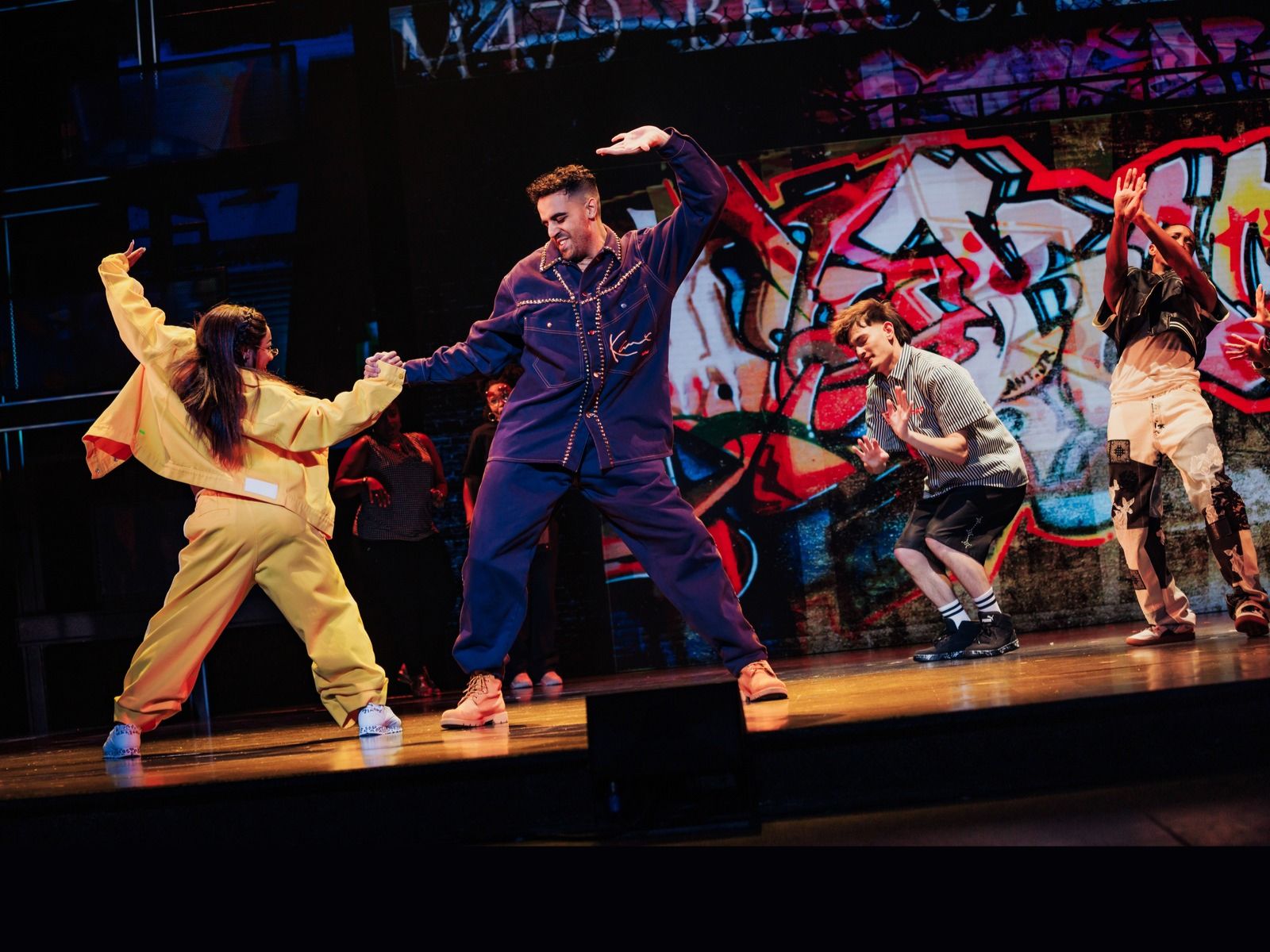
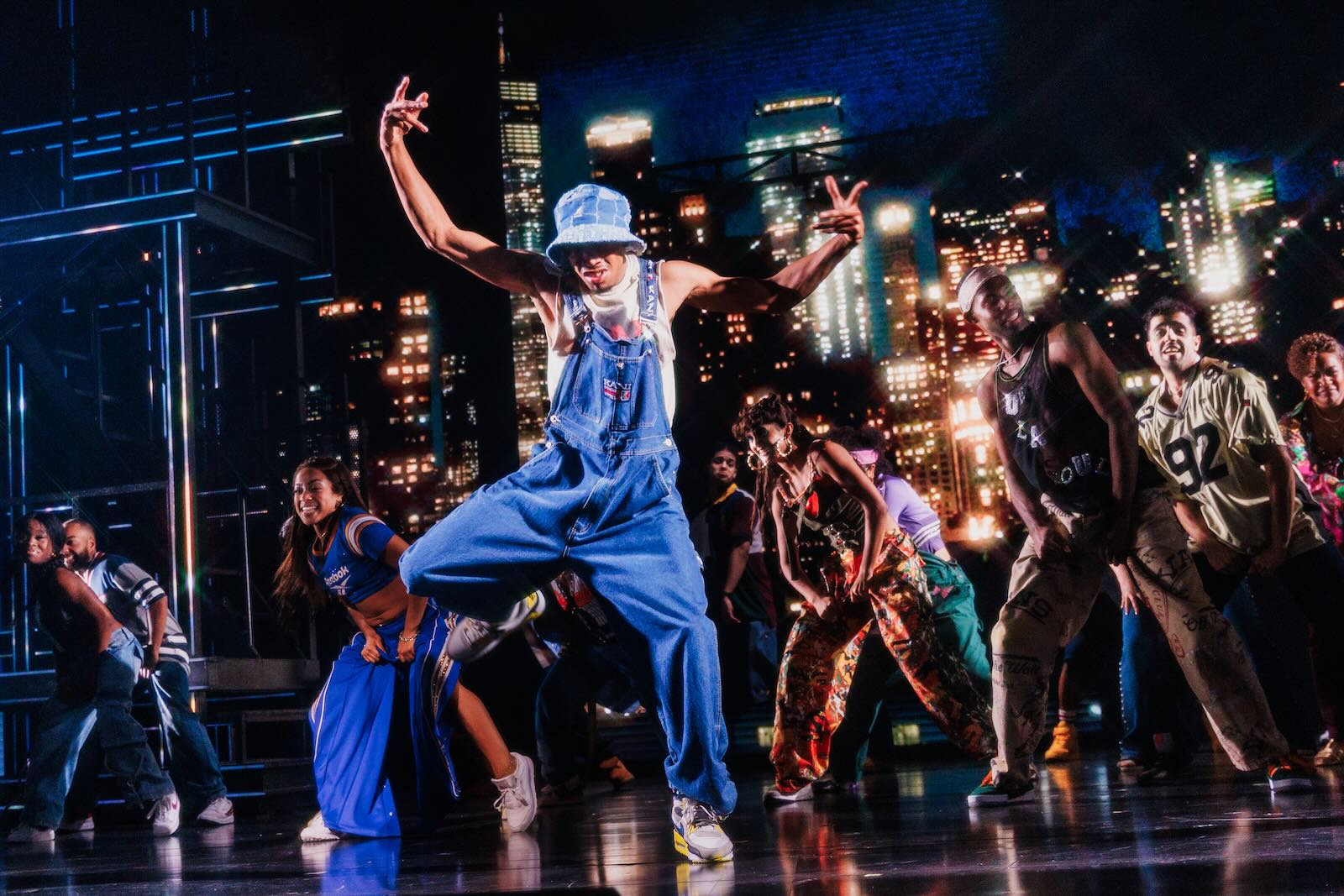
One of the production’s greatest strengths is its musical foundation. Drawing from Alicia Keys’ extensive catalog, the show blends familiar favorites with newer material and refreshed arrangements of some of her earlier work. Much of the music is upbeat and energetic, carrying the unmistakable sound that has made Keys such a celebrated artist. The musical numbers are accompanied by interpretive movement and choreography, keeping the stage in constant motion. The scenery is particularly bright and colorful, creating a youthful atmosphere that complements the music. While the choreography is enjoyable, it is the combination of the score, ensemble, and staging that gives the production its momentum.
The cast delivers several memorable vocal performances, beginning with Desmond Sean Ellington as Davis. His voice is enormous. There is a richness and power to his vocals that immediately commands attention. During “Fallin’,” particularly in this duet with Jersey, Ellington demonstrates just how much vocal presence he brings to the stage. His delivery is soulful and expressive, adding an emotional depth to the number. He has a way of drawing you into the music, and his performance is one that stays with you long after the song ends.
Then there is DC-based actor Roz White as Miss Liza Jane, the piano teacher. Oh, my goodness! What a voice! White is an absolute treasure, and her performance is among the evening’s most extraordinary highlights. During “Authors of Forever,” she delivers a vocal performance that seems to reach back through generations of musical greatness. Her voice carries the warmth, depth, and soul of legends past. There is something beautifully authentic about her delivery. It is not simply about hitting the notes; it is about making you feel every word. Her voice has a richness that cannot be manufactured, and when she sings, you feel it all the way down to your soul. White is a remarkable talent, and I could have listened to her sing all evening.

Sydney Townsend as Ali (understudying Maya Ann Butler) also deserves special recognition for her performance of “Girl on Fire.” Her voice is remarkably pure and strong, with a clarity that immediately catches your attention. As the number builds toward its conclusion, Townsend delivers a vocal moment that is nothing short of impressive. Her strength never compromises the beauty of her tone, and she fills the theater with a sound that feels effortless. It was one of those moments when you find yourself wishing the performer had even more opportunities to take center stage. Townsend certainly makes her presence known.
Beyond the individual performances, the production benefits from an ensemble that keeps the energy moving. The acting is solid, and the cast does a commendable job bringing the relationships and conflicts to life. The technical elements are equally impressive. The projection and scenic design, by Peter Nigrini and Robert Brill respectively, enhances the mood of each scene, the music is well balanced, and the lighting design by Natasha Katz provides a colorful backdrop for the unfolding story. There is a great deal happening onstage, but the production maintains a cohesive feel throughout the evening.
While there is plenty to appreciate, Hell’s Kitchen is not without a few shortcomings. Some portions of the storyline feel predictable, and a handful of scenes lean toward the cheesy side. The coming-of-age themes are relatable, but they do not always offer much beyond familiar musical theater territory. I also found myself wishing for a little more variation in the lead’s vocal delivery. The frequent use of vibrato, particularly during sustained notes, became noticeable after a while. Vibrato certainly has its place, but when it accompanies nearly every held note, it can begin to lose its impact. A little more restraint would have allowed some of those musical moments to land with greater effect. Jersey’s portrayal also occasionally veers into overacting, with certain musical scenes feeling more exaggerated than necessary. A subtler approach might have made those musical numbers even more compelling.
Still, these observations do little to diminish what is ultimately an entertaining and well-executed production. Hell’s Kitchen delivers an engaging evening of theater, supported by a recognizable musical catalog, an impressive technical presentation, and a cast with some exceptional vocal talent. Desmond Sean Ellington brings power and soul to Davis, Sydney Townsend shines with her stunning rendition of “Girl on Fire,” and Roz White gives us a performance that is truly special. The production may have a few rough edges, but its heart is firmly in the music. The creative team and cast have done a wonderful job bringing Alicia Keys’ musical world to the stage, making Hell’s Kitchen a show worth experiencing.
Running Time: Two hours and 35 minutes with a 15-minute intermission.
Alicia Keys’ Hell’s Kitchen plays through November 22, 2026, at the Hippodrome Theater, The France-Merrick Performing Arts Center, 12 North Eutaw Street, Baltimore, MD. Purchase tickets ($89–$213 standard ticket) online through the official Hippodrome Theatre ticket page.
The online program is here.
Complete cast and creative credits for the touring company are here.
Hell’s Kitchen plays next November 24 to December 6, 2026, at The National Theatre in DC.