Wicked, directed by Joe Mantello, has returned to the Hippodrome, and this current Broadway tour lands with a weight and urgency that feels sharper than ever. While the production still delivers the spectacle that audiences expect, the soaring vocals, iconic staging, and that unmistakable emerald glow, it is the emotional detail and social relevance that truly define the evening. Wicked, with music and lyrics by Stephen Schwartz and book by Winnie Holzman, based on the novel by Gregory Maguire, no longer simply plays as a beloved modern classic. It feels like a story that has aged into something more pointed, more painful, and far more reflective of the world we live in now.
The musical famously reframes The Wizard of Oz, offering a different perspective on the witches we thought we understood. At its heart is the relationship between Elphaba and Glinda, two young women thrown together at Shiz University under less-than-ideal circumstances. Elphaba, born with green skin and burdened by constant judgment, is intelligent, principled, and unwilling to ignore injustice. Glinda is charming, privileged, and deeply invested in being admired. What begins as rivalry slowly evolves into friendship, even as the political machinery of Oz nudges them toward very different destinies. Wicked asks how people become villains, who controls the narrative, and what happens when truth becomes inconvenient.
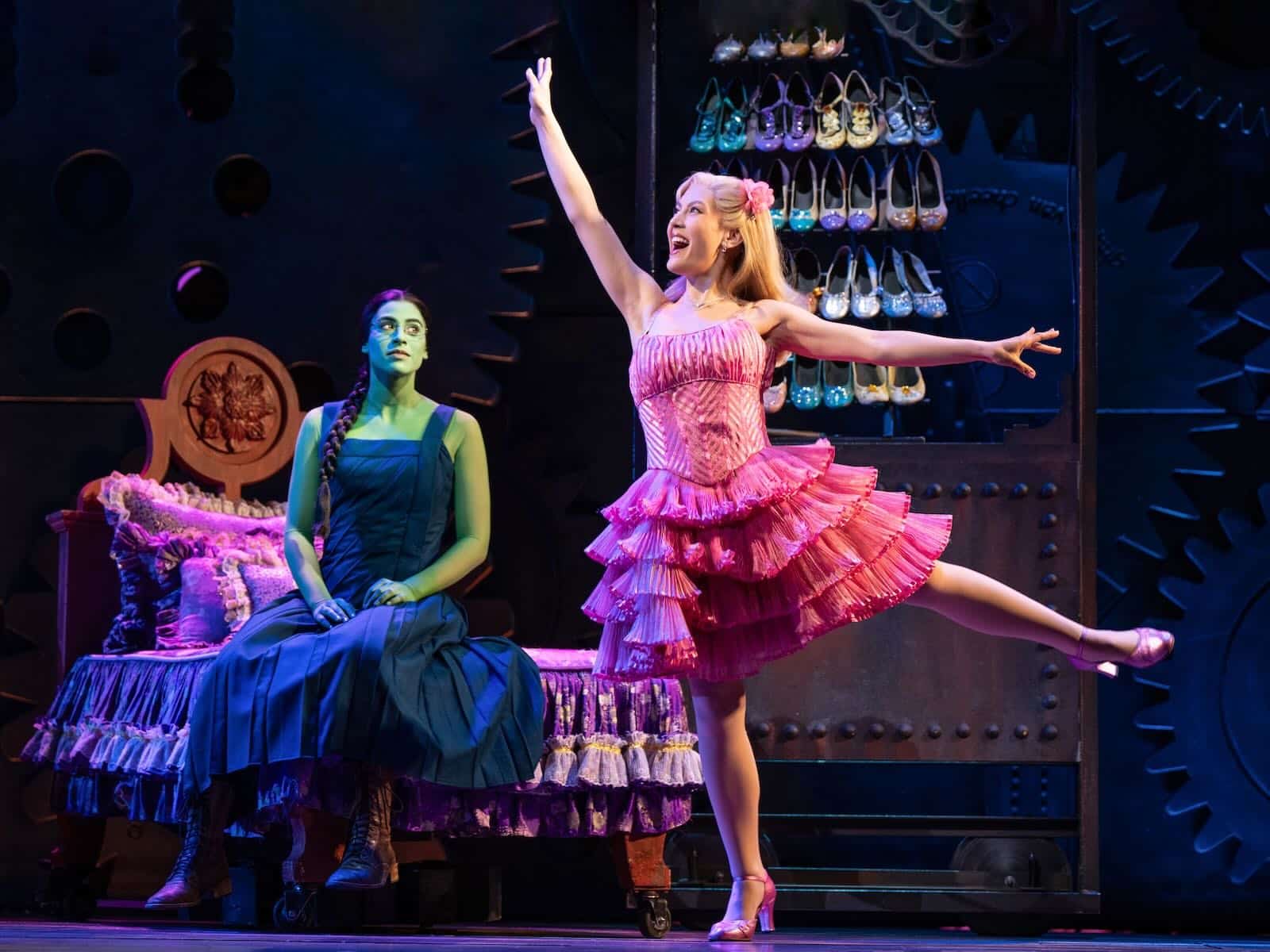
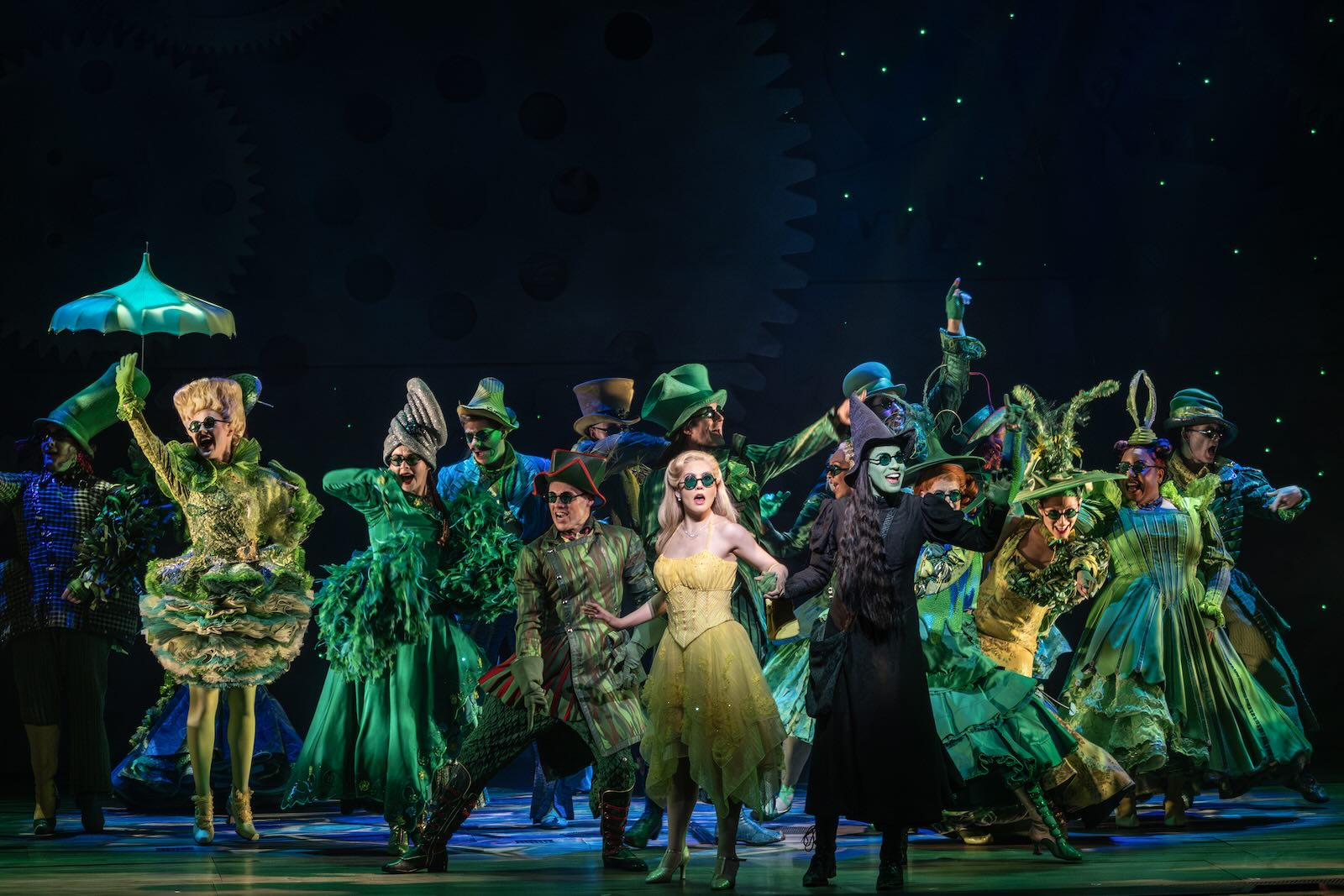
Visually, the production is stunning. Wicked has always been a feast for the eyes, and this tour fully delivers. The scenery is intricate and immersive, filled with towering mechanical structures, glowing green and red accents, and a sense of constant motion. Gears turn, backdrops fall, and the world of Oz feels alive, ominous, and unforgiving. The design reinforces the idea that the characters are trapped inside a vast system that values obedience over integrity. The Hippodrome’s stage allows these elements to breathe, creating scale without sacrificing emotional intimacy.
Zoe Jensen’s Glinda is a joy to watch, and her physical comedy is a highlight throughout the evening. Jensen leans fully into Glinda’s exaggerated elegance, punctuating scenes with hilarious hair tosses and perfectly timed poses. During “Popular,” her back bend is nothing short of outrageous, earning big laughs as she effortlessly contorts herself into what she clearly believes is the height of sophistication. It is showy, ridiculous, and completely in character. The comedy deepens when Jessie Davidson as Elphaba attempts to mimic the move — Davidson makes it look genuinely painful, awkward, and deeply uncomfortable, a brilliant contrast that underscores just how different these two women are. The moment is funny, yes, but it also quietly reinforces how ill-fitting Glinda’s world is for Elphaba.
Jensen’s Glinda, however, is far more than comic relief. Beneath the sparkle and self-absorption is a woman terrified of being overlooked. Jensen allows Glinda’s insecurity to surface in small, telling moments, especially as the stakes rise. Her charm becomes a survival mechanism, and as Oz rewards her image over substance, the cost of that choice becomes increasingly clear.
Davidson’s Elphaba is the emotional backbone of the production. From her first entrance, she brings gravity and sincerity to the role. This Elphaba is not angry for effect; she is exhausted from being misunderstood and increasingly horrified by the injustices she witnesses. Vocally, Davidson is exceptional. “Defying Gravity” is delivered with thrilling power, but what truly lands is the emotional weight behind it. This is not just a showstopper; it is a breaking point, a moment of painful liberation born from betrayal and resolve.
“No Good Deed” is equally devastating. Davidson unleashes Elphaba’s fury and despair with raw intensity, capturing the moment she realizes that her attempts to do good have only strengthened the narrative against her. It is a chilling reminder that once those in power decide a story, intention no longer matters.
One of the most quietly affecting scenes is the party sequence at the Ozdust Ballroom. Watching Glinda and Elphaba navigate that space, one celebrated, the other mocked, is heartbreaking. Elphaba’s awkward, earnest dance becomes an act of defiance, while Glinda’s decision to join her marks a turning point in their relationship. It is here that Wicked shows its deepest compassion, allowing connection to exist even in a room full of cruelty.
What makes Wicked resonate so strongly today is its unmistakable parallels to modern society. The show’s themes of propaganda, scapegoating, and manufactured fear feel unsettlingly familiar. Elphaba is labeled “wicked” not because of her actions, but because she challenges authority. Glinda’s rise, built on image and likability, reflects how easily goodness can be reduced to optics.At the Hippodrome, Wicked soars not just because of its spectacle, but because of its honesty. It entertains, unsettles, and lingers long after the departure from Emerald City. A stark reminder that history is often written by those who are believed, not those who are right.
Running Time: Two hours and 45 minutes with a 15-minute intermission.
Wicked plays through January 11, 2026, at the Hippodrome Theatre’s France-Merrick Performing Arts Center, 12 N. Eutaw Street, Baltimore, MD. Purchase tickets ($68–$206) online or call 410.837.7400.
Complete cast and creative credits for the touring company are in the online program here.