August Wilson’s Seven Guitars, now on stage at Spotlighters Theatre in Baltimore, is not a play you simply observe; it is one you sit with, one that settles into your chest and stays there. It breathes with memory, with longing, with grief left unspoken for too long. As part of Wilson’s monumental American Century Cycle, this 1940s-set story carries the familiar ache of deferred dreams and broken promises, revealing the quiet devastation of lives shaped by talent that never quite finds its reward. Under the steady and thoughtful direction of Benjamin Isaiah Black, Seven Guitars unfolds with patience and respect for Wilson’s language, trusting the power of stillness as much as the music of his words.
The story centers on Floyd “Schoolboy” Barton, a gifted blues guitarist recently released from jail and determined to reclaim the recording contract he believes was unjustly taken from him. The play opens after Floyd’s death, then rewinds to trace the final days leading up to it. We watch Floyd return to the Pittsburgh backyard that serves as the play’s emotional crossroads, reconnecting with friends and attempting to win back Vera, the woman he loves and has deeply hurt. Around them gathers a tight-knit circle of companions, musicians, dreamers, each wrestling with regret, hope, and survival. As Floyd prepares for a second chance in Chicago, unresolved tensions and fragile pride collide. Wilson’s brilliance lies in making the tragedy feel inevitable, not shocking — a slow tightening rather than a sudden blow.
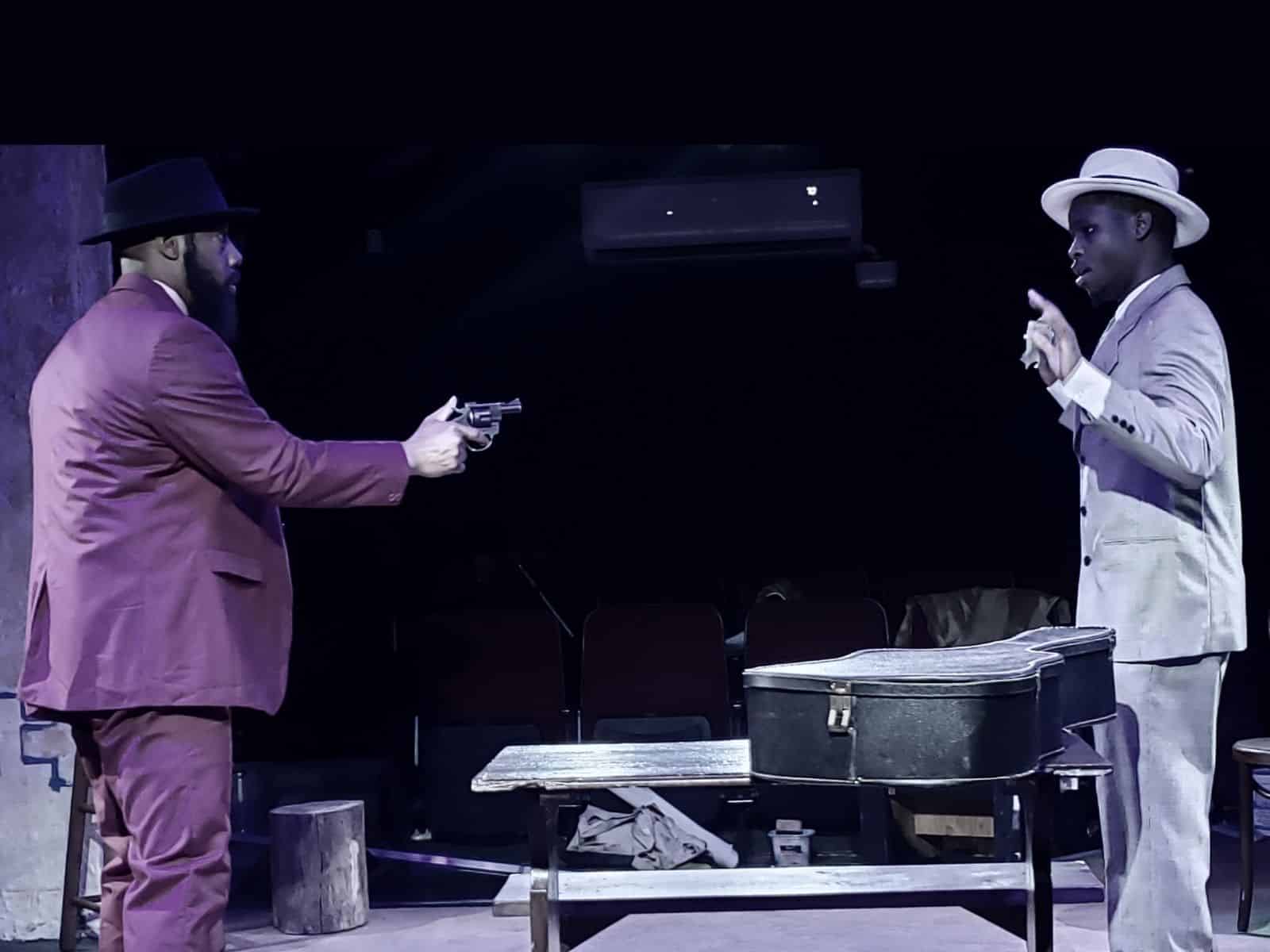
Jae Jones delivers a phenomenal performance as Floyd Barton, capturing both the swagger of a man convinced of his greatness and the vulnerability of someone desperate to be seen. Jones navigates Floyd’s contradictions with ease: his charm and carelessness, his passion and his selfishness. When Floyd speaks of music, of Chicago, of the future that surely awaits him, Jones makes the audience want to believe right along with him. Yet he never allows Floyd’s charisma to excuse his failings, particularly the emotional cost inflicted on the women in his life. It is a layered and compelling portrayal that makes Floyd magnetic even when he is at his most frustrating.
The emotional core of this production, however, belongs to Regina Gina G as Vera. Her performance is nothing short of top-tier. Vera is often reduced to a barrier in Floyd’s story, but Regina Gina G reclaims her complexity with fierce clarity and control. She imbues Vera with emotional intelligence, restraint, and quiet fire. Every pause feels deliberate, every word lands with intention. You feel Vera’s love, her disappointment, and her refusal to be diminished by it. Her passion never tips to excess; it simmers, then breaks when it must. I believed her completely, not as an idea or a symbol, but as a woman who has already paid dearly for loving once and will not do so blindly again.
Louis B. Murray’s portrayal of Hedley is quietly devastating. Hedley is slow-witted but deeply knowledgeable, a man whose thoughts move differently yet arrive with startling clarity. Murray leans into Hedley’s troubled inner life, his fixation on becoming a “big man,” on leaving behind proof that his life had meaning. Hedley’s obsession with the inheritance from his namesake is not merely about money; it is about legitimacy, about stepping into a legacy he believes was promised to him. Beneath his wandering monologues is a son still waiting for forgiveness and still trying to forgive a father who has long since passed. Murray captures that ache beautifully. His Hedley is dangerous not because he is angry, but because his hope has nowhere left to go. When his arc reaches its end, it feels tragically earned.
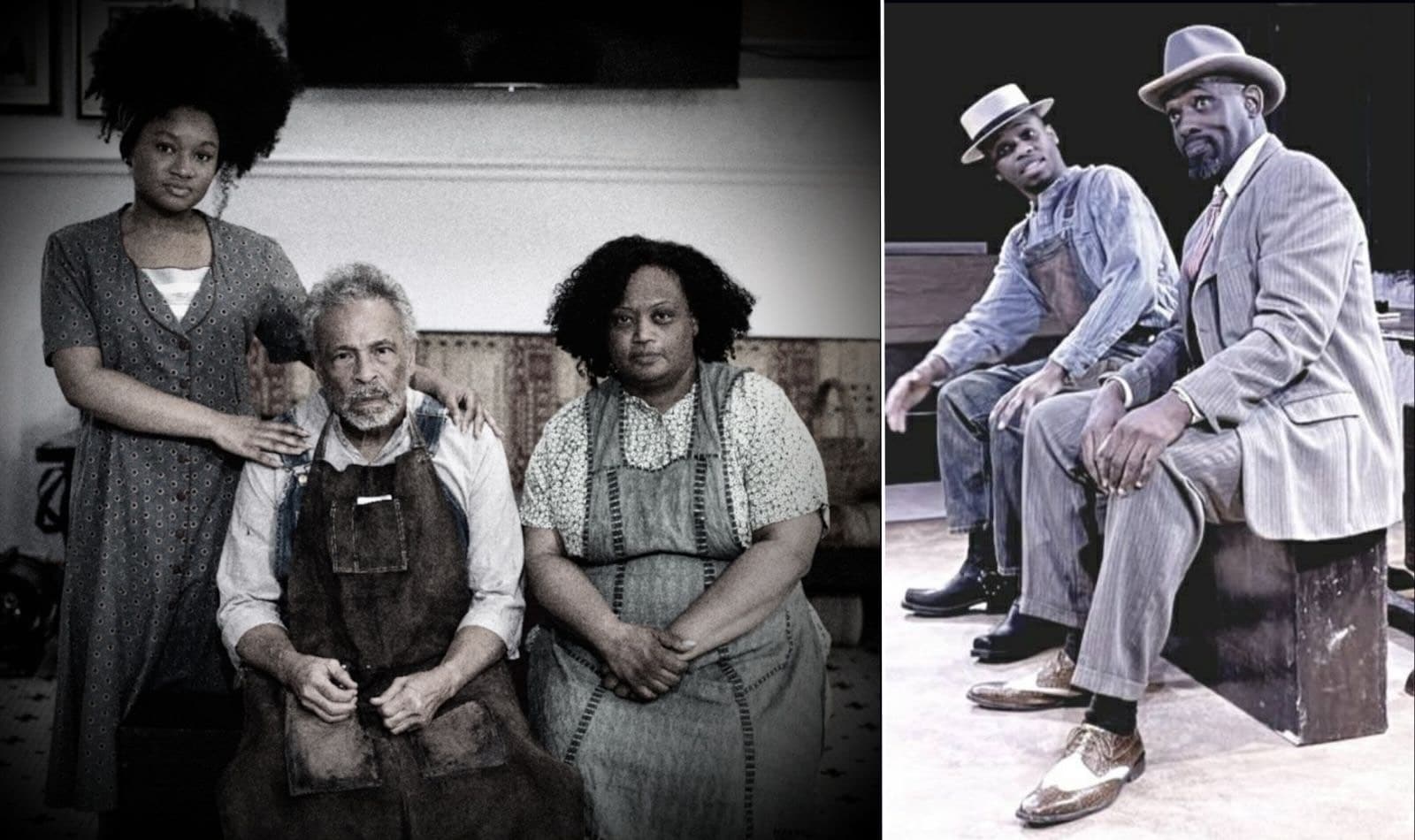
The ensemble work strengthens the production, creating the sense of a fully realized community rather than a collection of individual performances. The rhythm of Wilson’s dialogue is honored, with overlapping conversations and musical cadences that feel organic and lived in. Benjamin Isaiah Black’s direction is confident and restrained, allowing scenes to breathe and trusting both the text and the actors to carry the weight.
What ultimately sets Seven Guitars apart is its emotional honesty. It does not romanticize struggle or excuse harm. It interrogates ambition, accountability, and the stories men tell themselves to survive disappointment. Crucially, it gives space to the women who are so often asked to shoulder the consequences quietly. Vera does not stay quiet here, and the production is stronger for it.
Spotlighters Theatre’s Seven Guitars is a powerful and thoughtful entry into August Wilson’s Century Cycle — one that honors his legacy while remaining deeply human and urgently present. It reminds us that talent alone is not salvation, that love without listening is hollow, and that the past is never finished with us. This is theater that lingers — not because it demands attention, but because it earns it.
Running Time: Three hours with a 15-minute intermission.
Seven Guitars plays through February 1, 2026, at Spotlighters Theatre, 817 Saint Paul Street, Baltimore, MD. Purchase tickets ($24) online. (The run is currently sold out.)
Here is the online program.
Seven Guitars
By August Wilson
Directed by Benjamin Isiah Black
CAST
Floyd Barton: Jae Jones
Vera: Regina Gina G
Louise: Jenelle Brown
Canewell: Steven Forrester
Red Carter: David Mitchell
Hedley: Louis B. Murray
Ruby: Destiny Jennings
CREATIVE/PRODUCTION
Stage Manager: Steven Zhu
Dramaturg: Dr. Khalid Y long
Costume Designer: Wendy Snow Walker
Set Designer: Justin Nepomuceno
Sound Designer: Lorenzo Millan
Lighting Designer: Jaeden Arrington
Board Operator: Jada Abbott
Run Crew: Alyssa Stambaugh
SEE ALSO:
August Wilson’s ‘American Century Cycle’ to play at 10 theaters in Baltimore (news story, April 3, 2024)