
“Phone rings, door chimes,” and in comes Damascus Theatre Company’s production of Stephen Sondheim’s Company, now playing at the Arts Barn.
Premiering in 1970 with music and lyrics by Sondheim and a book by George Furth, Company made a bold statement in the musical theater world through its revolutionary structure and unflinching focus on modern relationships.
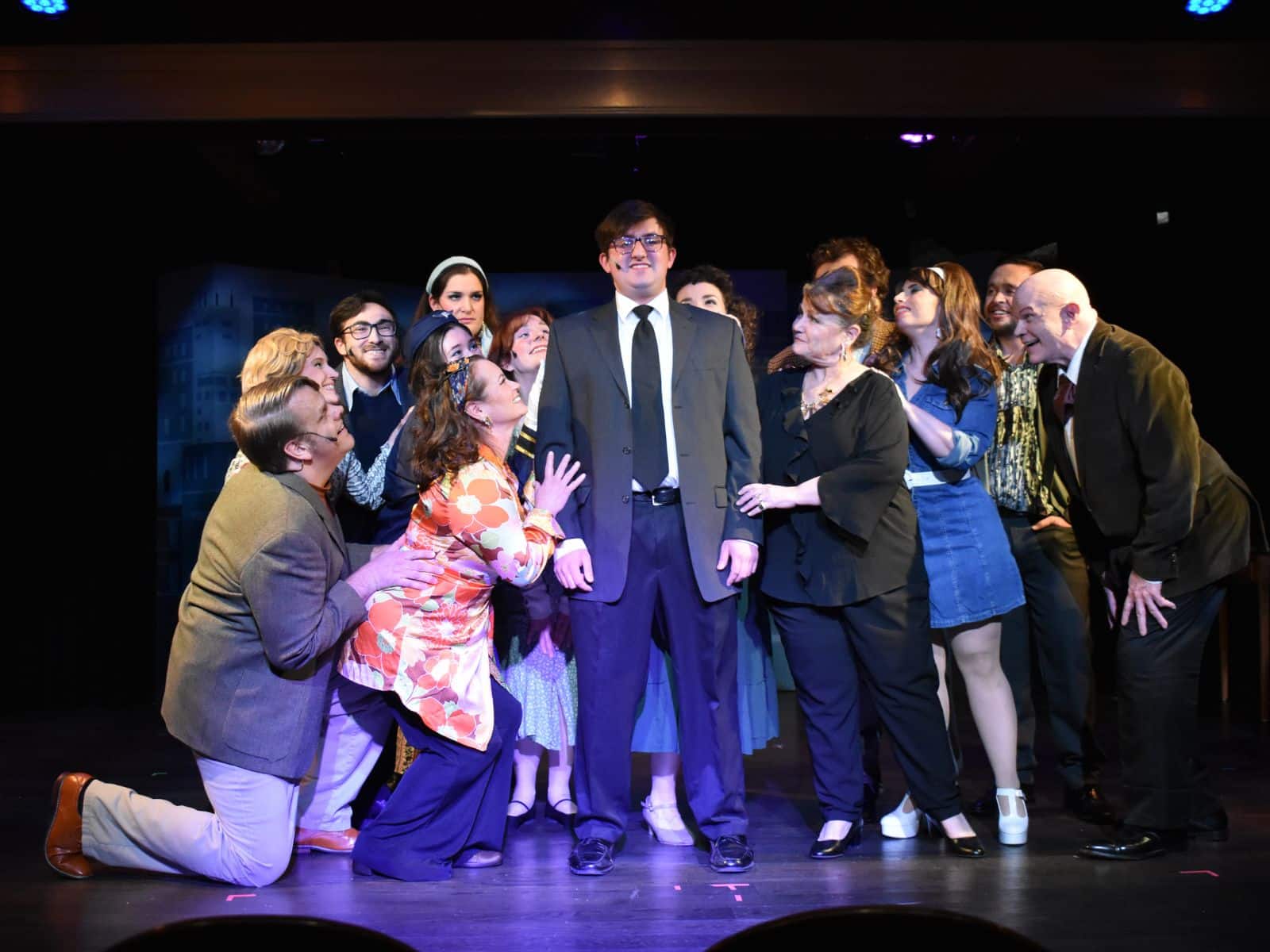
At the show’s center is 35-year-old Bobby, a commitment-phobic but ever-yearning bachelor who learns the trials and tribulations of love from his married friends. Unfolding through a series of vignettes, Company reminds us that we need vulnerability to connect with others and that our greatest human fallacy is not relying on those who are closer to us than we think.
More than 50 years later, that framework remains strikingly relevant for all relationships, romantic or not.
In an era of modernized theatrical storytelling that often incorporates technology into production, as seen in the 2021 gender-bending Broadway revival of Company, director Rachelle A. Horn resists that impulse. Supported by musical director Keith Edward, the production preserves the original construction and tonal elegance of Sondheim’s musical, favoring clarity and class over conceptual reinvention.
Horn’s direction is straightforward and deeply intentional, with her staging highlighting the social intricacies of the musical’s colorful cast of characters. Her direction, along with choreography by Karen Kushner Creel, embraces the musical’s original nature without making it feel dated. This harmony comes through particularly in the upbeat ensemble numbers the show is known for.
The production’s balance is further exemplified through the set, which Horn also designed. A minimalist backdrop of the New York City skyline, created by set constructors and master carpenters Jim Korte and Bill Rippey, reinforces the production’s elegant aesthetic. And the calming blue hues of the retro-style cityscape set, by paint designer and lead painter Maria Littlefield, pay tribute to the melancholic urban alienation of 1970s city life that Bobby comes to terms with.
Additional kudos must be given to the rest of the set construction and painting team members, who are listed below.
At its core, Company relies on the performances and unity of its 14-member cast, who collectively capture the shifting complexities of relationships among friends, lovers, and exes.
Leading the way is birthday boy Bobby, played by Ethan Kahwaty, whose performance as Sondheim’s perpetual bachelor carries a refined emotional weight along with a brilliant baritone voice. Kahwaty’s Bobby, present in nearly every scene, moves across the stage with confidence, knowing when to command attention and when to play off the energy of his fellow actors.
Appearing through episodic scenes are Bobby’s eclectic group of friends and lovers, some of whom are coupled happily and some, unhappily. Each of his coupled friends anchors the stage upon their introduction.
First are the quietly adversarial Harry and Sarah, played by Michael Rudmann and Chrissy Barnett Miller, whose competitive, dominant personalities highlight the realities of domestic tension. Their barbed banter is punctuated with comedic fight choreography by Daniel Amaguaña, which had the audience laughing out loud.
The friction between Harry and Sarah is softened by Rudmann’s nuanced rendition of “Sorry-Grateful,” accompanied by the other husbands. This intimate moment among the men foreshadows the complexities that emerge with the remaining couples, each revealing the all-too-human dynamics of relationships.
Bobby then meets Peter and Susan, portrayed by real-life married couple Nicholas Eden and Katherine Eden, who offer a cold reminder that relationships are rarely as perfect as they appear. They deliver this sentiment through zany humor and grace, all while allowing their characters’ underlying affection for one another to come through.
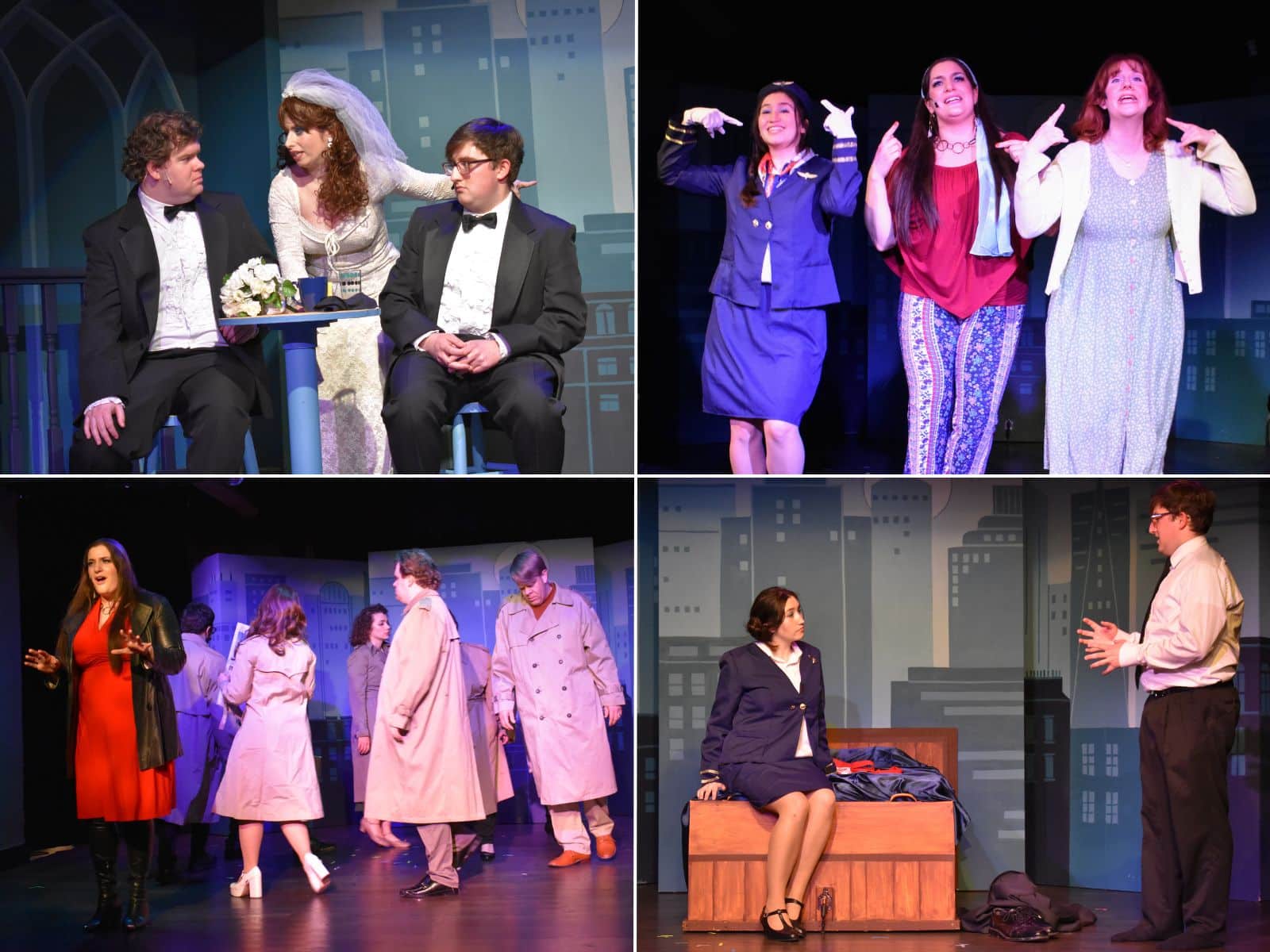
Things shake up after Bobby meets with Jenny, played by Julia Donato, and David, played by Adam Esrig. Their joking quickly turns sobering for Bobby when the uptight Jenny poses the daunting question: “When are you gonna get married?” In response, Bobby’s three former lovers enter to sing the wildly entertaining “You Could Drive a Person Crazy.”
The three women rise to the demands of this iconic Sondheim tune, delivering a polished three-part harmony paired with fun, flirty choreography. Kathy is played by Mary Efimertz, Marta by Leah Chiaverini, and April by Alexis Levien, who appears onstage while being voiced by understudy Ally Harnsberger due to extenuating circumstances.
Chiaverini is a standout performer as the “peculiar” Marta, whose stunning vibrato and sassy demeanor shine through in “Another Hundred People.”
One of the musical’s most famous songs, “Getting Married Today,” becomes another hilarious sequence as Melanie Kurstin’s performance as Amy captivates the truthful neuroticism and humor needed to break up the show’s emotional intensity. Although she has strong comedic chops, she also impresses with Amy’s more anxious moments opposite her fiancé, Paul, played by Drew Looney.
Later in the show, we learn more about the elusive Joanne, played by Lee Michele Rosenthal, and her third, devoted husband, Larry, cheerfully played by Bob Bryant. I found this pairing to be one of my favorites as they delicately balance a layered performance that highlights both the wins and the losses of handling a more mature love.
I was particularly moved by the scenes before and after Joanne’s iconic “Ladies Who Lunch,” which serve as a reminder that Company is as much about dialogue as it is about Sondheim’s tunes.
While much of the character development is rooted in Act One, Act Two, though slightly shorter, heightens the musical’s intensity. I have always found the writing in Company’s second act to be more compelling, and the direction here leans into that strength. The opening of Act Two is a standout moment, driven by a lively and well-executed performance of “Side by Side by Side.”
Like the other group numbers, the production is at its strongest when the full ensemble is in play, where the camaraderie and friendship among the cast are on full display. Together, the performers sing as a cohesive chorus, honoring the precision and musicality required by Sondheim’s work.
Their voices align seamlessly with the orchestrations under the direction of conductor Stuart Y. Weich, who remains faithful to Sondheim’s rhythms. However, with the band positioned behind the stage, there were moments when vocal projection struggled to cut through the orchestration’s brightness.
Additionally, there were minor inconsistencies in blending the intended sound design across scenes. That said, this coordination will likely continue to settle as the show progresses through its run. Even with these small issues, the cast and crew do a terrific job of carrying the production with professionalism and care.
Ultimately, Damascus Theatre Company’s Company succeeds by trusting the material and the people telling it, delivering a grounded and emotionally clear staging that reaffirms why Sondheim’s work continues to feel essential — not only to theatergoers, but to the human experience itself.
Running Time: Approximately two hours and 30 minutes, with one 15-minute intermission.
Company plays through February 22, 2026 (Friday and Saturday at 8 pm; Sunday at 2 pm), presented by the Arts Barn in partnership with Damascus Theatre Company, performing at the Arts Barn, 311 Kent Square Road, Gaithersburg, MD. Purchase tickets ($25 for adults; $23 for students 15–21; $16 for youth 14 and under) at the door or online. Tickets may also be purchased in person at the Arts Barn box office or by calling 301-258-6394.
Recommended for ages 12 and up.
Company
Music and Lyrics by Stephen Sondheim
Book by George Furth
Originally produced and directed on Broadway by Harold Prince
CAST
Bobby: Ethan Kahwaty
Sarah: Chrissy Barnett Miller
Harry: Michael Rudmann
Susan: Katherine Eden
Peter: Nicholas Eden
Jenny: Julia Donato
David: Adam Esrig
Amy: Melanie Kustin
Paul: Drew Looney
Joanne: Lee Michele Rosenthal
Larry: Bob Bryant
Marta: Leah Chiaverini
Kathy: Mary Efimetz
April: Alexis Levien (Understudy: Ally Harnsberger)
ARTISTIC AND PRODUCTION TEAM
Director and Set Designer: Rachelle A. Horn
Music Director: Keith Edward
Producers: Mario Font & Elli Swink
Choreography: Karen Kushner Creel
Conductor: Stuart Y. Weich
Fight Choreographer: Daniel Amaguaña
Stage Manager: Michael Loebach
Technical Director/Lighting Design: Rick Swink
Sound Design: Michael Steimer & Rick Swink
Crew: Chris Spahn & Jen Willard
Set Construction/Master Carpenters: Jim Korte & Bill Rippey
Set Paint Design/Lead Painter: Maria Littlefield
Properties: Maria Littlefield & Ellie Swink
Set Construction/Painting: Bruce Clark, Mario Font, Rob Gale, Jim Korte, Bill Lebair, Kerry Marks, Bill Rippey, & Joy Wyne
Costume Design: Ginger Ager
Hair & Makeup Design: Ava Silberman
THE BAND
Keyboards: Matthew Dohm & Andrew Mauer
Percussion: Scott Luxenberg
Violin: Rachael Daudelin
Cello: Tom Zebovitz
French Horn: Sam Weich
Reed 1: Julia Pangelian & Dana Gardner (2/13–2/15)
Reed 2: Rose Weich