Hello, you’re in Hollywood! Welcome, white people! Other folk … not so much. And only in a certain direction, as imagined by white people. By the Way, Meet Vera Stark is a comedic examination of inequity in Hollywood, which ought to be better known by now, as the play debuted 15 years ago. Seeing Laurel Mill’s production of this should-be classic is an excellent way to fill a gap in your theatrical experience.
Director Lorraine Brooks assembles an excellent cast, creates multiple environments on the pocket-sized Laurel Mill stage, and deftly choreographs beautiful physical comedy to support the snappy wit of Lynn Nottage’s script. The story is absorbing and the dialogue crackles in a pastiche-style show with themes that are disquietingly timeless.
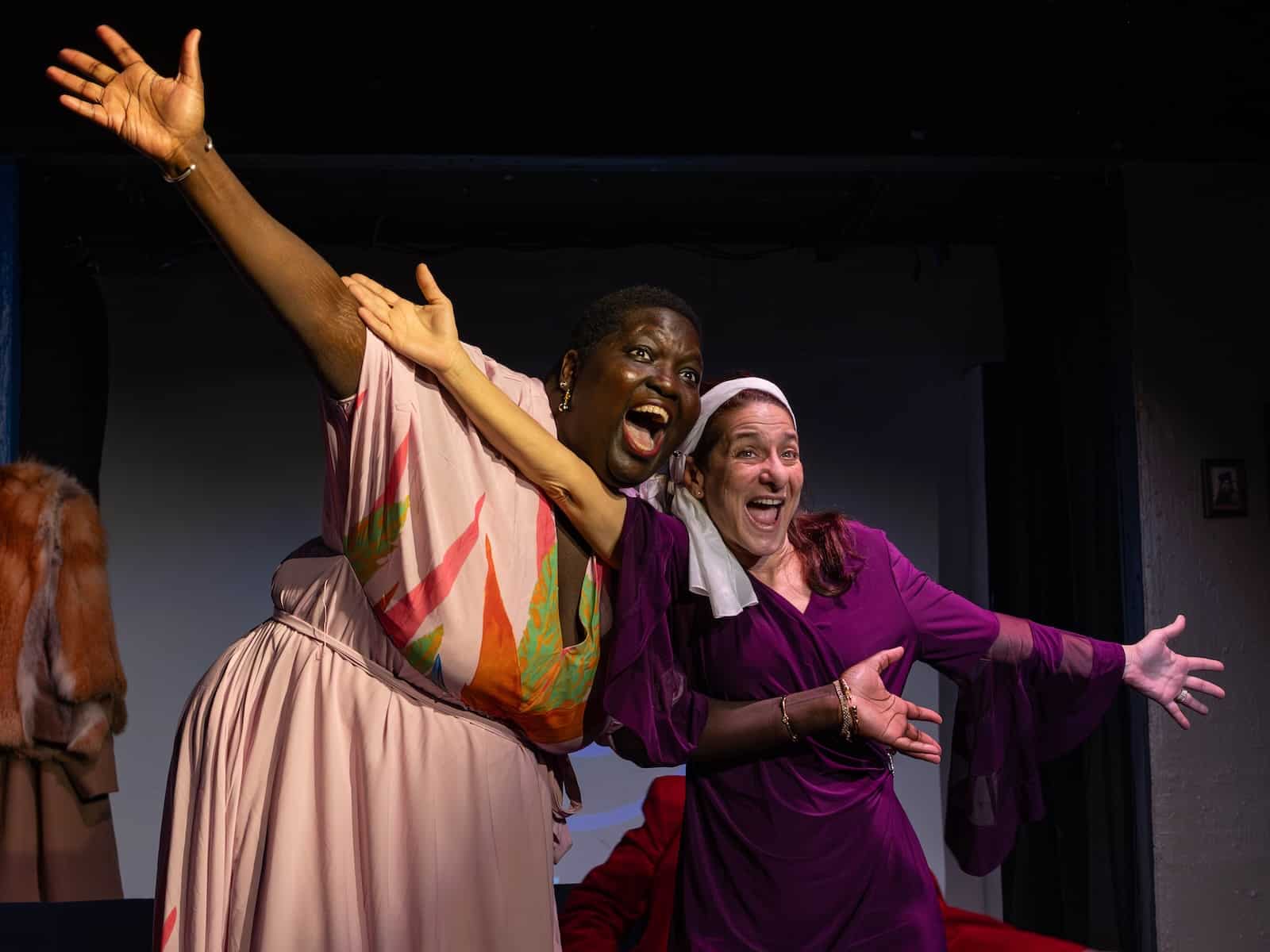
Jacqueline Youm as Vera Stark and Terri Laurino as Gloria Mitchell in ‘By the Way, Meet Vera Stark.’ Photo by Hart Wood.
Lynn Nottage has written strong, meaty female roles. The roles for men are not as deeply nuanced, though overall, they’re more comic. From the outset, I liked the relationships between the characters. The opening sequence is charming, the party scene is hilarious, and then Act II happens. Act II, while not as dynamic as Act I, despite the augmentation of multimedia elements, explores basic cognitive flaws and personal biases exhibited by people seeking to understand history.
The media, which I support and appreciate, is deployed so frequently and at such length as to impact the pacing of the show. Brooks draws out interstitials past their logical timeframes, and leans heavily into film and photo collage/sound elements, which are presented at a slower tempo than the live action. My companion submits that she enjoys time to digest information she has just been presented, while I prefer reflecting on the whole thing after its conclusion. Significant pauses between scenes are therefore something of a frustration point to me. I accept my companion’s perspective as valid, however, so what I might term a “pacing issue” becomes a “pacing choice.” My personal preference in the matter is perhaps not relevant. In any case, Act I has a faster pace and more comedic style than Act II, which gets a little sluggish with talky-ness.
The actors in By the Way, Meet Vera Stark are all highly watchable. Jacqueline Youm‘s physical presence is tempered by her soft, gentle delivery and the quiet smoothness with which she moves. When she alters her presentation in a later sequence, it is comically impactful. Terri Laurino as Gloria Mitchell is not quite what I imagine as “America’s little sweetheart,” but there is much about the character that is mysterious, so I suppose that’s thematic. Her timing is pin-point accurate, and her facial expressions tell stories beyond her lines of dialogue. In the dual roles of Lottie and Carmen, Dionne Belk is strong and believable with wise-eyed, snappy wit. Shiesha McNeil is a delight as both Anna Mae and Afua, and the wildly divergent characters really show off her range. We must absolutely fall in love with Derick John-King as Leroy in Act I. He is quite the charmer and 100% sells that. His Act II character, Herb, is less likeable, and John-King sells that, too. Alan Barnett has a prize role as Slasvik in Act I and clearly relishes it, and delivers one of my favorite monologues ever. He’s less splashing in Act II as Brad, though still quite funny. Paul Norfolk playing VonOster and Peter is broadly funny in recognizable archetypes. Sydney Johnson, whom I did not see, is listed as Understudy, perhaps for all the characters, which by itself is impressive.
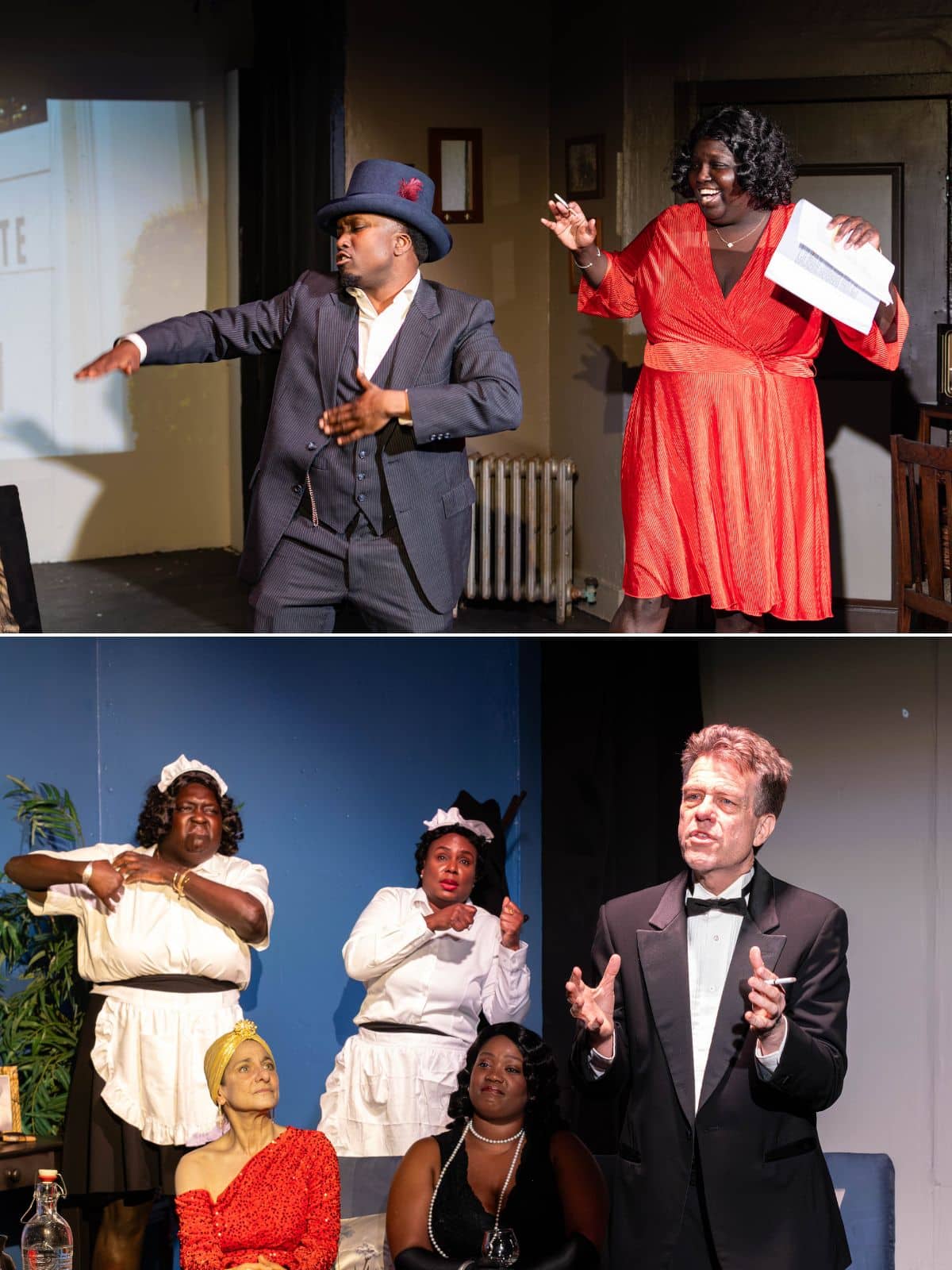
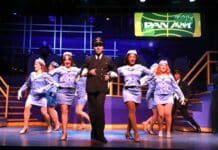
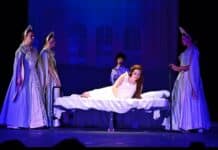
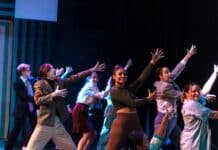
TOP: Derick Johnson-King as Leroy Barksdale and Jacqueline Youm as Vera Stark; ABOVE: Jacqueline Youm as Vera Stark, Terri Laurino as Gloria Mitchell, Dionne Belk as Carmen, Shiesha McNeil as Anna Mae, and Paul Norfolk as Maximilian Von Oster, In ‘By the Way, Meet Vera Stark.’ Photos by Hart Wood.
Costuming, hair, and makeup by Marge McGugan do a lot to evoke character and time period, really giving excellent visual punch to Act II particularly. Director Brooks also is responsible for the cinematic elements of the show, of which there are many. These are captured and produced in a way that looks archival yet is clear and audible, and are absolutely crucial to the effectiveness of this show, which was written by Nottage with multiple media in mind.
Intermission is an opportunity to purchase sweets at the ticket window (located at the back of the theater), which you may consume in your seat during the show. The restroom is for one person at a time — plan accordingly.
Vera Stark was inspired by a real life African American actor, Theresa Harris, whom you may never have heard of, as she was uncredited in many of her roles. She spoke of her frustration with Hollywood’s limited opportunities for African American performers, a topic addressed by Laurel Mill’s previous production, Save My Black Soul. Producer Maureen Rogers and Laurel Mill Playhouse are working to elevate Black theater in a way that is encouraging to see outside the urban settings of Baltimore and DC. I recommend this production and commend all of its collaborators.
Running time: Two hours and 15 minutes, with one intermission.
By The Way, Meet Vera Stark plays through March 15, 2026 (Friday and Saturday at 8 PM except February 27, Sunday at 2 PM), at Laurel Mill Playhouse, 508 Main Street, Laurel, MD. Tickets ($20, general admission; $15, children 18 and under, seniors 65 and over, active and retired military) can be purchased online or by calling 301-617-9906. Street parking is available but not plentiful.
The program for By the Way, Meet Vera Stark is online here.
Next up at Laurel Mill is Assassins.
Final Factoid: If you liked the dialogue of box office smash MJ the Musical (2022), thank Lynn Nottage. That’s her work on the King of Pop’s jukebox musical.