J.K. Rowling’s Harry Potter novels have had a massive influence on our culture. Whole families have enjoyed her mix of fantasy, mundanity, humor, and grief. Her work revived the young adult fantasy novel, turned a generation back to reading, and has spawned an entertainment juggernaut.
I know one young person whose first memory is of their mother reading Harry Potter and the Philosopher’s Stone to them. They became a massive fan, re-reading the books multiple times, attending midnight book launches in Hogwarts robes, at one point visiting the set of the second movie. But now, they no longer want even to think of the series they once loved.
Because they are trans.
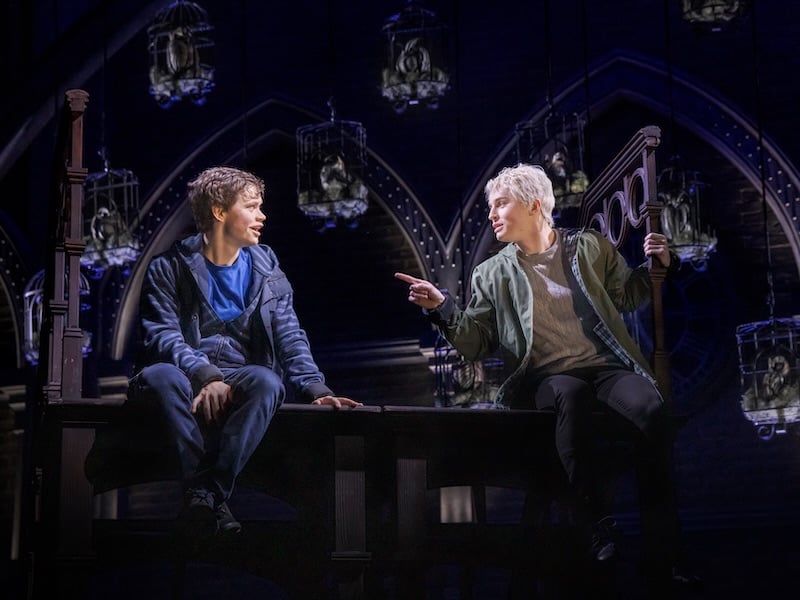
J.K. Rowling, the world’s highest-paid author over multiple years, could have been the first billionaire from writing had she not given some $200 million to charities, mostly supporting medical causes and at-risk women and children. She has all the hallmarks of a liberal-minded person. She has made it canon that Dumbledore is gay, and there are broad hints that two of the major characters in the new Harry Potter play (Albus Potter and Scorpius Malfoy) are embarking on a gay relationship (although some have seen that as “queerbaiting” — pandering to the gay community without making it explicit).
But over the past six years, Rowling has become a “gender-critical feminist” (also known as a trans-exclusive radical feminist, or TERF) proclaiming widely that women’s safety requires that trans women (who she insists are men who merely believe they are women) are inherently dangerous and must never be allowed in women’s spaces such as bathrooms. (Ironic that some of the pivotal scenes in Harry Potter, including in the present play, involve boys visiting a girls’ bathroom.) Her outsize influence has done real damage to the legal position and safety of trans people in the UK. She has been criticized for these views — which are contrary to medical and legal evidence — by some of the very people who were once most likely to enjoy her work. She has essentially declared that an entire segment of her audience does not exist, or at least does not deserve legal standing equal to the others of their gender, and that those who think they do are wrong.
The woman who wrote stories about a young man who felt fundamentally different and misunderstood by his surrogate parents, and then, through great struggle, found a place where he belonged, has now alienated an entire generation of fans who know exactly what that feels like.
And that is tragic.
Which is what makes it difficult to review the latest addition to the Wizarding World leviathan, Harry Potter and the Cursed Child, now playing at the National Theatre. There is great support for trans folks among many theater lovers, and it is difficult to separate the damaging views of the author from her creation.
But it is worthwhile to point out that many talented theater professionals have given their utmost to this show. So it is only right to examine what they have created on its own terms.
Harry Potter and the Cursed Child is a spectacle designed to satisfy the fans. (People who have not at least seen a Harry Potter movie may enjoy the show, but will miss many of the references.) Written by Jack Thorne from a story by Rowling, Thorne, and John Tiffany, it both shows the original characters grown up and introduces a new generation of characters. Thorne also builds a plot that uses “time-turners” to revisit scenes and characters from the past. For those familiar with the books and movies, it is akin to visiting old friends. It also allows the story to play out several alternate scenarios, including the big one: “What if Voldemort had won?”
The show displays the care and attention to detail that mark the entire franchise: from books to movies, theme parks, and now theater. It is visually stunning, full of swirling robes, floating suitcases, eerie fog, and, of course, magic. The magic tricks by Jamie Harrison are the true star: top tricks include Harry being sucked into a pay telephone, characters popping out of fireplaces, transforming into other characters using “Polyjuice potion” (a source of some of the best humorous bits of the show as adolescent characters try to pretend to be their elders), and impressive wand battles. Excellent wirework abounds. Dementors that fly in and overwhelm characters and carry them off prove as eerie as in the movies. A segment set “underwater” works extremely well. Most impressive of all is probably the extended duel between (now adult) Draco Malfoy and Harry Potter, which involves magically tipping and throwing not only chairs but each other. Neil Austin’s lighting perfects the illusion — I was sitting in the front row, and I couldn’t see the wires. I could also feel the heat from fiery wand blasts, a testament to the bravery of the actors and the precision of the pyrotechnics. It is a wonder that a touring production can adapt the stage in each location to enable so many tricks.
The show covers many locations, and so can’t rely on large, impressive sets and locations (let alone CGI) as do the movies. Christine Jones’ set, consisting mainly of brick arches and rolling staircases, bookcases, and doors on a revolving platform, stands in for everything from King’s Cross station to Hogwarts to the Forbidden Forest. Beyond that, director John Tiffany chose to use choreography to enliven the transitions between scenes. Steven Hogget’s movement direction is effective, although the tropes of flying suitcases and swirling wizard robes, while intriguing at first, start to feel overused. The best movement examples involve two large sets of rolling stairs mimicking the moving staircases at Hogwarts, and effectively presenting the dilemma of two characters who are being kept apart from each other. The best movement comes at the opening of the second act, when evil Hogwarts students in the alternative timeline stalk around the stage in armored robes (costumes by Katrina Lindsay) like large black predatory beasts and then charge at the audience in a truly unnerving phalanx.
With all this going on, it would be unfair to say that the actors seem almost incidental. There is an emotional story at the heart of all this, involving the difficulties sons face in living up to their fathers’ expectations and legacies, adolescent battles with parents, and the quest for odd, awkward young people to find friendship. The actors look convincing and carry the story capably, for the most part. Alexis Gordon (Hermione Granger) and Matt Harrington (Ron Weasley) are funniest when they play the younger characters pretending to be them. As Harry Potter, John Skelley hits the right tone, and is most effective in his scene at the end with his son, when he is confessing his true fears. Unfortunately, he has a distracting way of working his mouth when portraying emotion, and he talks so fast that it is sometimes difficult to understand what he says. In fact, there are some problems with the accents in general. Trish Lindstrom (Ginny Potter) seems to slip into Irish at times. As Professor Minerva McGonagall, Katherine Leask, clearly cast for her resemblance to Maggie Smith, plays her Scottish accent and strictness broadly for laughs, and doesn’t have a chance to show her wisdom or charm. Leask is better as the evil Professor Umbridge. As Draco Malfoy, Benjamin Thys is suitably icy, but also gets some touches of humor and pathos. Larry Yando plays all three of the old men in the story, Amos Diggory, Albus Dumbledore, and Severus Snape, with exactly the same face and voice, although he has an awkward way of pulling in his chin to portray Snape. He does have some moving moments as Dumbledore apologizing to Harry.
As the two new lead characters in the story, Emmet Smith (Albus Potter) and Aidan Close (Scorpius Malfoy) shoulder the show. Smith, portraying an alienated, moody teenager, gets the job done. Close, as the even more awkward, un-Malfoyesque, out-of-place Scorpius, shows terrific physicality, and is at times very funny, especially in his overwrought bouts of enthusiasm and screaming. But there are times when his portrayal slips out of endearingly awkward and into uncomfortable, as in one scene where he rhapsodizes at length on how a girl smells.
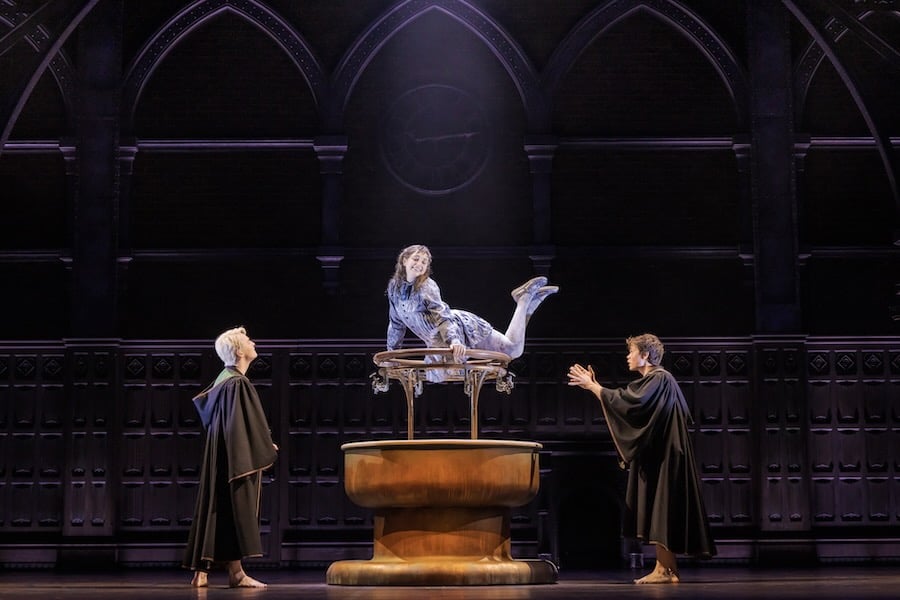
An absolute standout performance comes from Mackenzie Lesser-Roy as Moaning Myrtle, who channels the original in voice and manner but puts her own spin on it — literally — performing her entire scene on a rotating hoop atop the fountain sink in the “girls’ bathroom.” She is a delight.
Perhaps not totally surprising for a series of which the final book had to be split into two movies, Harry Potter and the Cursed Child was first performed as two plays that could be seen on the same day, or on subsequent nights. Later, it was cut down to one three-and-a-half- hour show, and then before the North American tour, it was further cut to its present running time of just under three hours. So it is perhaps understandable that the storytelling and emotional portions should feel squeezed by the spectacle. But perhaps, if elements such as the swirling capes and dancing staircases were trimmed a bit, there would be more room for the story to breathe and catch the audience’s hearts.
I can’t tell you whether you should go see Harry Potter and the Cursed Child. That is for you to decide based on your feelings on how an author’s attitudes reflect on their work. But I can say that the show is a visual and magical treat, with some affecting moments and some good-to-excellent performances. Many talents have put their all into the play, and it shows.
Running Time: Two hours and 55 minutes, including a 20-minute intermission.
The national tour of Harry Potter and the Cursed Child plays through September 7, 2025 (Tuesday through Sunday at 7 pm; Thursday, Saturday, and Sunday at 1 pm), at the National Theatre, 1321 Pennsylvania Ave NW, Washington. Tickets ($59–$189) are available online or at the box office.
The cast and creative credits for the touring production are here.
Enter the Digital Lottery for a chance to purchase $40 tickets to Broadway at The National shows. Learn more here.