IN Series is Washington, DC’s provocative and exploratory opera company. In a field that tends to isolate disciplines and people, IN Series unites musical forms and diverse cultural traditions with equal respect. Its productions challenge audiences to rethink what opera is — and who it is for. If you have never seen an IN Series production, The Delta King’s Blues is a good place to start. It is the first full opera commissioned by IN Series.
The opera tells the story of Robert Johnson, described by Composer Damien Geter as “arguably the most important American musician whose influence is still heard today.” An American blues musician, born in Mississippi in 1911, Robert Johnson is considered one of the most influential artists of the 20th century. His short life — Johnson died in 1938 at the age of 27 — was marred by tragedy, including the death of his wife and child. Johnson is remembered in popular imagination for the legend that he sold his soul to the devil at a crossroads in exchange for musical talent.
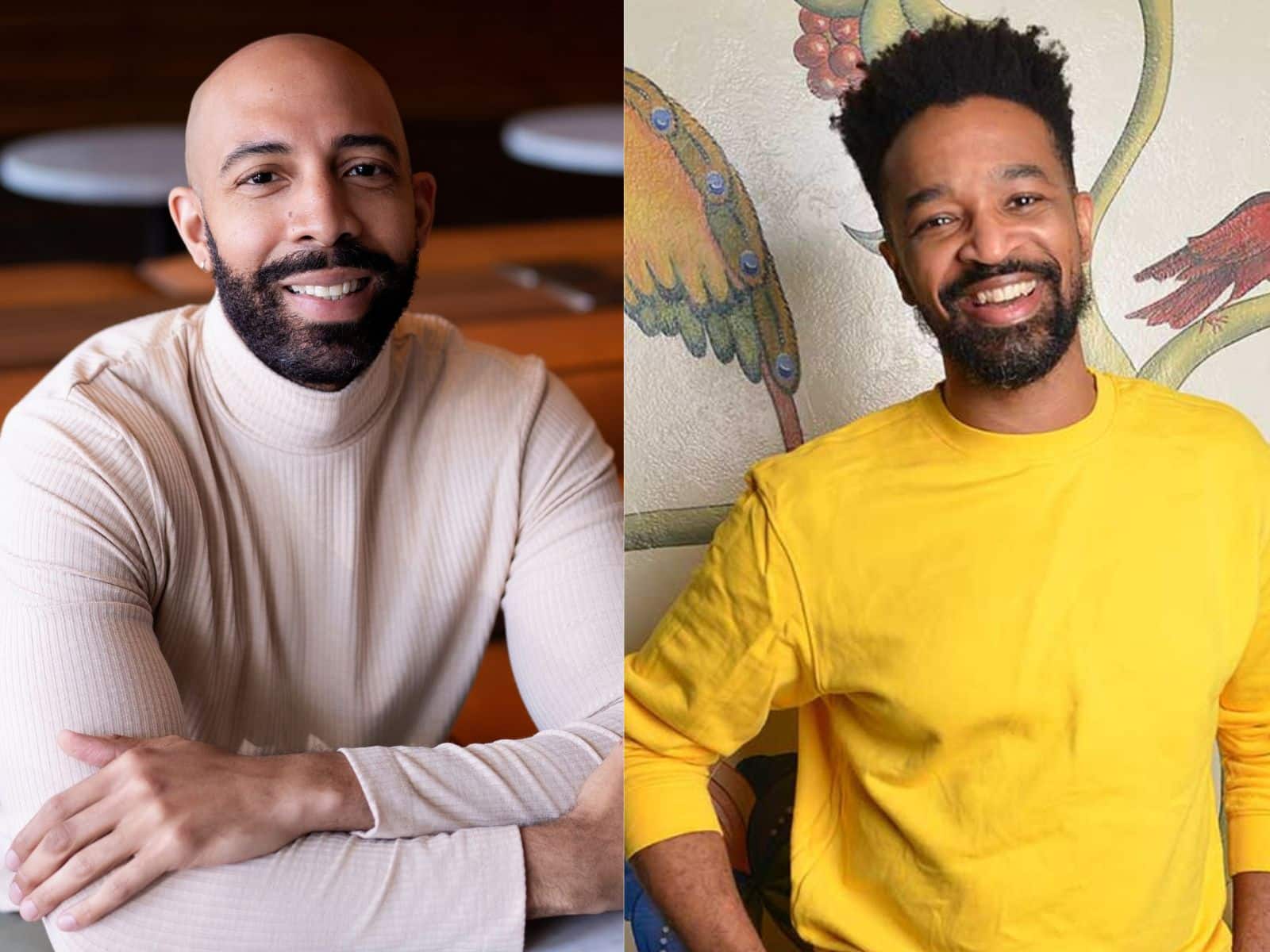
In its publicity materials for the production, IN Series artistic director Tim Nelson says: “The Delta King’s Blues represents in one visionary project all the artistic and social threads of IN Series as a company. Firstly, it tells the truly American story of the advent of the blues — setting it proudly and audaciously beside the Western classical canon to both spar and dance. Furthermore, The Delta King’s Blues spotlights the remarkable gifts of two emerging giants of classical music-theater storytelling today, Damien Geter and Jarrod Lee.”
DC Theater Arts sat down with Geter and Librettist Lee to learn more about their process in writing The Delta King’s Blues. (This conversation has been edited for length and clarity.)
Gregory Ford: Damien and Jarrod, what do you want potential audiences of The Delta King’s Blues to know?
Damien Geter: Robert Johnson is the American Beethoven. That’s what I want audiences to know. That was why I wanted to write this piece. Because people need to know who Robert Johnson was. People need to know who this Black man was who was the centerpiece of all American music. Gospel included. Country. You name it.
The piece is about (“in my opinion,” “arguably,” all of those qualifiers) the most important American musician to have ever lived. THE MOST IMPORTANT.
Because everything that we know about the blues and rock and roll and all of the branches that come off of that tree … they all stem from Robert Johnson. All of the blues licks that you hear (and of course, we know that rock and roll came from the blues), the style of playing, the style of singing, stems from Robert Johnson. I think Nina Simone called it the Black classical music, or something like that. But we know that the blues is American, born-and-bred, and we know that rock and roll, therefore, was as well. It took Americans a minute to latch onto Robert Johnson. But the Brits knew of his genius before Americans did. A lot of what you hear in early rock, like the Beatles and that bunch, was influenced by Robert Johnson. A lot of Americans don’t know about Robert Johnson, which is a shame. His story isn’t heroic in any way; it’s not beautiful. It’s not easily presentable. But he’s the most important American musician.
Jarrod Lee: Damien introduced the subject matter to me and how it could potentially become an opera when we had a conversation over coffee a couple of years ago in New York. I did a lot of research for the writing. And what emerged was a much longer piece than what people will see in December. We were able to find support within In Series, which allowed us to reshape it into the one-act chamber opera that we’ll be premiering here.
I want people to feel what I felt when I first heard the MIDI file of the music. I want people to be excited about the piece like I was when I was immersed in researching and discovering how many people Johnson influenced in music, not just in the genres of blues and rock and roll. And I want people to be spooked by it like I was when, while I was listening to the music for it (with a thunderstorm happening outside), all of a sudden, thunder cracks resounded at the perfect time for the music. It scared me. It spooked me.… What Damien has created in the soundscape of this work is something that is completely bluesy, churchy, and operatic all in one.
What was a moment that made you say: This is an opera?
Damien: I’m a fan of the horror genre. I started watching the Netflix documentary Devil at the Crossroads: The Robert Johnson Story because it had a little spookiness to it. The legend that surrounds Robert Johnson’s life is a Faustian story. He sells his soul to the Devil and becomes this virtuoso guitarist. It was rumored that he was not a good guitar player or singer at first. He goes away for six months and comes back this phenomenal player. Six months! I’m a musician, a pianist. If I go off for six months, I guarantee you I’mma come back in six months and I might be a little bit better, but I’m not going to be a virtuoso. So, there is something in that story that is very ripe for the operatic stage in terms of the drama. And I’m curious to know — I don’t think we’ll ever know — but I’m so curious to know what transpired in those six months. Did he have a transaction with said Devil? We don’t know. That is the most compelling part of his story.
What shocked you about Robert Johnson’s story?
Damien: The thing that shocks me is that more people don’t know about him. That’s the shocking thing. Jarrod, wasn’t he supposed to play at Carnegie Hall?
Jarrod: Johnson is technically a part of what some people call “the 27 Club,” artists who did not live beyond the age of 27. That includes people like Janis Joplin, Jimi Hendrix. He was supposed to play at Carnegie Hall, and, instead, they actually ended up playing a record of his. I can just imagine even now, operatically, in the future, when we have a commission to make this piece larger, I can imagine someone going to the stage and dropping the needle at some point in the story and having that be: “This is what this man Johnson did in his lifetime and this is the legacy that he’s left for us to cherish and to boogie with, to dance to and enjoy and be moved by as well.” That performance at Carnegie Hall was going to be one of the pinnacles of his career, but his record ended up being played in that space in the absence of his physical presence.
What was the first thing you wrote that became part of this opera?
Damien: I’m a composer who likes to go in order, so I don’t usually hop around. So, I started at the beginning. However, the piece now starts with the hymn “At the Cross,” which I wrote later in the opera. Then I thought, “Oh, I should start it with that.” So, I also put it at the beginning. But the first thing that I wrote was the overture, a prelude to set the time for the enchanted world that is to come. His music is not in the public domain. So, the hardest thing about writing this opera was trying to write in his style for an instrument that I do not play, which is the guitar. So, I had to do a little bit of research to figure that part out. That was the hardest part about writing this.
Is there something in Robert Johnson’s story that you wanted to be in the opera that you ultimately didn’t add?
Damien: Jarrod and I talked about the idea of this Devil playing different parts of his life. In an extended version, we would have thought the Devil to be the person who gives him the record deal. And this person keeps showing up in various parts of his life. The Devil hands him the bottle of liquor. The Devil does the transaction at the crossroads. So, the Devil makes the deal and ends up being a part of his life in a more substantial way. But we didn’t have enough time for that.
Jarrod: There was something else that for me exemplified the way Johnson learned things. When he was recording, for example, he didn’t want people to see how he played in that recording session, so he faced the corner away from the recording engineer. I had always envisioned this singer with the recording engineer behind them, and then they were able to face the audience, who would be the corner of the recording studio in the character’s mind. And we, the audience, would see it, but the engineer wouldn’t be able to see it. That’s one thing I would like to see in an extended version that didn’t make this version.
What do you have to say about the composer/librettist relationship? When I think of operas, I usually think of them as the composer’s work. So, I say Mozart’s Don Giovanni, not Da Ponte’s Don Giovanni. It’s a little like the old Roger Dangerfield joke, “I don’t get no respect.” But applied to librettists.
Damien: I can’t write an opera without a librettist. Librettists don’t get enough credit. I think that in today’s world, there is an effort to make sure that the librettist is credited as well. Jarrod and I go way back to 2019. We sang in the Metropolitan Opera’s Porgy and Bess that season. That’s how we met. We met at a coffee shop and were just throwing ideas around, and that is when I introduced this to him.
Jarrod: We did end up going to a coffee shop, having a conversation, and pitching some ideas. I pitched an idea to him. He didn’t like it. And that’s OK! That’s OK! Then he pitched an idea to me. And I was like, “OK. Cool. Alright.” Then we went our separate ways. I was focusing on singing, and Damien was focused on his projects. Then the COVID shutdown happened. And that afforded me some time to sit down. I was very privileged to have that safe space at my mom’s dining room table. And I spent five months working on this. And working electronically with dramaturg Leon Major and in conversation with Tim Nelson. And here we are today. I think the relationship between librettist and composer always needs to improve. Because I believe that “if it’s right in the root, it will be right in the fruit.” As a singer, I think it’s important to have as much information as possible when you get that score. And one way of doing that is to make sure that the creatives have put what they need to at the beginning and get the representation that both creatives deserve. It’s always been a great communication between Damien and me.
Delta King’s Blues is not Aida or Otello. What do you think about the African American and African diaspora relationship to opera? How do you engage with that?
Damien: It’s complicated. I will say that the way that I engage with it is that I write operas about Black people. That’s my answer.
Jarrod: And I’ll add to that and say I’m grateful that I get to write about Black people and stories within the Black diaspora. Because I’m having a ball. I’m enjoying myself. I get to see myself onstage, and I get to participate in the change that I want to see. And I believe that this subject matter and this opera deserve to be on any stage just like anyone would program a Bizet, a Carmen, or an Aida.
Damien: Right. We’ve done the Aidas, we’ve done the Carmens. It’s time to do something else, especially now. This is a larger conversation but especially now, the way that opera is, the direction that it’s heading in, we need something new. So, get on board, all of God’s children.
Jarrod: Truly. Truly. Truly. And also to add to that: If it’s not going to be traditionally put on by opera companies, I’m betting on us. I’m betting on our stories. I’m betting on our creativity and our ability for the work to be seen and received by the people who need to receive it.
You engage in a variety of creative practices and disciplines. Give me a sense of the shape of your creative universe.
Damien: I’m also a conductor. I don’t sing as much as I used to. Actually, I don’t really sing at all anymore. I have a podcast [ARTillery]. And that has reinvigorated an interest that I have always had in journalism and writing. So, I’m actually taking some classes in journalism at NYU now, and I’m trying to decide what I want to do with it.
What about you, Jarrod?
Jarrod: Right now, I’m wearing a lot of hats. And I’m OK with that. But it’s important not to wear multiple hats at the same time. So, I just regulate the hats by three. It’s one as a singer, one as a writer, and one as an arts administrator. I get the opportunity to work with performing arts entities and help them achieve their goals. I get to write. So, that means I’m writing for opera but not only opera. I’m writing songs. I’m writing poetry that is turned into songs. I’m also stepping into writing for children’s books, which is opening up a whole new process for me. I’m also interested in getting into voiceover acting. I like to believe that I have a soothing voice that can even put the most anxious at ease.
Is there anything else you’d like to add?
Jarrod: This has been a long time coming, and I cannot wait for the people to see this work, experience this story and this soundscape. And it’s going to be delicious. That’s the best word I can use at the moment.

Running Time: 60 minutes with no intermission.
The Delta King’s Blues plays December 6–7 and 12–14, 2025, presented by IN Series, performing at Pop-Up Theater, 340 Maple Drive, Washington, DC. Tickets (ranging from $35 to $72) can be purchased here. The Delta King’s Blues also plays December 19–21, 2025, at 2640 Space, 2640 St Paul St, Baltimore, MD, where tickets (ranging from $25 to $35) can be purchased here.
For further exploration: Robert Johnson – Can’t You Hear the Wind Howl? (documentary)