Some of the most moving, indeed theatrically compelling works that have been presented in the DMV in recent memory could not be called plays or dramas in any regular sense: The Pale Blue Dot: A Musical Voyage Inspired by Nature, for instance. Angel Gil-Ordoñez, founder and artistic director of DC’s PostClassical Ensemble, has surprised and delighted me with his bold, out-of-the-box, cross-disciplinary programs in which dance, music, poetry, video, and narration are combined to invite audiences into an immersive theatrical experience.
PostClassical Ensemble (PCE) is, to my mind, the region’s preeminent and most innovative contemporary-classical music ensemble. PCE launches its 2025/26 mainstage performance season with The Pale Blue Dot: A Musical Voyage Inspired by Nature, with one performance only on Wednesday, November 19, at 7:30 pm at the Kennedy Center Terrace Theater. This exciting program has been developed in collaboration with guest curators Enric Sala (National Geographic Explorer-in-Residence and Executive Director of Pristine Seas) and Kristin Rechberger (CEO, Dynamic Planet). As the Conference on Climate has gathered extraordinary leaders and experts from around the world in Brazil, minus the participation of the U.S. and China, this program could not be more timely.

I sat down with Maestro Ordoñez to learn what I could about the collaboration and his vision. (Our conversation has been edited for length and clarity.)
Your work is always theatrical and multi-disciplinary, combining film, literature, and the visual arts with music. What has drawn you to be such a pioneer and advocate for such work?
Angel Gil-Ordoñez: I always ask myself why today people go to film and art events, but not so much now symphony concerts. How to bring especially young people into this experience? We work to transform the concert experience by bringing in and combining new elements.
How did you start this collaboration with Enric Sala from National Geographic?
Well, I love inviting guest curators, especially from other disciplines, and working on programs in collaboration. I had the idea of designing a program on nature. Enric is a good friend from years ago, currently an incredible lead explorer at the National Geographic. He is also an ardent activist and spokesperson for Nature, particularly devoting his time to protecting the seas.
At this time, do you think the arts should take a leading role in giving voice to address the crises faced by Nature and our relationship to the natural world? And does that role include the mandate to move audiences from experiencing art to taking action?
I think so. The issues are too urgent for artists to just create a pretty experience. So, totally. More than ever.
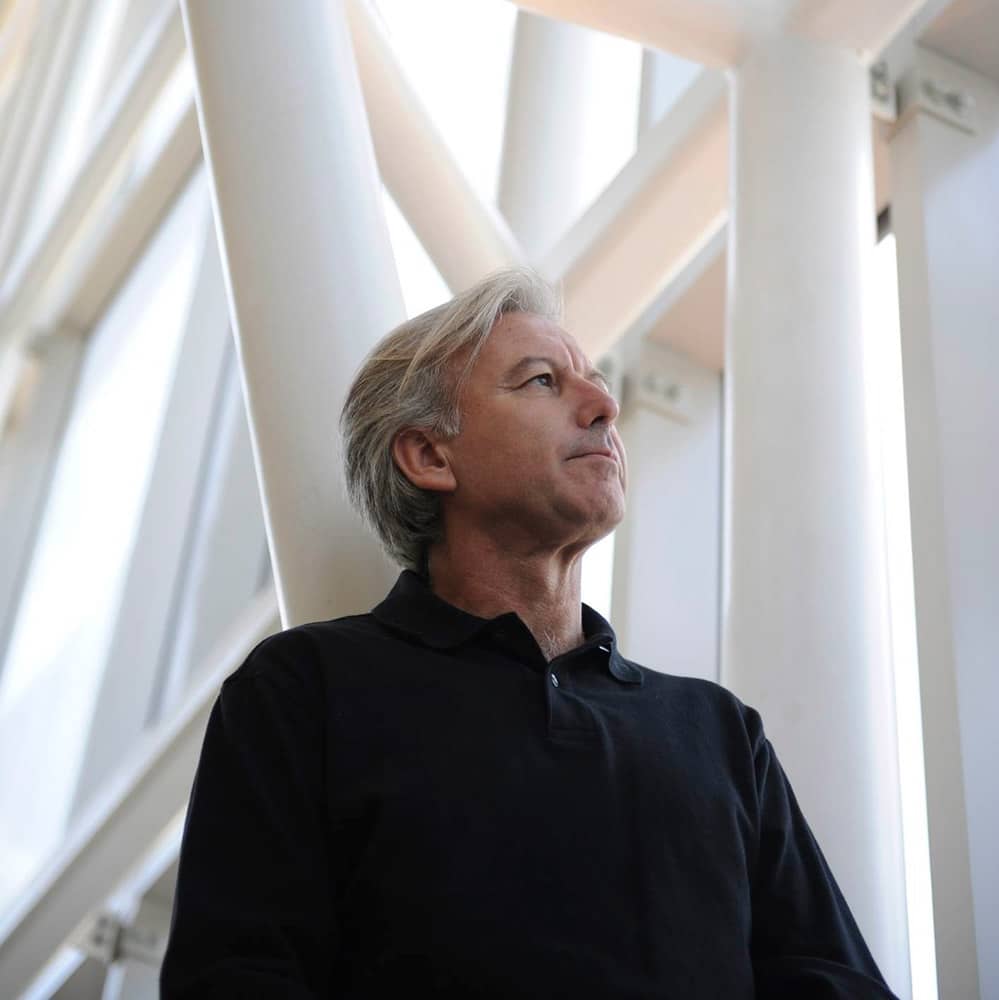
I understand you are also bringing in the Children’s Chorus of Washington. Will they function like an operatic chorus?
Let me describe the structure of the program. We live in harmony with Nature. Then we go about destroying Nature. Our vision and our task must bring us together to find the solution, restore, and bring us back into harmony with Nature. And there is hope at the end, and the children are part of that hope. That is the theatrical component they are bringing to the program.
You have also brought into this project Ed Gero, one of the most highly esteemed and beloved actors in our community. How do you see his contribution?
This is most important for me to say about my work. I always try to integrate Washington artists, not only because they have a following but also because we have such extraordinary talent here. Ed Gero is a supreme example. He will, through narration, take us from the Harmony Part through the Destruction Part, where this represents the dramatic conflict, with images from exciting, important documentaries.
You also love bringing together different music genres. You’ve got Debussy and Virgil Thompson as well as contemporary local composer Joel Friedman and Howard Shore’s “Lord of the Rings”! How would you describe how these pieces speak musically and perhaps dramatically to each other?
Again, our structure provides stages in this dialogue, starting with harmony; we amplify Nature with the sounds of a seal in Alaska, with incredible images of the oceans prepared by our curators. We also always choose one music selection that acts to establish a unified whole. For this program, we have chosen Debussy’s “La Mer.” And let’s not forget Kristin Rechberger (CEO, Dynamic Planet), co-curator and partner to Enric. Kristin was the one who devised our whole structure. And in the first section, we introduce our children’s chorus.
And is this a program you would hope families and young adults would be welcome to come?
Absolutely. Young people are the solution, and they are the future. And they, the audience, will get a lovely surprise and join in an experience “in harmony” at the end.
Running Time: Approximately 80 to 85 minutes, without intermission.
PostClassical Ensemble’s The Pale Blue Dot: A Musical Voyage Inspired by Nature plays November 19, 2025, at 7:30 pm, in the Terrace Theater at the Kennedy Center, 2700 F St NW, Washington, DC. Purchase tickets ($45–$69, not including fees, with discounts available) via phone (202-467-4600) or online.
The Pale Blue Dot: A Musical Voyage Inspired by Nature
Enric Sala & Kristin Rechberger, guest curators
The Children’s Chorus of Washington
Ed Gero, narrator
PostClassical Ensemble conducted by Angel Gil-Ordóñez
PROGRAM
Claude Debussy: La mer (arranged for 15 players by Joolz Gale)
Howard Shore: Excerpts from The Lord of the Rings
Virgil Thomson: Music for the New Deal documentaries, The River and The Plow That Broke the Plains
Edvard Grieg: Morning Mood from Peer Gynt
Léo Delibes: Flower Duet (“Sous le dôme épais”) from Lakmé
Joel Friedman: Musical surprise to be announced at the performance
Post-Concert Discussion