The longer that Wicked: For Good has been in theaters, the more evidence I see that most negative reviews are met with surprisingly intense vitriol from Wicked fans online. So much for the tolerant left.
Even the most valiant defenders of Wicked: For Good seem to be aware of its problems. While they are rarely articulated by the many theater content creators I’ve encountered who’ve discussed the film, there appears to be a broad cross-community awareness that the pacing of the second act of Wicked has not been fixed, despite many changes made for the film and its much longer runtime than its stage counterpart.
Look, I wanted the Cats movie to be good, too. But we cannot reject the evidence of our eyes and ears.
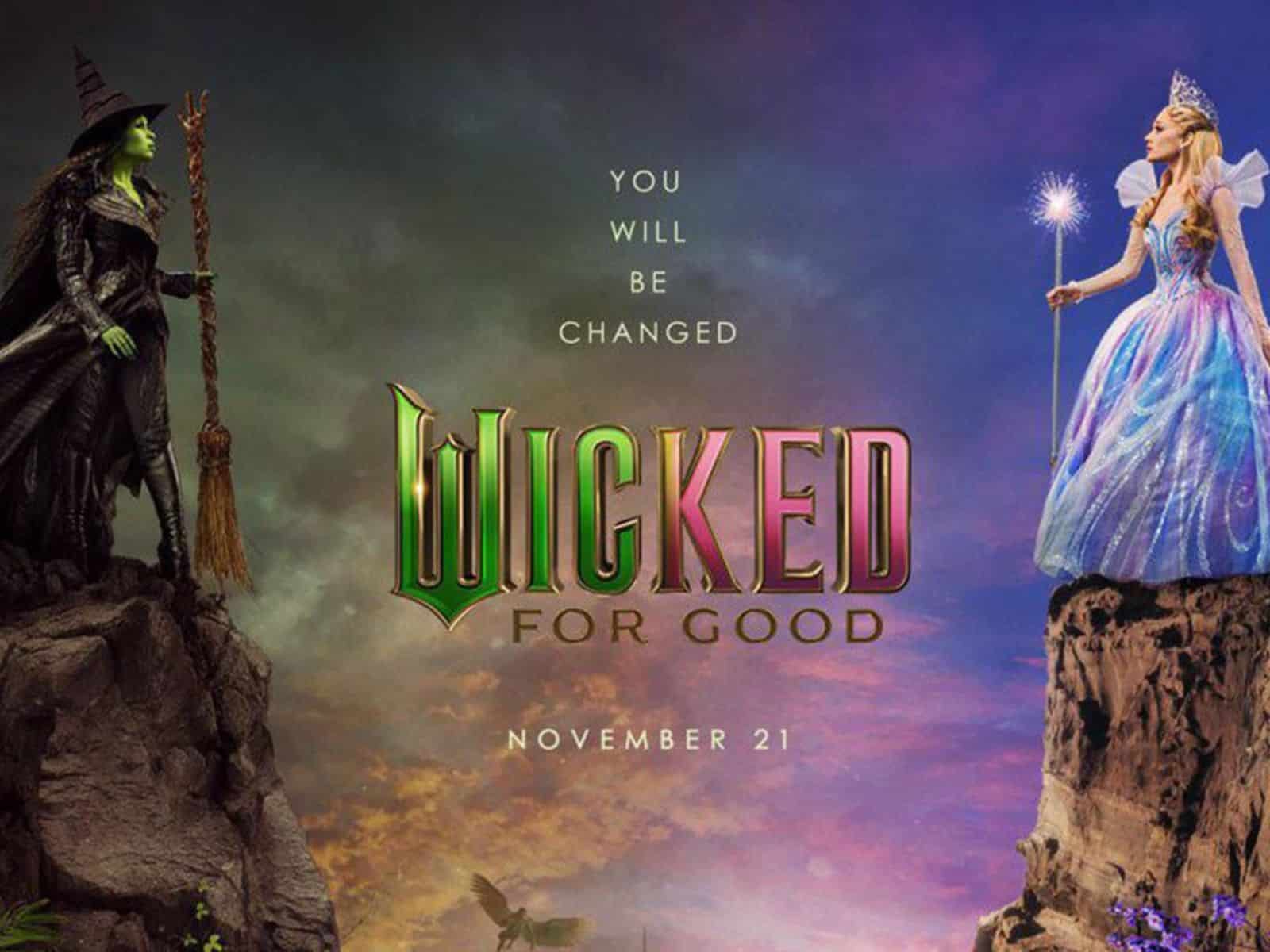
The most common argument against For Good criticism from these diehard fans is that “it is Act II of a stage musical, therefore your arguments about the movie’s ‘flow’ issues, narrative stakes, and pacing are invalid.” This argument, unfortunately, just doesn’t work as a catch-all response to broader issues, and, for one thing, much of what has been added to this film adaptation is what makes the film especially weak.
One of the two new songs added to the film, “No Place Like Home,” encapsulates the adaptation’s major issues: what little it adds is hardly worth the airtime it consumes. Nearly all the film’s problems result from this issue, which was arguably the problem of the second half of Wicked in the first place — as it attempts to resolve the first half while simultaneously shoving everyone into position for the events of The Wizard of Oz. When the first Wicked film was so excellently done, these new issues with the source material and the problems of the material that has been added are bared even more nakedly.
This is especially odd given that the first Wicked film used its extra breathing space to add so many unique details that never created a sense of bloat.
After Wicked: Part One showed us that Glinda and Elphaba were enemies in college who became kinda-sorta friends, and Elphaba chose to stand up for the rights of animals and Glinda did not, Wicked: For Good shows us the continuation of those paths. Elphaba has become a vigilante fighting for animal rights, and Glinda has become the blonde, sparkly mouthpiece for the Wizard’s fascist regime.
The song “No Place Like Home,” sung by Elphaba, has an admirable thesis: when fleeing animals ask Elphaba why she thinks Oz is worth fighting and possibly dying for, she sings this song, where her thesis boils down to these lines from the song: “When you want to leave / Discouraged and resigned / That’s what they want you to do / But think how you will grieve / For all you leave behind / Oz belongs to you too.”
This is an interesting enough point — but why did it take three stanzas, seven-plus lines each, to build up to it? Without bringing in a single unexpected insight or framing with the lyricism? And the three stanzas after this one don’t build on this thesis lyrically, either. It’s worth noting that the animals Elphaba is singing this to aren’t persuaded.
I won’t go so far as to say “they could have just said that in a line or two of dialogue,” which feels like a side swipe at the concept of expressing plot through song. But think about how many thoughts, and elaborations thereupon, are communicated in “No Good Deed,” or even in Stephen Schwartz’s self-described “empty calories” song “with no depth whatsoever,” “Popular.” The core thesis of each of these songs is expressed in numerous and distinct ways, with many individual pieces of elaboration that each feel fresh.
In “Popular,” Glinda talks about the variety of ways in which she lures people into finding her appealing — many of which describe the process in individually insightful ways — and then talks about how popularity is not only something that her college-age peers value, but that a citizenry values more broadly in its leaders and politicians. We see that Glinda is not only enjoying her college fame for its own sake, but is shrewd enough to see that same core flaw in the way individuals and communities determine social value. Schwartz thought this song had “no depth whatsoever,” but a song that communicated a single idea through a single lens was different?
Hadestown, another highly political show, encapsulates any one single lyrical idea in maybe a line or two tops at multiple points, while bringing in plenty more to consider in the lyrics’ word choice and musical quality. Think about how much depth you got out of those lyrics, and how their poetry benefited your listening experience. Now think about how you felt listening to those two new Wicked songs.
At the end of the day, Wicked: For Good got little out of the addition of these two songs besides getting to market the fact that it added two new songs to the oft-deemed musically limited Act II.
The thesis expressed in “No Place Like Home” is fine — and certainly for some, particularly in the United States at the moment, it may be far more of a new idea than for others — but it is not nearly revelatory enough by itself to warrant an entire song. Unmemorable musical composition is not helping either.
It’s worth noting that Glinda’s new song, “The Girl in the Bubble,” is superior in every way to “No Place Like Home” both lyrically and musically. It might not have staying power in our memories, but the lyrics offer far more insight into Glinda’s sin of purposeful ignorance. (Though, given the fact she’s notably not ignorant of so much of what makes the world tick, as we see in “Popular,” is this even a consistent or fair characterization of her?)
This issue of taking far too long to convey a relatively simple point, or doing too much with too little emotional or narrative significance, is the whole film’s primary flaw.
The next example of that is the way that “As Long as You’re Mine” is shot. In the stage musical, the song is sung after Fiyero helps Elphaba escape from a conversation with the Wizard (which features the song “Wonderful”). The staging of the song simply features the two sitting next to each other, maybe hugging at a climactic moment.
This feels correct: Elphaba has had little to no time to express her feelings to Fiyero, or to discuss with him the complicated love triangle they’re embroiled in.
In Wicked: For Good, Glinda and Fiyero’s actual wedding is featured, which does not happen in the stage show. Elphaba interrupts the wedding while freeing animals who had been imprisoned in the next room over. Immediately after escaping the wedding, which he did not consent to in the first place, Fiyero finds Elphaba, and the two almost immediately have a moment of implied physical intimacy, after which they are seen waking up in bed together.
Why would Elphaba, a noted introvert and critical thinker, jump into a moment of physical intimacy with Fiyero at the first opportunity? Especially if she has complicated feelings toward Glinda that involve a strong degree of empathy and affection, however undeserved?
Further, in the added Glinda wedding sequence, including a moment during “I’m Not That Girl (Reprise)” when Glinda is sobbing in the ruins of her destroyed wedding, we develop a significant quantity of sympathy for Glinda, despite the forced engagement and her manifold wrongdoing. In fact, Ariana Grande and Jon M. Chu’s depiction of Glinda has done wonders to make her an even more sympathetic character, particularly in this film.
A distinct result of this addition of both the wedding and the implied intimacy, both of which significantly increase the runtime, is that the audience feels that Elphaba has now officially done something that Glinda would be right to be angry about.
Separately, this intimate scene continues far too long. The audience understands immediately from the initial shedding of clothes what’s coming, but what results doesn’t feel like a moment of shared grief and care after the traumatic events the two have been through, but instead a drawn-out soap opera sequence that is most focused on the fact that the intimacy is happening, rather than what it means. The humor of the infamous gray cardigan — a lumpy sweater Elphaba puts on just as she and Fiyero begin taking off other clothes, and one that visually swallows her to boot — only worsens the absurdity and out-of-placeness of the scene.
The choice to add this element may have been in response to a common criticism of Wicked that Elphaba is essentially infallible — she is uncomplicatedly good, which makes her and the story less realistic. But this particular method simply makes her unlikable, and puts a soap-opera storyline into a film that is otherwise a tale of a fascist takeover in a beloved fantasy world. The idea of “the witch is in love with the scarecrow after being roommates with the other witch!” already pushes its luck as something resembling a cheap fanfiction trope. To add a cancelled wedding and a sex scene — that is not graphic, but contains enough to make many parents squirm — only worsens these associations.
We seem to have the Hobbit movie conclusion once again: there’s a good movie in there, if a YouTube creator with some time on their hands can edit out about 30 percent of the adaptation. And regrettably, this 30 percent will probably be the stuff that wasn’t in the original Wicked Act II in the first place.
And we’ll always have Wicked: Part One.
SEE ALSO:
Why ‘Wicked’ the movie is better than the Broadway musical (review by Alexandra Bowman, November 15, 2024)