There is something deeply satisfying about a show that knows exactly what it’s supposed to do and then does it with unapologetic flair. That is precisely the case with Back to the Future: The Musical, now electrifying audiences at the Hippodrome Theatre. Under the energetic direction of John Rando, this stage adaptation of the beloved Back to the Future, the film written by Robert Zemeckis and Bob Gale, leans into spectacle, nostalgia, humor, and heart, delivering a theatrical experience that feels as high voltage as the DeLorean itself.
From its very first moments, the production establishes a tone that is far more dramatic than one might expect from a musical comedy rooted in an iconic film. The opening is bold, cinematic, and immersive, using sound, projections, and staging to pull the audience into Hill Valley before a single joke lands. It is not merely a curtain rise; it’s a launch sequence. That sense of propulsion never really lets up, and by the time we reach the equally dramatic ending, complete with jaw-dropping technical wizardry, the show has built to a finale that feels earned rather than overblown. It is big, yes, but it is also joyous and celebratory in a way that reminds you why live theater can be so thrilling.
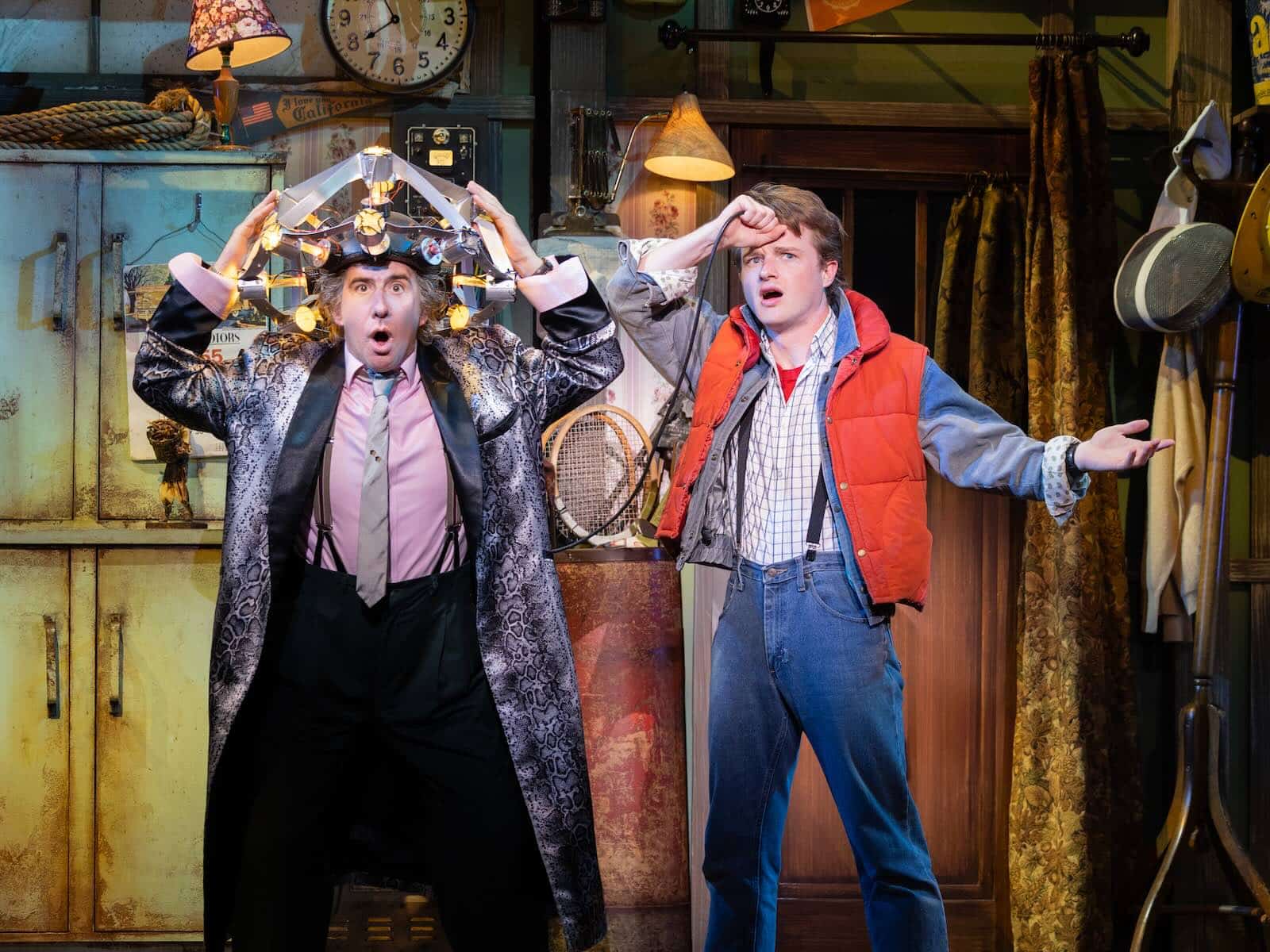
As Marty McFly, Lucas Hallauer delivers a performance that captures the character’s recognizable teenage bravado without tipping into caricature. He embodies that particular mix of confidence and confusion: normal teenage arrogance, layered with a level of exasperation that only adolescents seem capable of. Hallauer’s reactions to the increasingly absurd circumstances ground the show, giving audiences a relatable emotional anchor amid the swirling theatrical effects.
One of the true standouts of this production is Cartreze Tucker, who takes on the dual roles of Goldie Wilson and Marvin Berry. Tucker commands attention the instant he steps onstage, delivering vocals that are rich, dynamic, and effortlessly controlled. His performance of “Gotta Start Somewhere,” alongside the ensemble, becomes one of the evening’s highlights, a moment that expands the world of Hill Valley while showcasing both vocal power and infectious energy.
Tucker also makes a strong impression during “Earth Angel,” a song that already carries enormous cultural weight. Here, it becomes more than a nostalgic callback; it is rendered with warmth and musicality that ground the surrounding spectacle in something emotionally authentic. The audience feels the stakes in that gymnasium scene, not just because of the plot mechanics, but because the music is delivered with sincerity and finesse.
Technically speaking, this production is nothing short of extraordinary. The combined work of lighting designers Tim Lutkin and Hugh Vanstone, alongside video designer Finn Ross, creates a visual language that is constantly in motion. The lighting does not simply illuminate; it shapes time, space, and mood. Whether evoking the warm nostalgia of the 1950s or the electric tension of the time-travel sequences, the design operates as an active narrative partner.
Ross’ video work integrates seamlessly with the physical set, blurring the boundary between projection and scenery in ways that feel fluid rather than distracting. Scenes shift with cinematic speed, yet everything remains grounded in theatrical craft. This is augmented brilliantly by illusion designer Chris Fisher, whose contributions elevate the production from impressive to genuinely magical. The illusions are not gimmicks; they are storytelling tools that reinforce the wonder and danger of time travel while leaving audiences audibly gasping.
And then there is the DeLorean.
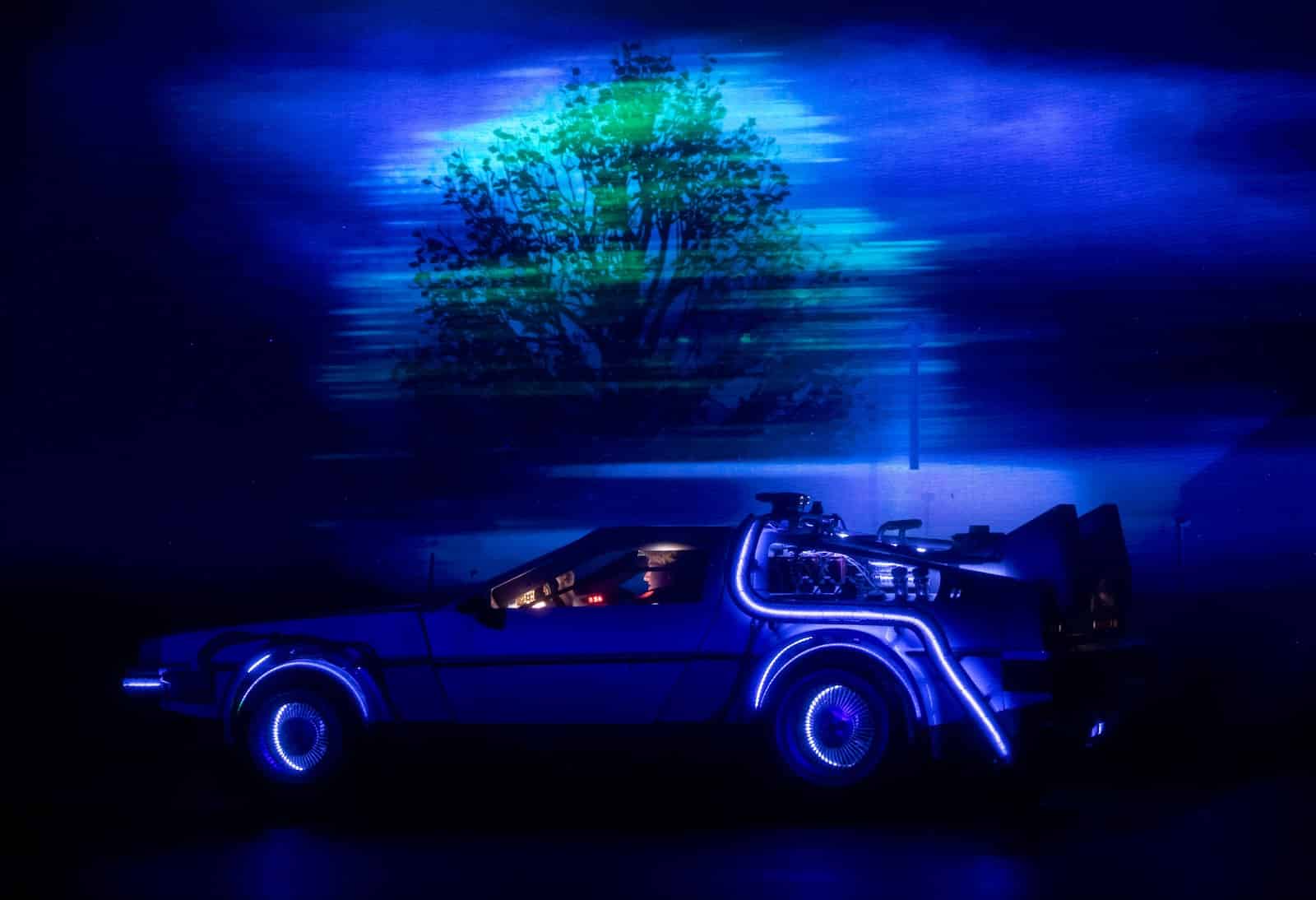
The production wisely treats the car not just as a prop but as a character in its own right. Every appearance is met with excitement, and by the time it participates in the climactic sequence, the illusion of motion, speed, and temporal displacement is astonishing. It is a masterclass in how stage engineering, lighting, projection, and choreography can collaborate to produce something that feels impossible within the confines of a theater.
What makes this musical work so well is its understanding that audiences come for two things: affection for a classic story and the promise of theatrical spectacle. It delivers both, but it also adds an undercurrent of optimism. Beneath the flashing lights and comic timing is a message about possibility, the idea that the future is not fixed, that change is messy but necessary, and that every journey has to begin somewhere.
By the final curtain, as the show circles back to its emotional core and reprises its themes with full-force theatricality, the audience is not just entertained, they are exhilarated. This is a production that embraces scale without losing clarity, technology without losing humanity, and nostalgia without relying on it as a crutch.
In short, Back to the Future: The Musical is a technical marvel wrapped in a crowd-pleasing package. It is funny, visually stunning, and musically satisfying, anchored by standout performances and some of the most inventive stagecraft currently on tour. When theater dares to be this ambitious and succeeds, it reminds us why we keep coming back.
Running Time: Two hours and 40 minutes with a 15-minute intermission.
Back to the Future: The Musical plays through March 01, 2026, at the Hippodrome Theatre’s France-Merrick Performing Arts Center, 12 N. Eutaw Street, Baltimore, MD. Purchase tickets ($50–$212) online or call 410.837.7400.
Complete cast and creative credits for the touring company are in the digital program here.