With its clever conversational dialogue, multi-dimensional characters, and just absolute relationship goals, Emma is by far my favorite Jane Austen novel. Emma merged comedy and romance in a way that hadn’t really been done before, helping create a new genre that is now the staple format of the rom-coms we know today. The story may be more than 200 years old, but its themes of female empowerment through love, courage, and self-growth are eternal and just as essential for future generations. St. Mark’s Players’ production of Emma from director Heather Cipu, co-producers Margaret Chapman and Courney Elkins, and writer Kate Hamill brings forth the underlined contemporary voice of the iconic feminist novel.
Emma Woodhouse (Ashley Holmes) is a privileged, precocious, and pretty girl with a sharp mind and a sharper tongue who has a penchant for knowledge and proclivity for matchmaking. She lives with her widowed father in a large manor estate in the fictional town of Highbury. Emma takes it upon herself to set up a love match for her new (lesser-privileged) friend Harriet Smith (Sophie Page). Her failed attempts as masterminding a successful situation result in multiple misunderstandings, mishaps, and other comedic consequences. All the while, romantic tensions build between Emma and her childhood friend, Mr. George Knightly (Chris D’Angelo).
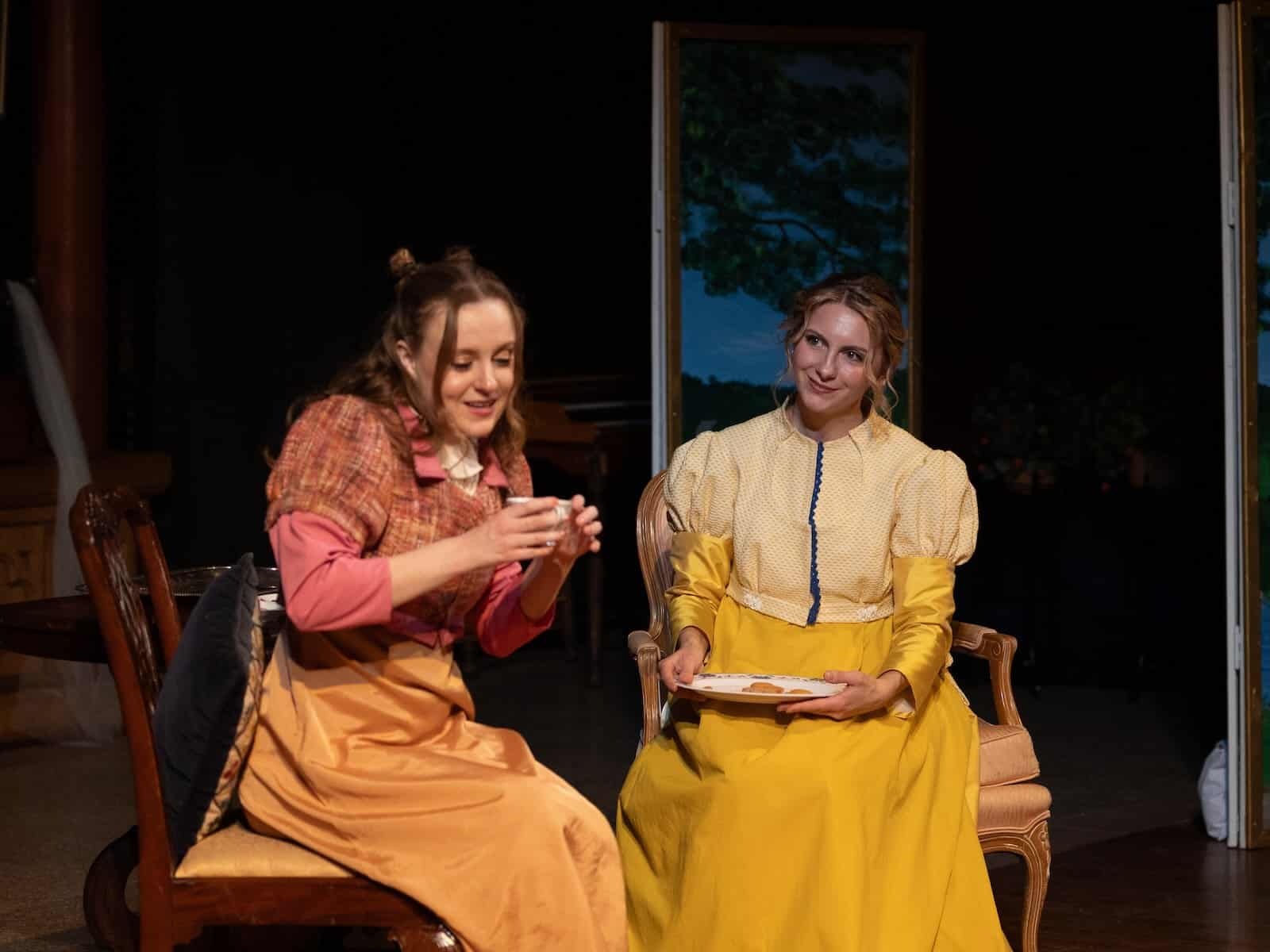
Holmes’ specific countenance paired with commendable comedic timing perfectly presented the witty, flighty, charming, yet self-absorbed side of Emma. Although, I did feel myself missing more of the elegance and confidence also associated with the character. Holmes’ chemistry with D’Angelo as Mr. Knightly, however, served as the absolute high points of the show. The romantic tension and playful bashing as banter was true rom-com magic. D’Angelo furthered this endearing trope and tasty tension even when performing in the background of scenes through his subtle yet palpable looks of jealousy and longing toward Emma.
The entire ensemble cast gave a fun performance, leaning heavily into the comedic side of the story, even incorporating a few new bits (not all of which landed, but which were all entertaining, nonetheless.) There were a few instances, though, where several actors stumbled over the lines, which, with it being opening night and considering the complex nature of the early 19th-century Georgian dialogue, is completely understandable. However, I wish they would have incorporated those little slips into the lines conversationally to keep us grounded in the story rather than quickly reciting the correct line following whatever little misstep, which only pulled us further out by reminding us that the words are merely memorized.
This missed opportunity felt especially counterintuitive to the tone of the play as they actually incorporated a narrative device that melded the story’s reality with the audience’s reality. Throughout the show, Holmes as Emma would interject scenes by addressing the audience directly as a sort of narrator, sharing her internal dialogue. Occasionally, D’Angelo as Mr. Knightly, would comment on her comments or even join her address — a charming metaphor for Emma’s feelings for Mr. Knightly. He’s the only person she’s ever trusted enough to allow in on her private thoughts and feelings.
This fun twist of breaking the fourth wall was only one way in which the production played with incorporating modern modes and elements to highlight the consistency of the story’s relevance for today’s generation. The style of blending period pieces with modern elements such as music and lingo has really spun off a new sort of core culture genre with the rapid rise in popularity of shows such as Netflix’s Bridgerton, AppleTV’s Buccaneers and Dickenson, and Hulu’s The Great.
In the vein of these shows, this production utilized modern music such as romantic soft pop songs, which would play during each scene transition. We also got a taste during a scene when Jane Fairfax (Camryn Powers) played an instrumental piano version of Pink’s risqué 2006 hit “U + Ur Hand.” This choice served as a fun nod to the characters’ emotional status with Jane angry and brokenhearted over Frank Churchill’s (James Stillwell) womanizing behavior. Powers as Jane gave a fun performance in that scene, shooting scorned-lover daggers in Churchill’s direction.
In addition to the music, the costumes from Rosemary Lane, aided by Ceci Albert and Abigail Soulen, also incorporated several fun modern pieces many of which felt indicative of the 1995 cult-classic film based on the story of Emma, Clueless. In the play’s opening scene, Harriet (Page) is the only character sporting contemporary items. Like everyone else, she wore a traditional dress, yet she was accessorized with pink chucks and a modern hairstyle (from hair and makeup designer Betsy Scarisbrick). In the next scene, she added a clear, plastic, mini-backpack with hot pink trim and a stuffed animal keychain.
As the play progressed, more characters began adding contemporary pieces such as monogrammed jean jackets, country-club–styled sweaters, aviators and other sunglasses, a porkpie hat, a Louis Vuitton purse, a sustainable water bottle, etc. The slow increase of modern clothing throughout the show mirrored the narrative increase in character development, thereby drawing attention to the emotional insights in Emma as equally relatable and important to human growth today as they were 200 years ago. The impact it had on women’s empowerment spanning generations was monumental and will continue to be as it’s repurposed for a contemporary audience.
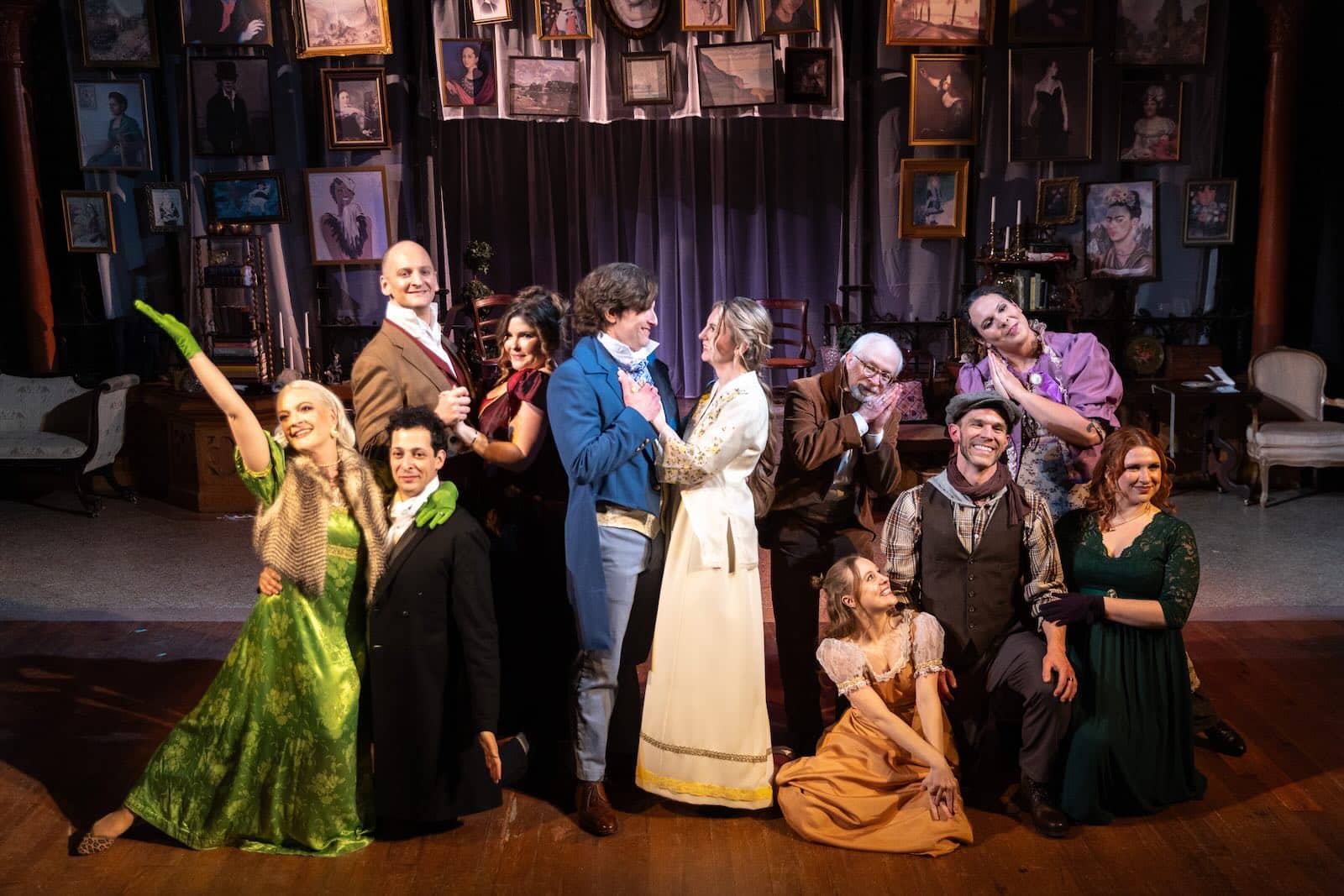
Jane Austen, Gertrude Stein, Josephine Baker, and Frida Kahlo were just a few of the iconic feminist faces that hung on the wall among a set of 30 paintings spanning multiple generations of women, arranged in the style of a 19th-century salon as the backdrop for this production of Emma. In 1815, when Jane Austen published Emma, women didn’t have access to the avenues that men did, and therefore turned to communal outlets like salons to amplify knowledge, feed ambition, and express themselves. It’s through these discussions and ingrained values that each generation can inspire and empower the next. St. Mark’s Players’ production of Emma has confidently and creatively joined the conversation to continue the work, to “create more Emmas.”
Running Time: Approximately two hours and 15 minutes, including a 15-minute intermission.
Emma plays through March 14, 2026, presented by St. Mark’s Players, performing at St. Mark’s Church, 301 A Street SE, Washington, DC. Tickets (starting at $22) are available online. Seating is first-come first-serve and actors are not mic’d, so early arrival is recommended.