‘

“I was so deep in my feels,” explains thirty-something Mak to her 12-year-old self in MaKayla Baker Paxton‘s semi-autobiographical two-hander When I Was, now playing at District Fringe. Mak’s feelingful recollection is a tender understatement of self-awareness in a play thoroughly immersed in emotional introspection.
The playwright’s theatrical portal back into her teenage angst in the early aughts — for herself and thus for us — is the music genre emo, a popular pairing of pop-punk rock and emotional vulnerability in extremis. The script refers knowingly to emo tracks and bands in abundance. Indeed, in the back-and-forth between Adult Mak (Paxton, playing herself) and Teen Mak (a standout Elizabeth Eby), there flies such a compendium of genre familiarity that one might close one’s eyes and imagine one is listening to an insider podcast for emo geeks.
We don’t actually hear much emo music (a show-themed playlist is provided), but in a script that’s mostly direct audience address, we hear a lot about it. The fringe-frugal set features a large poster for the influential band My Chemical Romance opposite a bedsheet on which are projected album covers as they are mentioned, which is (have I said this already?) very often. Projections also label the ten scenes TRACK ONE, TRACK TWO, et cetera, and an early scene is a very funny bit in which the two Maks quote lines from actual emo lyrics and lines written by Edgar Allen Poe (“the world’s first emo”) and ask the audience to guess “Who said it?”
Mix CDs were the playback tech of choice for Teen Mak (a stash of them is shelved centerstage), and much is made of how personally burned CDs factored into relationships with Mak’s girlfriends and mom and a painful breakup with a crush. Gradually, from the preponderance of fan-girl musical references, some surprisingly poignant storytelling emerges. At several points, for instance, Teen Mak sits in a spotlit beanbag chair and reads from her diary. (“Music is my boyfriend. I will no longer rely on men to satisfy my self-worth.”) We are never at a loss to know which feels young Mak is deep into.
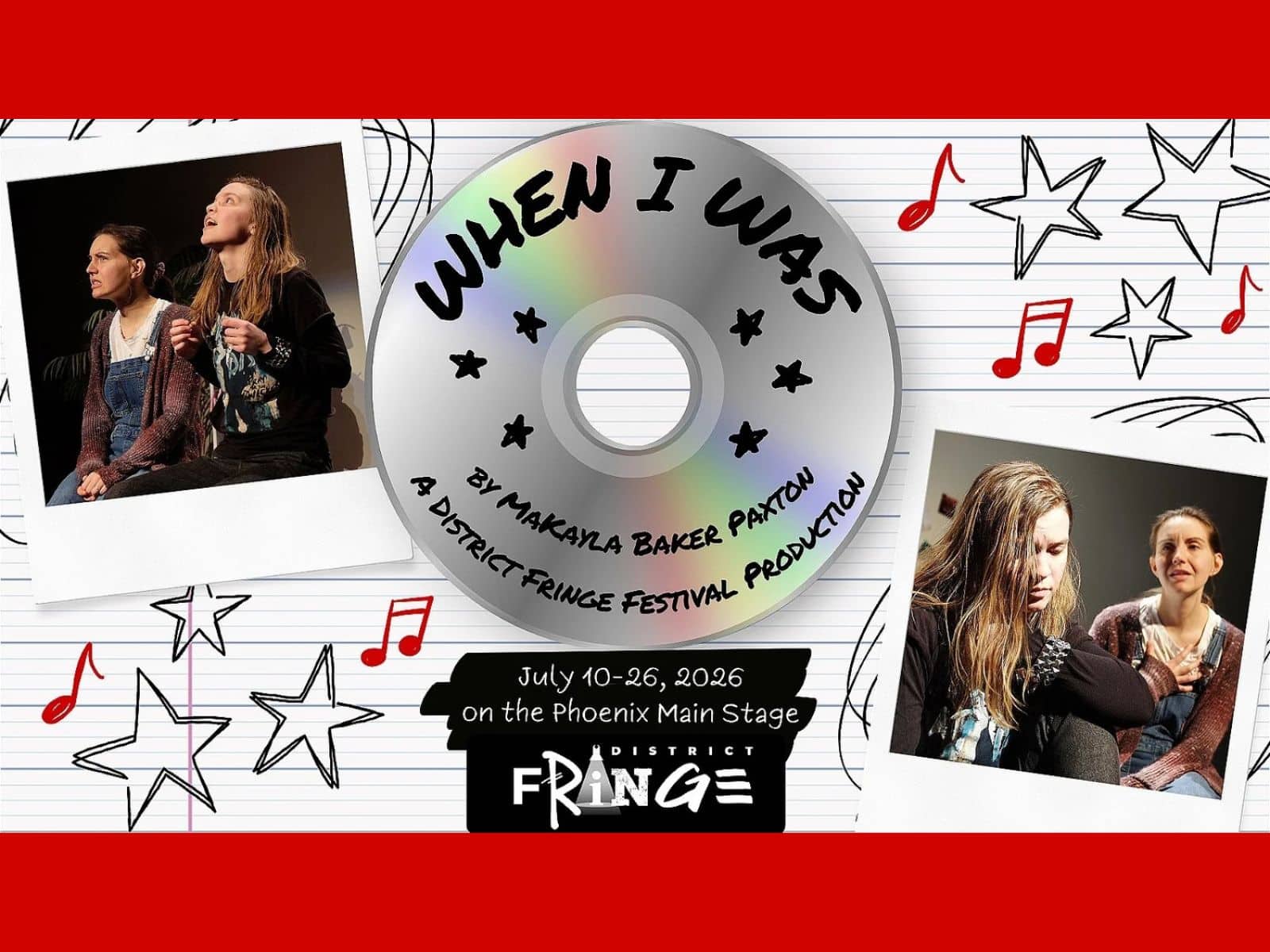
The rapport between Adult Mak Paxton (costumed by Heidi Jablonski in overalls and sneakers) and Teen Mak Eby (in jeans and Panic at the Disco T) is arresting and appealing. Eby, in particular, has an extraordinary gift for modulating from wired to charming to sly to intense, and director Rachel Herrick has taken great care to maintain the clarity and credibility of Paxton and Eby’s evolving connection.
When I Was is, in one sense, a heartfelt overview of adolescence. (“Teens follow trends,” says grown Mak. “It’s a fact. It’s part of their fundamental desire to fit in.”) At one point the play even cites “adolescent egocentrism,” an actual developmental diagnosis of teenage self-absorption, which could well be the Spark Notes explainer for much of the music-cued script.
But where playwright Paxton goes with that seemingly shallow theme is breathakingly deep. She discloses, among other things, a moving memory of a boy who died, her addiction to self-harm, and in perhaps the play’s most powerfully written passage, she revisits a choice she made as a teen to abandon a friendship:
ADULT MAK: We stopped being friends because she was raped. Katie said no multiple times, and I insisted that she talk to someone. But instead, she withdrew. You [to young Mak] never told anyone. You never became concerned about her withdrawal.
TEEN MAK: Oh…
ADULT MAK: I’m going to let you in on a secret that may shock you and half of the audience in this room, but I know the other half will not be surprised at all: every single woman has this story. Whether we were assaulted or we know someone who was assaulted, we know all too well what this is about. I feel like a broken record when I say this, but I wish I knew what I know now. You should have grabbed Katie’s hand, looked her in the face, and said:
IMAGINED TEEN MAK: I don’t care how we do it, but we will get through this together. I’m here. I’m always here. You are loved and you did nothing wrong.
Come for the play’s playful emo sets; stay for the deep cuts about a young woman’s real life.

When I Was
By MaKayla Baker Paxton
Running Time: 75 minutes
Dates and Times:
- Saturday, July 11, 5:00 PM
- Saturday, July 11, 8:15 PM (masks required)
- Friday, July 17, 9:30 PM
- Sunday, July 19, 4:30 PM
- Saturday, July 25, 9:30 PM
- Sunday, July 26, 3:45 PM
Venue: Phoenix – UDC Mainstage Venue
Tickets: $15
More Info and Tickets
Genre: Drama
Company based: Shenandoah Valley, Virginia
Show program: https://makaylambakerpaxton.my.canva.site/when-i-was
Directed by: Rachel Herrick
Playwright: MaKayla Baker Paxton
Performed by: MaKayla Baker Paxton, Elizabeth Eby
The complete 2026 District Fringe Festival lineup is online here.
The 2026 District Fringe Festival calendar is online here.