By Richard Tarbox
The Guy Who Didn’t Like Musicals is a sci-fi/horror/comedy musical from StarKid Productions (the creators of A Very Potter Musical) that spoofs the 1956 film The Invasion of the Body Snatchers, but instead of turning small-town Americans into communists, these aliens are out to create a hive of singing and dancing musical theater enthusiasts. It’s very likely that if you like the spirit of Bat Boy, Ride the Cyclone, Little Shop of Horrors, and The Rocky Horror Show, you’ll enjoy this one too.
This is my second time this summer as an audience member for The Guy Who Didn’t Like Musicals (read my review of Greenbelt Arts Center’s production here), and I’m starting to see a pattern: Incredible enthusiasm both onstage and in the audience, but frustratingly underdone execution. But I’m not yet The Guy Who Didn’t Like The Guy Who Didn’t Like Musicals.
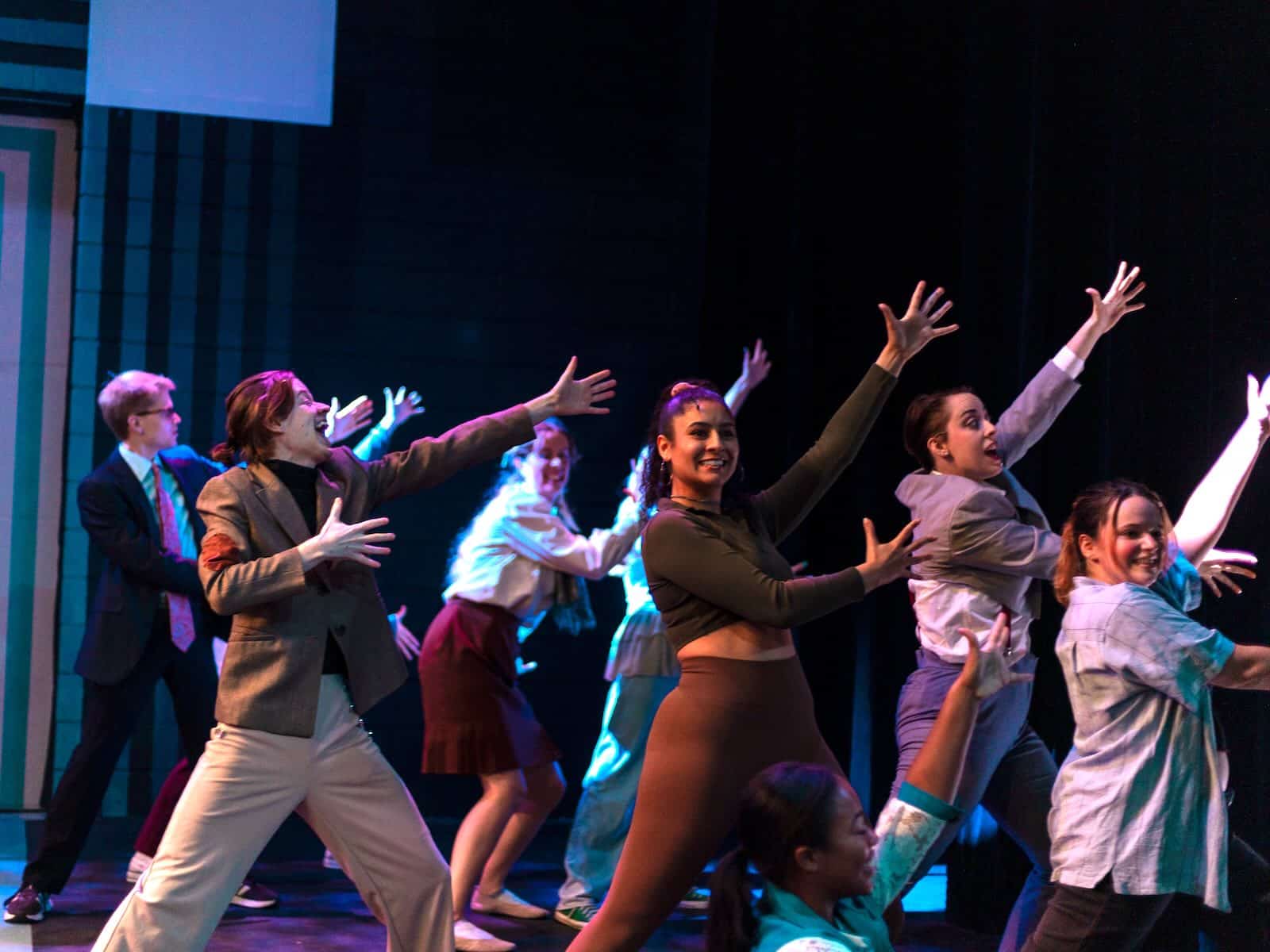
Wildwood Summer Theatre is a nonprofit, hands-on learning theater company composed entirely of volunteer performers, technicians, and staff ages 14 to 25. This is an incredibly exciting model for a community theater, and should absolutely be encouraged. Giving teens a place to grow and learn beyond their school theater program, and to engage with college-level peers and early-career artists, is a unique opportunity. This program seems like an excellent launch pad for those aspiring to become professional theatermakers.
As you’d expect with any learning-based organization, feedback is critical to growth, and there is opportunity for improvement.
Thankfully, this production employed a live band and microphones for the performers. Given the rock-forward nature of the music, this is essential. While overall mic and music levels were generally well balanced (with the exception of occasionally intrusive sound effects, courtesy of speakers being very close to the audience), diction, enunciation, and vocal volumes were often problematic. I could hear the actors most of the time just fine, but I could not always make out what they were saying. Enthusiasm would sometimes overtake clarity, with shouting sometimes substituting for proper vocal support.
The same goes for singing. Not the quality of the singing by the young performers (though some song keys could have been adjusted to better fit the vocal range of the singer), but the over-focus at times on intricate vocal runs — which they may have heard seasoned professionals pull off — at the expense of basic pitch, volume, and again, lyric clarity. I can imagine many of the cast watched the StarKid production and are trying to imitate what they saw and heard. There is a real opportunity for Wildwood Summer Theatre to prepare teens for professional auditions, and the place to start is with fundamentals of good clear vocal technique.
Over-enthusiasm is also at the root of some problematic acting choices. It’s a silly show and it should be fun, but the story is about how normal, boring characters get assimilated by aliens to become over-the-top chorus line members complete with jazz hands and drag steps. Many of the featured performers came out of the gate with quirky characters turned up to 11, leaving themselves nowhere to go and undercutting the inherent contrast the story calls for. I didn’t see enough of a difference in the worlds before and after the alien invasion.
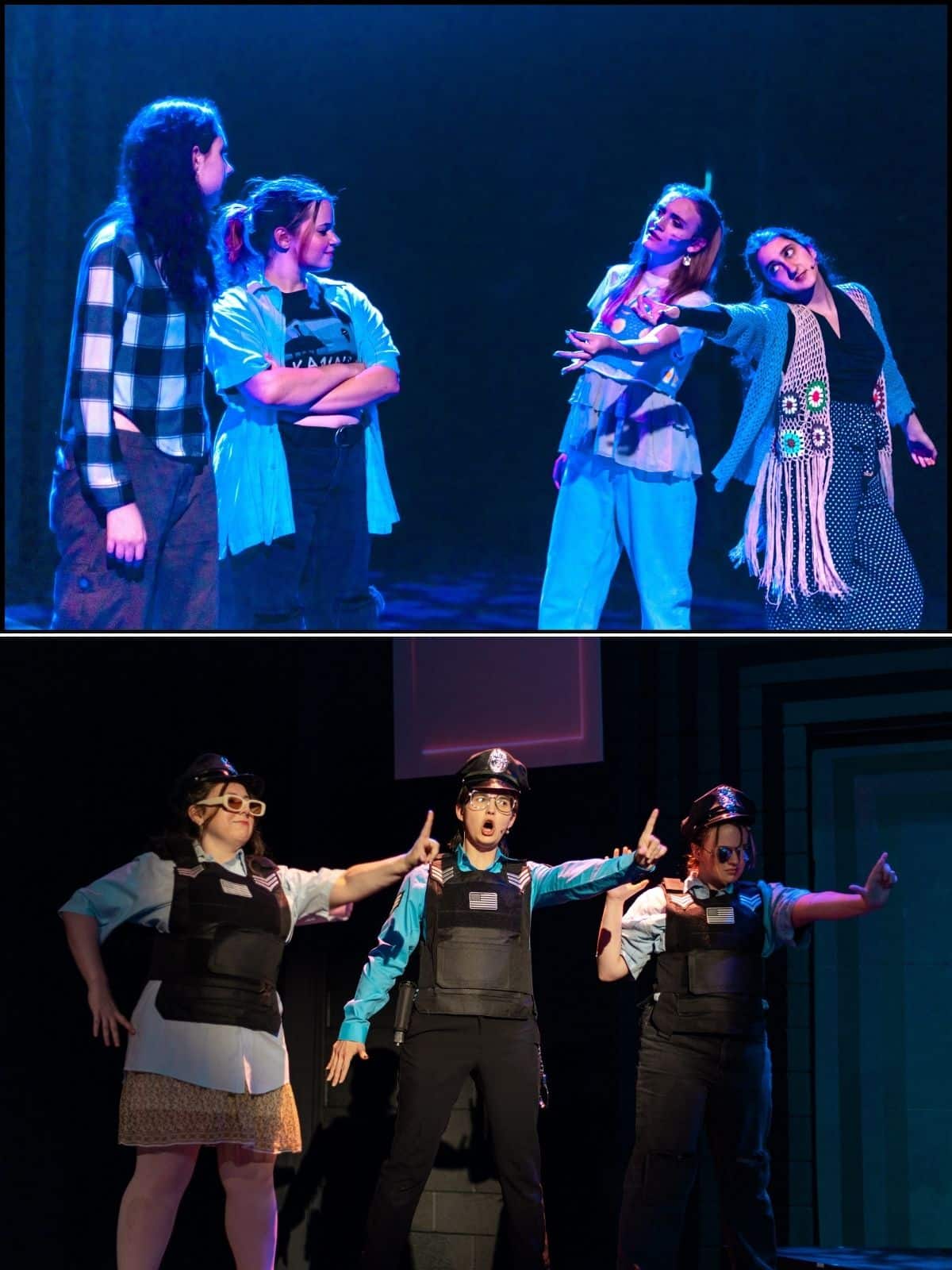
That said, many of the characters created by the actors were genuinely funny and engaging after the takeover. Noah Anthony Haren I plays Professor Hidgens in hilarious perpetual nervous twitchy motion with a cartoonish Freud accent right out of “Gee, Officer Krupke.” Will Leovy (understudy for the character Mr. Davidson) sings a sincere yet raunchy audience-participation twist on the “I want” song with “What Do You Want, Paul?” And Samarra Ferrigno delivers a menacing turn as an assimilated teen in “Not Your Seed.” Tudor Rico as Paul (the titular guy), Ainsley Wallace Harper as Emma, and Nora Rudmann as Charlotte were nicely grounded as bewildered citizens trying to survive the alien invasion.
Design choices overall were sparing but effective. Soph Meek’s set consisted of a multi-use upstage platform and stairs with a geometrically patterned backdrop and painted floor. Sean DiGiorgio’s multiple projection surfaces would often show glitchy video static, adding to the sense of societal breakdown. I wanted more from Jaya S. Basu’s costume design to help better visually define characters. Similarly, lights and sound design from Aaron S. Adams and Chris Yeung would have benefitted from bolder choices. The ideas are there, but more fully-realized execution would have helped create the world.
In both productions of The Guy Who Didn’t Like Musicals I saw, scene transitions were not overlong, but often executed in silence where you would usually expect a playoff version of the previous scene’s song or a vamp of a theme from another part of the show. I’m not sure if this is a shortcoming of the musical itself, but it would often slow the momentum gained by the frenzied pace of the storytelling. More than once, a choice was made to not hold for applause after a song button, but to immediately push on with dialogue, cutting off audience reactions.
But all this opportunity for improvement does not take away from Wildwood Summer Theatre’s production of The Guy Who Didn’t Like Musicals being a fun time watching young performers find their footing on stage. It’s an organization worthy of support as it helps its members hone their talent and focus their technique. Yet as before, I still recommend first watching StarKid’s production on YouTube so you’ll be familiar with the story and songs first.
Running Time: Two hours and 30 minutes, including one intermission.
The Guy Who Doesn’t Like Musicals plays through August 2, 2026, presented by Wildwood Summer Theater performing at the Cultural Arts Center Theatre 2, Montgomery College Takoma Park/Silver Spring Campus, 7995 Georgia Ave., Silver Spring, MD. Purchase tickets ($15–$25) online.
The Guy Who Didn’t Like Musicals
Music and Lyrics by Jeff Blim
Book by Nick & Matt Lang
Originally produced by StarKid Productions
CREATIVE TEAM
Director: Katie Quinn. Assistant Director: Keegan Perry. Producer: Olivia Cholewczynski. Production Managers: Alexander Weiss and Alice Hockstader. Stage Manager: Amelia du Bois. Music Director: Deacon Withers. Assistant Music Director: Ember Schiffries. Choreographer: Tina Akumbu. Intimacy Choreographer and Assistant Projection Designer: Alana Isaac. Fight Choreographer: Jae K. Gee. Dramaturg: Emma Burton. Scenic Designer: Soph Meek. Costume Designer: Jaya S. Basu. Lighting Designer: Aaron S. Adams. Assistant Lighting Designer and Assistant Stage Manager: Marissa Lyons. Head Electrician: Ryland Mac Simpson. Sound Designer: Chris Yeung. Head of Sound and Audio Engineer: Beks Ryan. Projection Designer: Sean DiGiorgio. Props Designer: Adam Hawley. Assistant Props Designer: Puck Elkins. Technical Director: Frankie Grimaldi. Orchestrators and Conductors: April Lopez and Daniel Wilson.
CAST
Aaron Partin, Aisley Wallace Harper, Alissa Suser, Charlotte Richessen, Jackson Elkins, Keri Anderson, Nick Yarnevich, Noah Anthony Haren I, Nora Rudmann, Ollie Clark, Samarra Ferrigno, Sophia Braier, Tudor Rico, Will Leovy, Andrea Adelantar, Carolina Tomasi, Eva Lyric Schwartz, Lulu Mote, Nina Gregory, Puck Elkins, Shelly Wiese.
Richard Tarbox values theater as a celebration of shared storytelling and artistic intentionality. He seeks to uplift and educate with his writing. He is also a theatermaker, perhaps one you know, but under a different name.