
I can’t remember when I first met Ernie the person, but I can remember my first experience of Ernie the playwright. I have written scripts since my college days in the ’70s, but in 2007, when I stepped into his Playwrights’ Forum, I realized what playwriting was. Ernie loved “the play.” He loved the process of creating the play: beat by beat, scene by scene, until the whole story reveals itself. Actors have Constantine Stanislavski’s Creating a Character (and many other methods). Playwrights have Ernest Joselovitz.
Ernie spent more than half a century writing plays, developing playwrights, and helping build Washington, DC, theater as a new-play community.
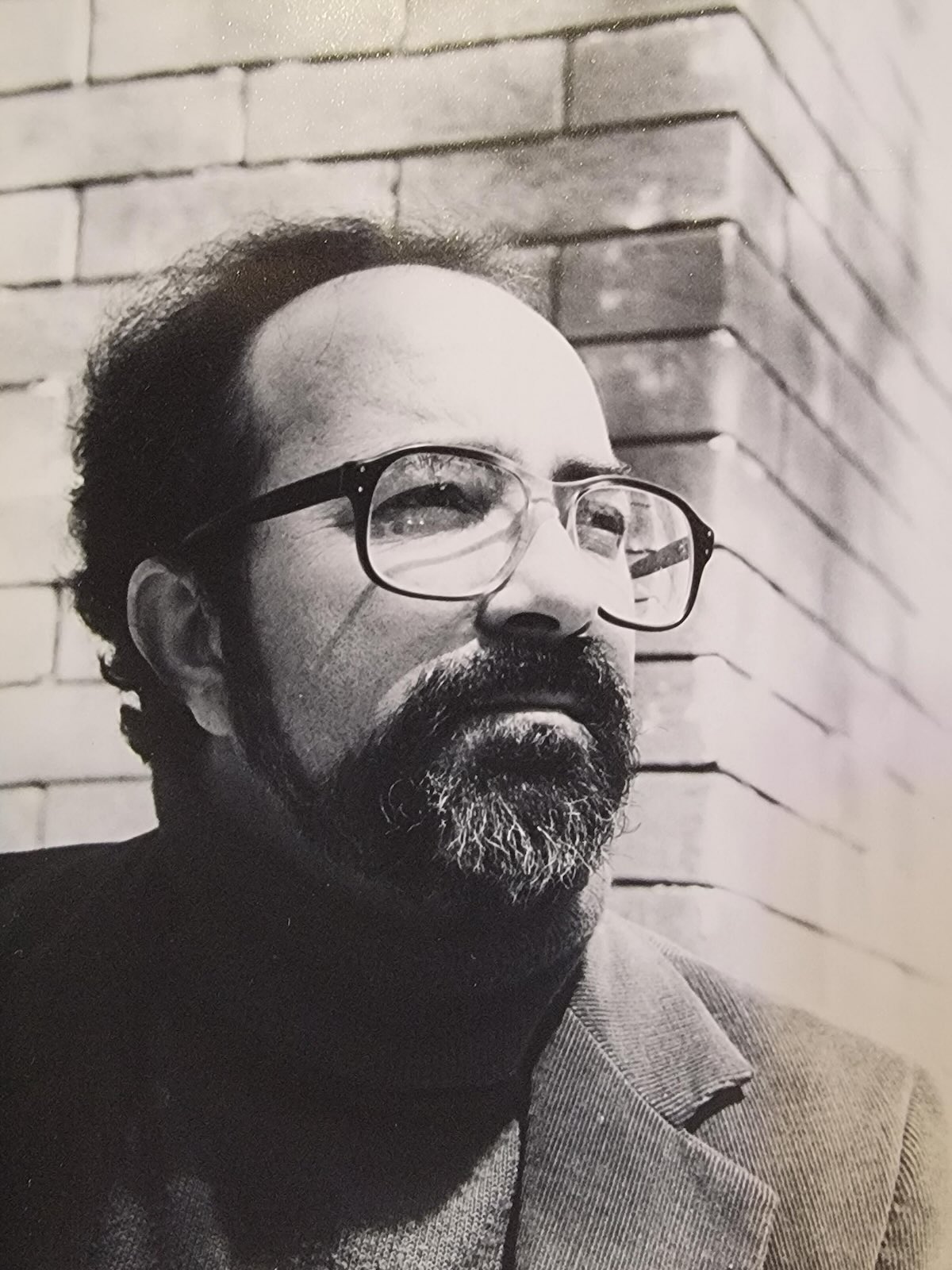
In 1977, his Hagar’s Children reached Joseph Papp‘s Public Theater in New York. It ran for 10 weeks. The New York Times praised the play as “abrasively astonishing.” Its set designer, Clarke Dunham, was nominated for a Drama Desk Award.
Ernie saw 69 of his plays produced Off-Broadway and throughout the United States. By his own account, these plays were either family plays, involving real people he knew, or social plays that explored ethical issues. These plays earned him numerous awards, including DC’s Source Theatre’s Literary Prize and two $50,000 awards from the Fund for New American Plays. Yet his contribution to American theater extended well beyond his own productions. Through the Playwrights’ Forum, he helped hundreds of aspiring writers discover their voices and bring their plays to the stage.
Ernie’s theatrical journey began at UCLA, where he enrolled in acting classes — initially, he confessed, to meet girls. Instead, he discovered something more important: a community of outsiders. In fact, during Elizabeth Bruce’s and my Creativists in Dialogue interview with him a couple of years ago, he said, “I was always an outlier. Always, my whole life, I was a loner.”
He confessed that he wasn’t much of an actor, director, or technician, but he loved the people who inhabited the theater. So, he found his place among them as a playwright.
Then, he met and married Elaine, the love of his life. Indeed, as he added in his interview with Creativists, “It was her kindness. It was her kindness.”
A workshop production of Hagar’s Children at San Francisco’s American Conservatory Theater and a successful production in Denver eventually led to an extraordinary accident of theatrical fortune.
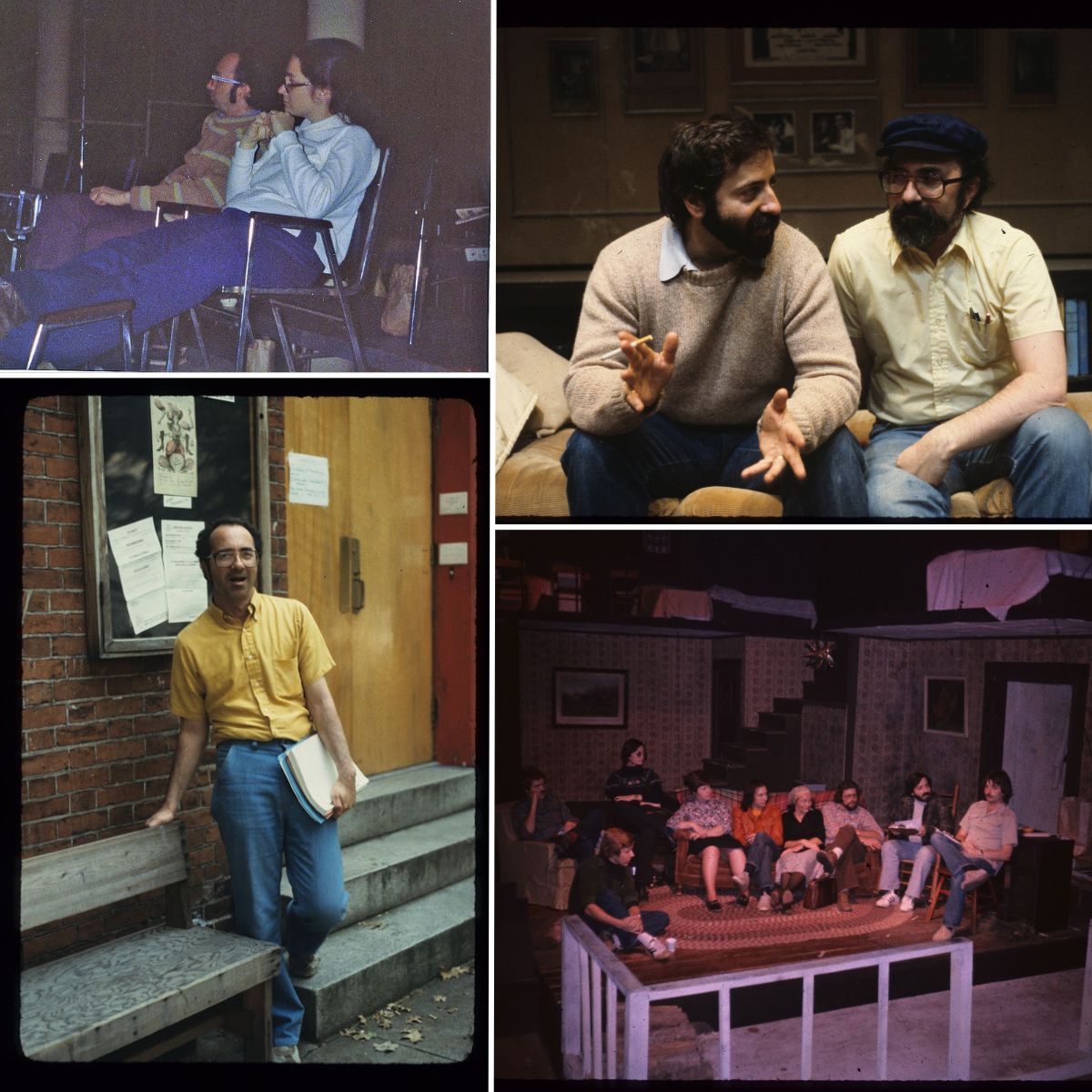
Harry Bagdasian, the artistic director of Washington, DC’s New Playwrights’ Theatre (1972–1988), discovered the manuscript of Hagar’s Children among scripts being discarded during a theater relocation. Mistaking its title for a biblical reference, he read it and immediately decided to produce it.
The Washington production was a hit. Director Bobby Small cast actual teenagers in the roles of abused children, creating a realism that astonished audiences. Bagdasian then persuaded Joseph Papp to see the production, and Papp immediately decided to bring it to New York.
For Ernie, however, success never diminished his fascination with ordinary human beings, and that fascination also defined his relationship with other playwrights.
After Hagar’s Children, Bagdasian secured Ernie a National Endowment for the Arts grant as playwright-in-residence at New Playwrights’ Theatre. For six years, Ernie worked alongside Bagdasian, literary manager Lloyd Rose, and others to develop original plays at an institution that helped pioneer Washington’s independent theater movement.
Eventually, Ernie began teaching a group of emerging playwrights called the Playwrights’ Unit. When Bagdasian departed New Playwrights’, Ernie transformed the Unit into an independent organization: with an initial membership of 13, the Playwrights’ Forum became one of the area’s most important incubators of new theatrical writing, serving hundreds of playwrights across a spectrum of stages of development.
That’s when I first met Ernie. Elizabeth Bruce, Jill Navarre, and I founded Sanctuary Theatre in 1984. We produced three to five shows a year, but we also hosted productions by other companies. We had the honor of hosting a couple of the Forum’s staged readings.
Ernie’s approach was practical, demanding, and deeply respectful. He did not offer playwriting classes. He did not speak of a play as good or bad. He did not focus on the play’s themes. He offered playwrights the opportunity to experience the play’s creation as a collaborative art form. Playwrights, like architects, create blueprints for stories. In the Forum, playwrights could witness their plays three-dimensionally. They could hear their characters speak; later, they could see those characters interact with each other; later, they could experience their stories unfold in real time. Through this development process, playwrights could examine the play’s structure, its characters, and conflicts. He could help playwrights identify a script’s structural weaknesses while encouraging each writer to develop at their own pace.
Ernie did more than arrange private and public readings of writers’ scripts. He secured opportunities for writers to observe professional rehearsals, and invited designers, directors, and established playwrights to explain their crafts. He organized annual conferences, beginning with 60 participants crowded into a private living room and eventually filling much larger venues.
He also published a monthly newsletter that reached hundreds of writers with news of productions, readings, and opportunities. Knowing that many couldn’t afford theater tickets, he persuaded local theaters to provide free house seats or pay-what-you-can admission.
His connections throughout Washington, DC, made these programs possible. He cultivated relationships with Source Theatre, the National Theatre, Catholic University, and numerous other institutions, enlisting their support for aspiring playwrights.
It would be impossible to mention all the playwrights influenced by Ernie’s mentorship. Karen Zacarías, who enrolled in an introductory playwriting class he taught at Georgetown, comes to mind as the most well-known. Her first one-act astonished him. He immediately invited her into the Forum — without charge. “You can write. You can write,” he told her.
Later, when Zacarías struggled with writer’s block, Ernie arranged a $500 grant and an opportunity to develop a children’s play at Imagination Stage. Although the first draft disappointed the theater, he urged its staff to trust her talent and encouraged revisions. Imagination Stage eventually produced nine of her plays.
But there have been many others, including Allyson Currin, Bari Biern, Marty DeSilva, and Patricia Connelly — to name but a few.
Ernie extended that same respect to young writers, including at Wilson High School (now named Jackson Reed) — where my daughter Maya Oliver remembers him — and Eastern High School. He worked with students at whatever level they had reached, encouraging them to create scenes and hear their words performed by actors.
Throughout these decades, DC theater has changed. Ernie witnessed the emergence of Woolly Mammoth, Studio Theatre, Source Theatre, and other pioneering companies. He welcomed the expansion of professional opportunities for actors and the increasing willingness of established theaters to develop new plays.
Near the end of our podcast interview, Ernie assessed his own achievements with characteristic modesty. Borrowing an analogy from baseball, which he dearly loved, he described himself as a Triple-A player who occasionally reached the major leagues.
But he had no regrets. “I did what I wanted,” he said. “I did the Forum. I ran [the Forum] the way I wanted to run the Forum. Playwriting, I wrote what I wanted to write.” And then he returned to the community that had embraced him.
“I never had much of a family,” he reflected, but — speaking of his fellow theater artists — “this was like a family for me.”
And that was Ernie’s relationship to theater, particularly to its playwriting core: family. A young outsider found a home among UCLA’s actors. He discovered a passion — playwrighting. He married Elaine, who shared his passion for 56 years, spending a lifetime creating plays and, in the process, that same sense of belonging for others.
Perhaps that is Ernie Joselovitz’s most enduring legacy: not simply the plays he wrote, but the community of playwrights and plays he helped bring into being.
For more information about Ernest (Ernie) Joselovitz, listen to the two-part Creativists in Dialogue interview with him: Part 1 and Part 2.
Or watch the Clay Teunis video:
Or “ERNIE JOSELOVITZ, OUT OF HIS HEAD” — The Washington Post
If you are interested in interviews with other DC Theater artists, click here.

About the Wendi Winters Memorial Series: DC Theater Arts has partnered with the Wendi Winters Memorial Foundation to honor the life and work of Wendi Winters, a DC Theater Arts writer who died in the Capital Gazette shooting in Annapolis, Maryland, on June 28, 2018.
To honor Wendi’s legacy, the Foundation has funded the Wendi Winters Memorial Series — articles produced by DC Theater Arts that make an identifiable contribution to local theater journalism, uplift the local LGBTQIA+ community, or highlight theater companies and practitioners in our region who engage in exemplary work that makes our community a better place.