I think it was Ron Charles’ newsletter that finally broke me. The head of the Washington Post’s books department has long been a literary hero to me, someone who had already made a career out of words back when I was figuring out how to do the same. For two days, I’d been curled up in the fetal position on my couch, doom-scrolling through story after dismal story, when his newsletter popped up on my feed. “Goodbye and thanks,” it read.
Goodbye.
How many adjectives do we need to describe how terrible, horrible, no-good, and very bad this week has been for anyone in the Washington, DC, region who values the arts, democracy, and freedom of expression? The Washington Post laying off a third of its staff just days after Trump announced he would close the Kennedy Center for two years of “renovations” feels bigger than anything we’ve contended with before. It’s a double blow of once-in-a-lifetime events that would each have been unfathomable just a year ago. It’s depressing, it’s disheartening; it’s hard to see where we go from here.
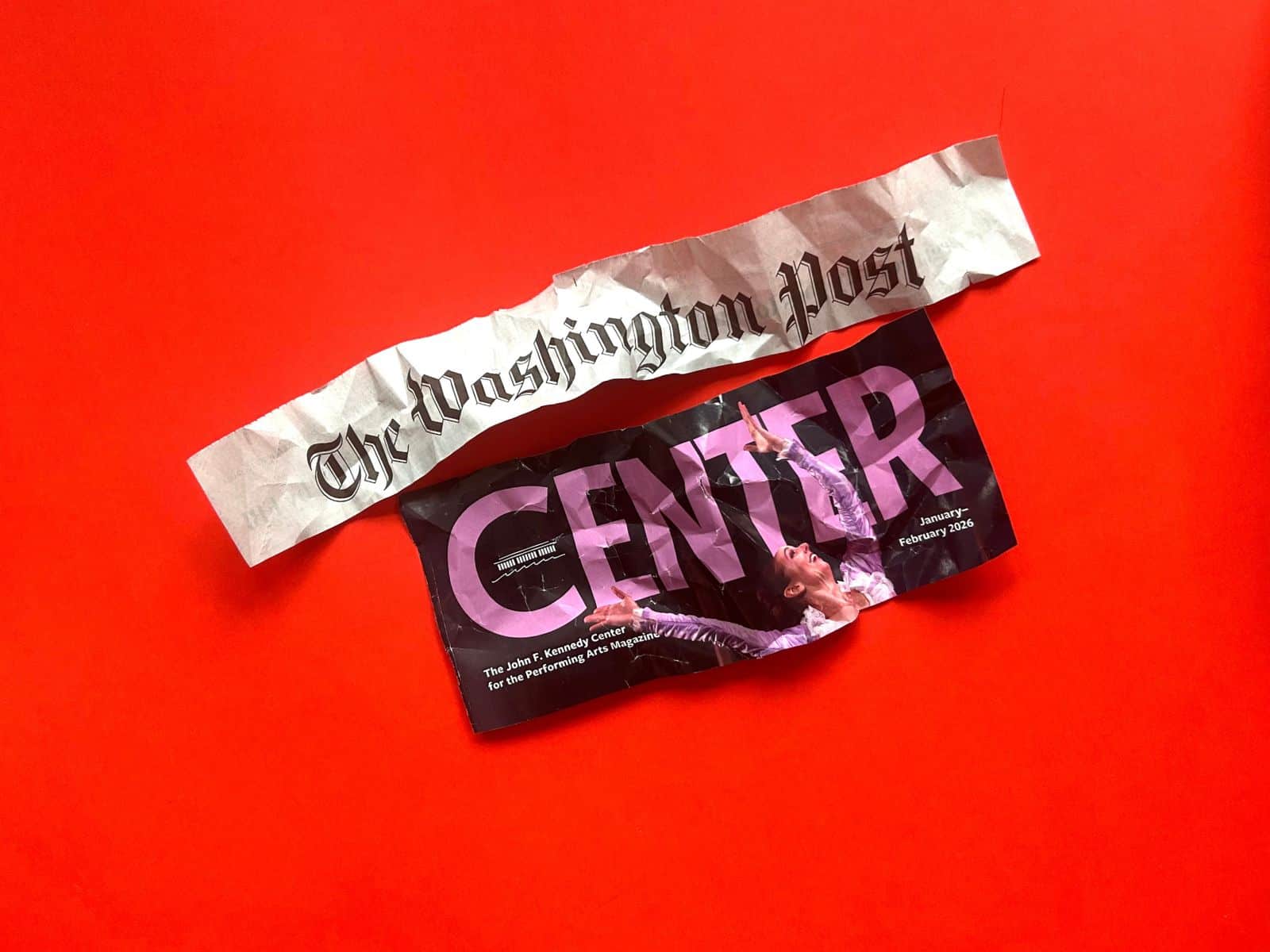
My social media feeds are full of talented, creative professionals reflecting on the myriad ways these two institutions shaped them, enabled their careers, and gave meaning to their lives. In 2024, the Kennedy Center employed nearly 3,000 people, with jobs ranging from administrative and custodial to artistic and educational. Many of those people have already lost their jobs. Thousands more stand to be displaced if the center closes entirely. And DC-area residents would lose a primary cultural hub, a right of passage of DC living where parents could give children their first glimpse at world-class culture, and retirees could stave off isolation by working as volunteer ushers. Heck, there is even a volunteer beekeeper. What’s going to happen to the Kennedy Center bees?
Meanwhile, over at the Washington Post, 300 journalists lost their jobs and livelihoods overnight, jobs in an already shrinking industry that are unlikely to be replaced. The newspaper that brought down Nixon has intentionally diminished its capacity to cover national politics. Entire departments ceased to exist overnight, including books and sports. The dismissal of the paper’s only remaining staff theater critic, Naveen Kumar, was such a footnote in the carnage that it didn’t even make most news stories about the layoffs. And the Post’s freelance theater critics are as much in the dark as the rest of us about what future theater coverage will look like because the two editors who made their assignments were both axed.
To imagine a future in which these institutions are not part of our day-to-day lives, as residents of the Washington region, is almost incomprehensible. And yet here we are.
We are losing access to culture and information, and watching two beloved local institutions, ones that many of us feel are part of our very identity, collapse before our eyes. We are watching friends and colleagues lose their jobs and livelihoods: people who have spent decades mastering their craft, developing rare expertise that enriches society, only to be told that what they do is no longer valued by the world at large. Where do we go from here? How do you say goodbye to all of that?
My go-to move has always been optimism, but I’m having a hard time finding anything to latch that optimism onto this week as the ideological hurricane blowing through America touches down so close to home. Not to sound apocalyptic, but it feels as though we are teetering on the edge of an insurmountable death blow to all we hold dear. It’s a David-and-Goliath moment, but I, for one, am having a hard time figuring out how we bring down Goliath.
I’m not saying we give up. Tomorrow I’m going to get up and start trying again. I’m going to try to be a leader, a mother, an organizer of good. I’m going to remind you all — and myself — that the DC region will still be home to some of America’s best cultural institutions. But today, I just want to say to everyone: It’s OK to be sad. Let’s all just take a moment to be sad. Then we start the work again.