When Shear Madness closes this Sunday, June 7, after a historic 39-year run, to some, it will be just another casualty of the Trump administration’s misguided appropriation of the Kennedy Center. To the hundreds of artists who have worked on the show, however, the loss is personal.
When I decided to write about Shear Madness and its impact on local artists, I posted a single message on Facebook asking who wanted to talk about it. One hour later, I had over 30 DMs in my inbox. Most from strangers. All from current and former cast members with nothing but good things to say about how this show impacted their lives and careers.
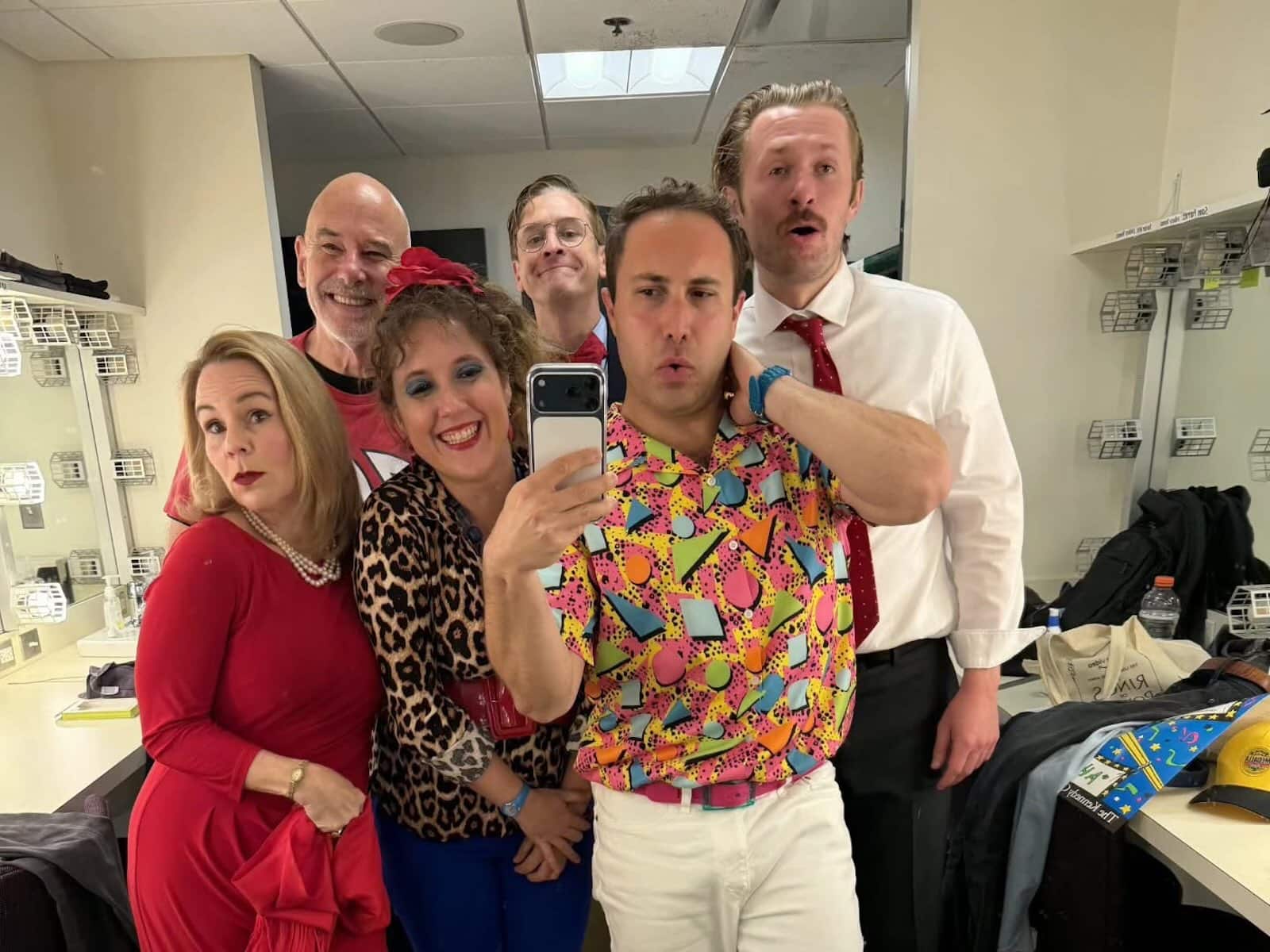
Sure, critics love to hate on Shear Madness, the slapstick murder mystery set in a hair salon where the actors are all suspects and the audience votes on each performance to determine who the killer is. In a 1987 City Paper review, critic Bob Mondello called it “less entertaining than Cats.” Critic Peter Marks told City Paper that “Washington should hang its head in shame” for programming Shear Madness at “the supposed premiere arts institution in the country.” And DC residents have long thought of the show as lowbrow tourist schlock, better suited to the buses of tourists who keep the show running than to savvy District theatergoers.
But for the artists who performed in Shear Madness, I heard over and over again that it was a blessing and a gift. Being part of a long-running, for-profit show at a major arts institution gave actors financial stability that is nearly unheard of in regional theater work. Providing health care to stable pay, a place to call a professional home, and comedy and improv training, Shear Madness changed the lives of the 251 actors who trod its boards over the years.
Shear Madness: A 50-Year Odyssey
But first, some background: Shear Madness opened at the Kennedy Center on August 12, 1987. The show’s low operating costs, appeal to tourist groups, and script regularly incorporating current events quickly made it a reliable source of revenue at the Kennedy Center, a secure way to pack audiences into the small upper-floor Theatre Lab, and a means to subsidize riskier creative projects.
The show is the brainchild of Bruce Jordan, who conceived the play after encountering its German-language original — then a serious murder mystery called Scherenschnitt by Swiss playwright Paul Pörtner — in 1973.
“I thought that if the play allowed the laughter to spill into more scenes, the experience would be more fun for the audience,” Jordan recalled in a recent Zoom interview. Also, there were parts for Jordan and his friend Marilyn Abrams, both young actors in search of work. So they turned Scherenschnitt into a comedy, and mounted it for a three-week run at the Lake George Dinner Theatre in upstate New York. That’s all they had in mind.
“But then,” Abrams shares, “tourists from Boston came and loved it and told us we should do the show there.” On a day off, the pair traveled to Boston, where they found a 200-seat venue that was a good fit for the intimate audience-interactive show. Shear Madness opened in Boston in 1980 and ran until COVID shut it down in 2020, making it America’s longest-running non-musical play.
In the intervening years, Jordan and Abrams opened productions of Shear Madness in dozens of cities across the U.S. and around the world (there are currently nine productions running in China alone). Each production is unique in that it is set in the city where it is performed, and local jokes are incorporated into the script. It has been translated into 23 languages and seen by an estimated 14.5 million people. Jordan and Abrams initially acted in almost every production of the show, but these days, 50 years into their business partnership, they are primarily producers. Jordan attributes the show’s success to its unique blend of mystery, comedy, and improv: “Mystery and comedy are the two most popular forms of entertainment, so trying to meld them just made sense,” he says. “And having the show set in the city where it is playing gives the cast the opportunity for many local laughs.”
And, of course, there’s the Kennedy Center. “We had wanted to open in DC for years,” Abrams recalls. She visited the Kennedy Center’s Theater Lab (then just a black box with bleacher-style seating) and thought the space would be perfect. “It took a year of asking [founding Kennedy Center chairman] Roger Stevens to come see our show. When he finally came, he left at intermission. We were brokenhearted. Then we got a call the next day, and he said, ‘You can’t rent the theater. We are going to be equal partners.’”
When the Kennedy Center production closes on June 7, after 14,737 performances, it will have played for 39 years, just short of the historic Boston run but wildly beyond the biggest dreams of its creators and producers. “We are the show’s mama and papa,” Jordan smiles. “It’s our baby. We watch over it every day.”
A Rare Chance at Stability in an Unstable Career
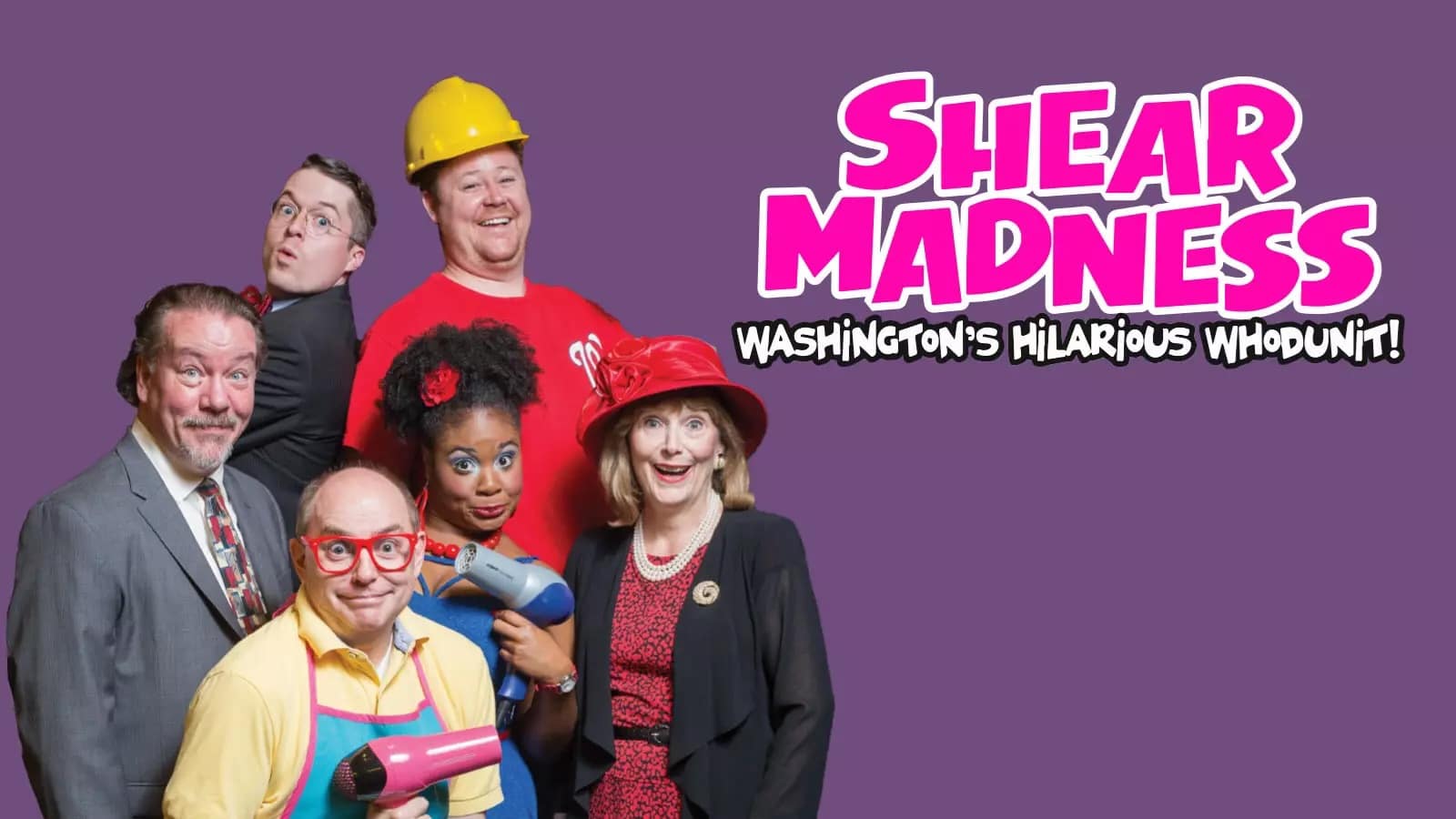
Over the course of those 39 years, over 250 actors have performed in the six-character cast. Some join for a single season; others have found the job security and benefits so tempting that they’ve built an entire career around it.
Patrick Noonan is one such actor. Noonan has been playing Nick, the lead cop investigating the murder at the hair salon, on and off since 1998. He estimates that he has performed in Shear Madness over 4,000 times: at the Kennedy Center, through its entire Off-Broadway run, and in cities including Milwaukee, Seattle, and San Francisco. He will appear in the final performance on Sunday, June 7, and that won’t be the end of his tenure. He is already set to play Nick in a New Hampshire production in August.
“Shear Madness has been a real blessing for me,” Noonan says. “For any actor, to have employment that I can go back to whenever I want, it really helps. When I have downtime, I can call and ask to be in it and know that I’ll have insurance for the year.”
Financial stability was the primary way artists said Shear Madness aided their careers. In regional theater, a field where most jobs only last for the duration of rehearsals and a three- or four-week run, being cast in an ongoing show was life-changing.
Rex Daughtry, the Artistic Director of Theatre at DC-based Solas Nua, played Mikey Thomas for a year in 2014 and returned to the show many times thereafter. “I first booked this show when my wife was student teaching (unpaid). It was the only gig in town where we could afford to live on a single actor’s salary!”
For actor Tyler Herman, who played Mikey in 2023, the opportunity came along at just the right time. “After almost a five-year drought of acting opportunities, and my wife expecting our first child, I had almost given up on acting. Doing Shear not only revitalized my love of theater but also rekindled my confidence in myself as an actor. Chris Stinson, who worked on the show in 2016, shares that “Shear came into my life when I was at a real crossroads career-wise. It allowed me to join Equity and begin to sustain myself as an actor.”
Some actors are even more blunt: “Shear Madness got me my house,” Jordan recalls one local actor telling him years ago.
But financial stability is not the only benefit actors got out of Shear Madness. For many, the show felt like a rite of passage, moving them into the big leagues and instilling in them the confidence to believe in themselves as actors.
Tonya Beckman, the 2019 Helen Hayes Award winner for outstanding leading actress in a play, played Barbara in 2005 and again in 2011. “It was my first job here in DC,” Beckman recalls. “I credit it for giving me the confidence boost I needed to build a career and life here.”
Jared Mason Murray, who played three of the show’s four male roles at the Kennedy Center from 2013 to 2017, moved to DC to do theater after graduating from Virginia Tech. “From 2010 to 2012, I worked at every theater in the region. It was mostly non-Equity stuff, so you’re not making much money, but it’s fulfilling. Once I got Shear, with the way it paid, with benefits, and equity, I did it for five years, and it led me to try acting in New York.
The Bob Lohrmann Effect
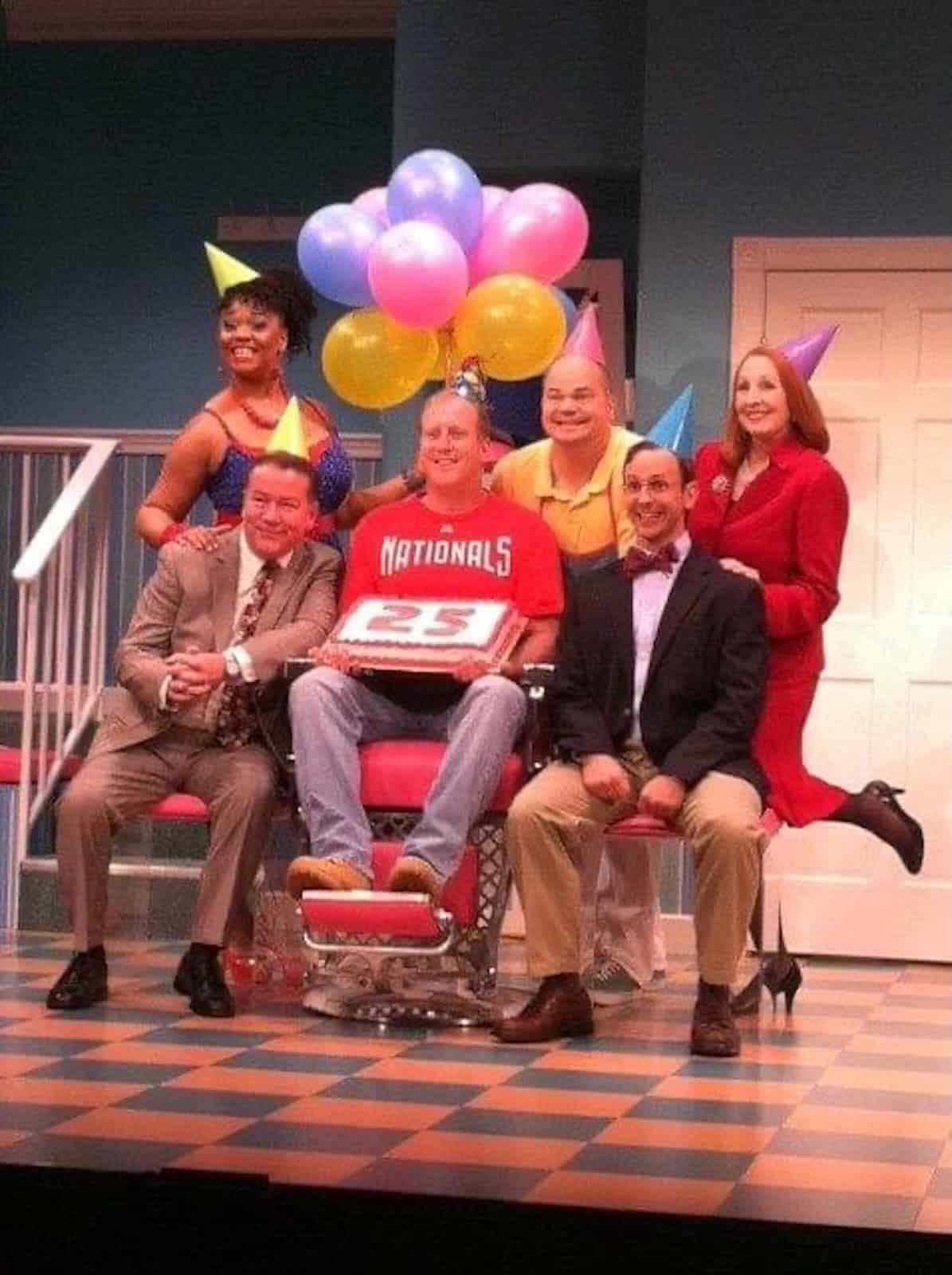
That confidence is instilled in no small part by resident director and casting director Bob Lohrmann. Lohrmann first joined Shear Madness in 1983 as a member of the Philadelphia cast. The opportunity came and went, and Lohrmann returned to his work at Philadelphia’s People’s Light Theatre, where he was a founding member. But in the late 1980s, he found himself in need of a job, so he called Jordan, who sent him to DC, where he cycled through most of the parts “until I aged out of them,” eventually becoming the production’s resident director, casting director, and Bruce Jordan’s right hand.
Person after person whom I spoke to this week credited Lohrmann with changing their careers for the better: instilling discipline, modeling comedic chops, and giving them a break when they needed it most.
“Bobby Lohrmann has been a tremendous steward of the show,” says Brad Letson, who played Tony Whitcob in over 1,500 performances over a 17-year span. “He understands what makes Shear Madness work while also recognizing the importance of keeping it alive and relevant for new generations of performers and audiences.”
Murray also credits Lohrmann’s leadership as being instrumental to the show’s longevity. “The show wouldn’t have gone on this long without him. He is both fun-loving and caring, but his bar is high, and he is going to hold the show to a certain standard of quality.” Murray shared. “When I first got cast, he directed me, and then he played Eddie, so you are on stage with the guy who just directed you. It can be intimidating, but it brings out the best performance you can give.”
“Bob knows this show better than you know the ABCs,” Herman added. “In my first rehearsal, no one else was available, so he played every single part simultaneously, did every single line of dialogue, with just me, for an entire run. And he WAS REALLY GOOD.’
Emily Gilson, who played Barbara di Marco this spring, concurs. “Bobby conducts the auditions. He will also get up and rehearse with you, and he was in the show with me. He will be directing and acting, and the code switching is just fascinating to watch.”
Lohrmann demurs when asked if he changed anyone’s professional life. “I wouldn’t take credit for launching or relaunching anyone’s career, but I definitely teach aspects of comedy that they can take away and use in other shows,” he says.
Even though Shear Madness is often dismissed as light and frivolous theater, the actors involved point out that doing comedy, and making it look effortless, is no laughing matter.
“The show gets a lot of flak for being low-brow,” Gilson says, “but as an actor, this is the hardest thing I’ve ever done. The timing is so precise. Bobby had to stop a few times and say to me, ‘Emily, if you want to be a star, you need to let us see you. Stop hiding.’ As an actor, stepping into an existing show like this, the learning curve is fast. I don’t know what else in town is this much of a training ground for baby actors.”
Noonan points to the benefits of working long-term on a show with so much improvised comedy. “The more you act, the better you’re going to get and the more arrows you will have in your quiver. As a comedic actor, you need to learn the sense of comedy. There was a point five years into my Shear Madness tenure when I thought, ‘I’ve already done this, I don’t need to do it anymore.’ But as I was invited back, I realized how much I was learning and growing. What I learned the most is how to create the illusion of a first time. When I walk onto the stage, it’s still the first time my character is walking into this shop.”
Shear’s actors take these skills with them as they move on to other jobs. Torin Lusorio played Tony between 2018 and 2024 and is now the Education Director at Maine’s Portland Stage. “Working on Shear Madness really inspired my approach as an educator,” Lusorio shared. Because of the interactive nature of the show, Lusorio thinks of the audience as an additional cast member “who hasn’t read the script, which means you have to be flexible and go with what they give you, while guiding them back toward scripted bits and punchlines. That skill has been transferable to working with kids. I have to go with the flow of what they bring up, while also trying to fit it into the lesson plan, or ‘script,’ that I’ve prepared.”
The Salon Where Improv Builds Family
Because Shear Madness’ script is continually updated, sometimes with a reference to something that appeared in the news that very day, each actor plays a part in keeping the show fresh. “The greenroom becomes like a writer’s room before each performance,” Lohrmann says. “We sit around and throw out ideas, most of which are terrible. Then we land on one and figure out the best way to deliver it and who’s going to take it on.”
“One of my favorite memories was watching first-time audience members realize that they could participate and actually influence the outcome of the show,” recalls Letson. “That sense of shared ownership and joy is something I haven’t experienced anywhere else.”
“My favorite part of doing Shear Madness was that I got to rewrite jokes,” Lusurio adds. “My biggest joke edit was during my first year, where I swapped out the Carol Channing Hello, Dolly! joke for one about the live-action Beauty and the Beast. It ended with me singing ‘Be Our Guest’ and then saying, ‘I’d be his guest anytime!’ It really modernized a dated reference while still keeping the same energy and enthusiasm. But that joke didn’t really land when I returned to the cast the following year. The movie was old news at that point.”
“A stale joke is like having a rotten blueberry in the container,” Lohrmann says. “It makes all the others feel less fresh.”
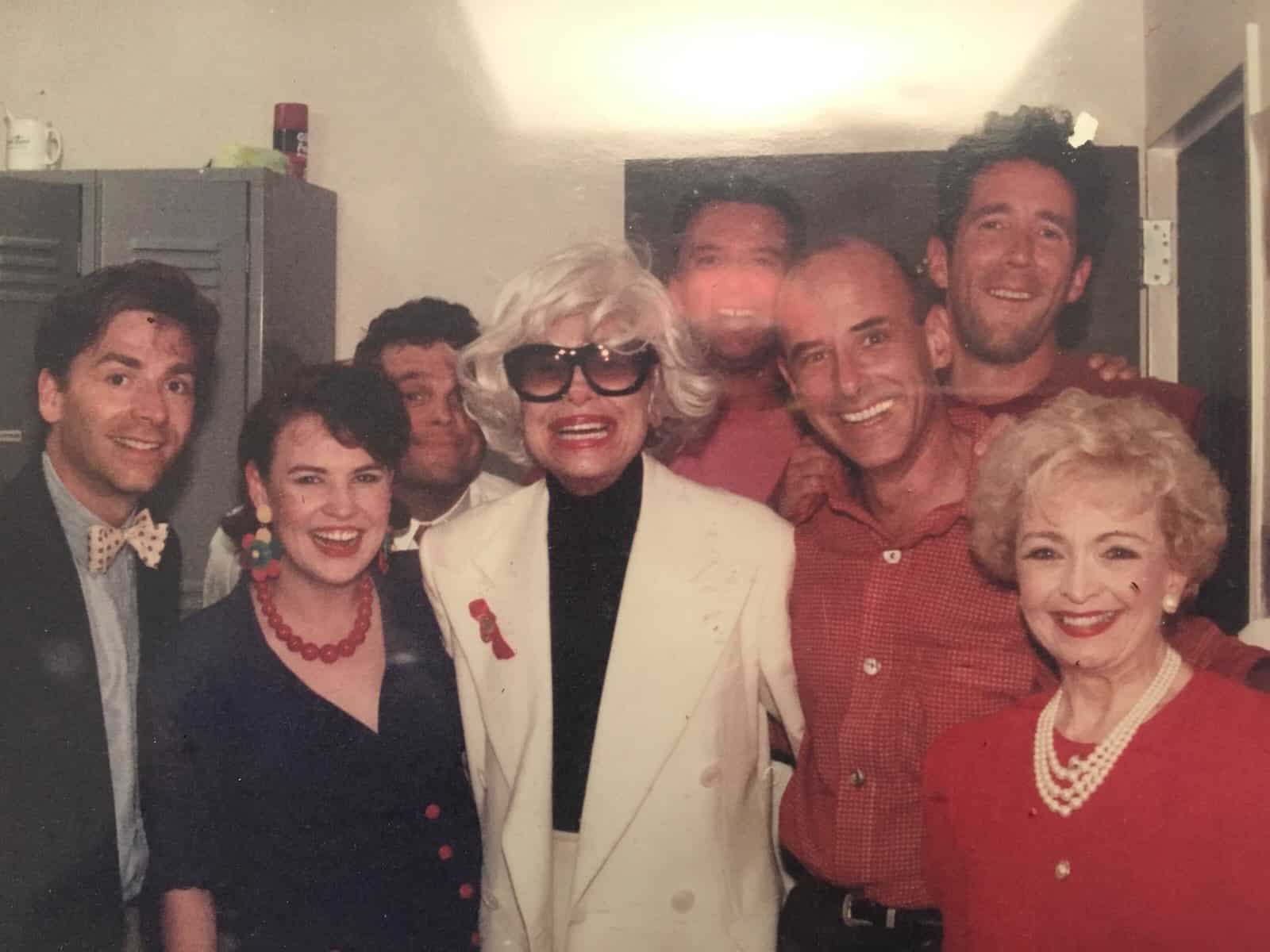
Because the DC run of Shear Madness was ongoing, performers developed deep connections to others involved with the show. “I still remember the incredible range of people who came through the cast over the years,” recalls Letson. “There was a special bond among those of us who performed it. I met my husband because of my time in DC, built a family here, and was able to pay off a significant amount of debt while working on the show. When I look back at the major milestones of my adult life, many of them can be traced directly to the opportunities that Shear Madness provided. In a very real sense, the show changed the entire trajectory of my life.”
Murray agrees. “Sure, the equity card, stable pay, and health insurance were great, but more than that, it was the Shear Madness people, especially those who do it for a long stretch. When you spend time with those people, you truly become a little family. Other shows you rehearse for three weeks, perform for four, and then go on your way. These people are in your life for years. I still love and miss them. My wife has to listen to all my stories about it.”
Murray was one of several artists who asked for Scott Hammer, the show’s former stage manager for over 20 years, to be acknowledged in this article. Hammer passed away in 2018.
“We all miss Scott,” Murray says. “He was so caring and nurturing. In the greenroom, he had Oreos once, and I made an offhand comment about liking vanilla Oreos. Never were we out of them again for the rest of my years. It was so small and mundane, but that’s the kind of group it was. Bobby, Scott, and Bruce were the glue that kept the whole ship going, and when Scott passed, everyone was devastated.”
I told Lohrman that Murray referred to him as the dad and Hammer as the uncle. “Scott wasn’t the uncle,” Lohrmann replied. “He was the mom. He was much more nurturing than me. I was the guy they were afraid of.” (Lohmann also pointed out that I should have spoken to Francie Glick for this article, another longtime show leader and current assistant stage manager who, he says, “knows the show as well as I do.”)
The End of an Era at the Kennedy Center
The Shear Madness team, whose unique business model sheltered them from much of this year’s tumult at the Kennedy Center, is now joining the ranks of those whose careers have been interrupted by the Trump administration’s takeover of the center.
Producers Jordan and Abrams looked into moving the production to another DC venue, but “nothing really worked out; there were a lot of unique conditions, like bus parking,” Jordan says. “And the Kennedy Center really has that unique historic flavor,” Abrams adds. “You can go see this funny, silly play at a monument.”
Working at the storied venue was just as much a thrill for actors over the years as it was for the visitors whom Shear Madness brought to the Kennedy Center.
“Working at the Kennedy Center had been a dream of mine, and this was everything that I had hoped it would be,” shares Carl Randolph, who played Eddie in 2001. “Just walking into that grand building was a feeling of home.” Lusario remembers walking into the Kennedy Center his first day on the job, “and just being in awe of the fact that I was working there.”
Even though a judge ruled on May 29 that the Kennedy Center must stay open during Trump’s proposed construction plan, Jordan and Abrams have no plans to reopen the show in the near term. “The Kennedy Center has indicated that they would like us to return, but I doubt that we will be back next spring because we need a nine-month lead-up to coordinate our school groups,” Jordan shared. The only good news from the legal ruling? “We don’t have to put the set, costumes, and props into storage. They can all be stored in the Theatre Lab, so if something works out and we return, the transition will be easy.”
But for now, the curtain is closing on Shear Madness’ historic 39-year run.
“I’m just sad that it’s ending,” Noonan says. “It’s premature. It has a lot of life left in it. When I go into the theater for the last week, it’s bittersweet because I know the end is near.
“As sad as I am to see the show close,” Letson adds, “I feel incredibly fortunate to have been part of it for so many years. There are very few jobs that can honestly be described as life-changing, but Shear Madness was one of them.”
SEE ALSO:
Inside Trump’s bonkers Kennedy Center Honors (by Nicole Hertvik for DC Theater Arts, December 12, 2025)
To Kennedy Center or not to Kennedy Center? For DC audiences, that is now the question (by Nicole Hertvik for DC Theater Arts, April 17, 2025)