There is a historical nugget behind the plot and leading characters of Intelligence, which was given its East Coast premiere by Virginia Opera last weekend. With a Grammy-winning score by Jake Heggie and a libretto by Gene Scheer, the opera focuses on an enslaved woman, Mary Jane Bowser, and an anti-slavery white woman, Elizabeth Van Lew, who collaborated in spying for the Union in Richmond during the closing stages of the Civil War.
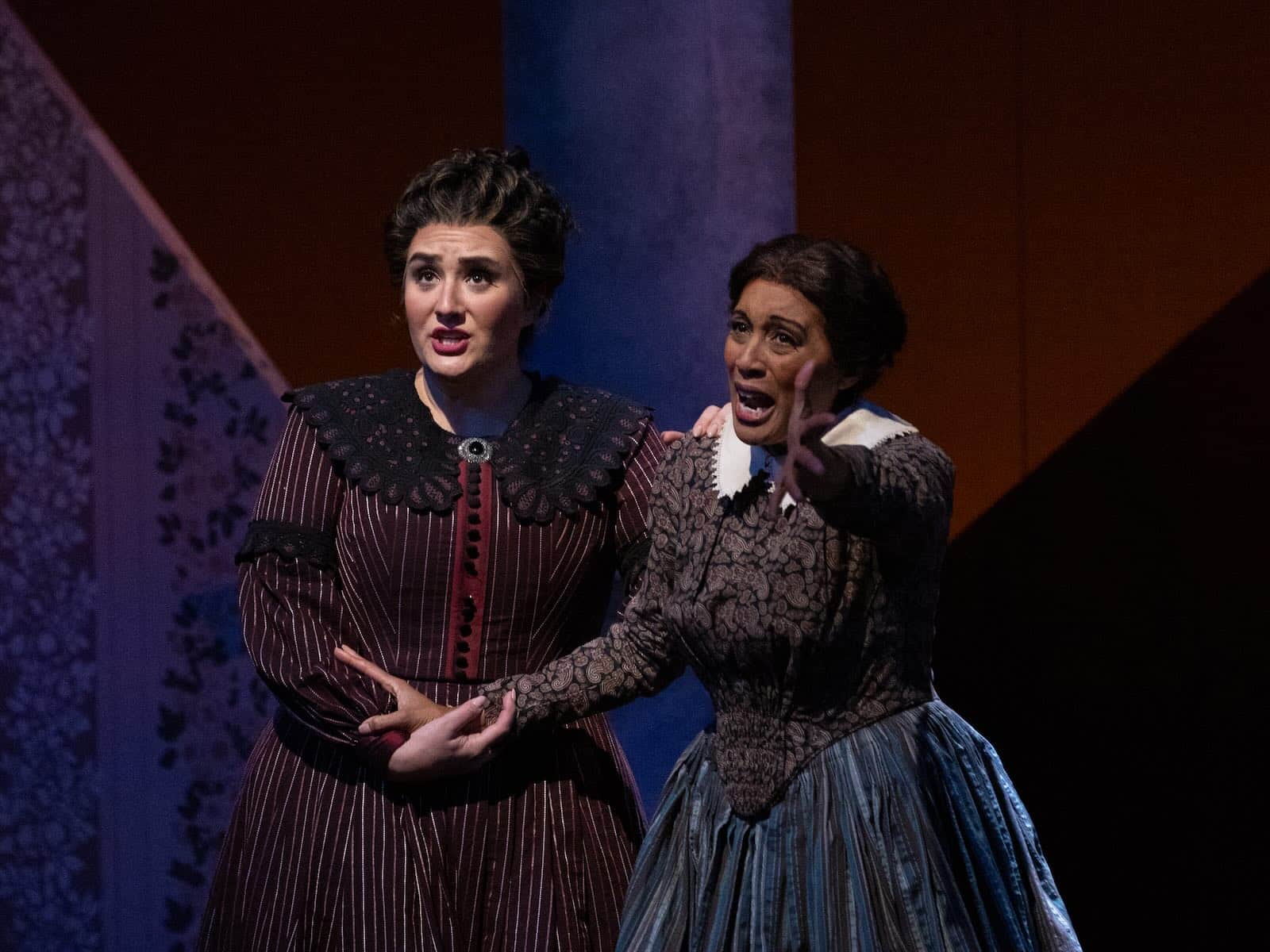
The title is a pun, as Elizabeth (mezzo Ashley Dixon) and Mary Jane (soprano Jaqueline Echols McCarley) explain in a first-act duet. On one hand, intelligence is the information gained through Mary Jane’s spycraft. On the other, intelligence refers to Mary Jane’s sharp intellect and literacy. It was her idea to infiltrate Jefferson Davis’s home, enabling her to gain access to Confederate military information from white folks who can’t fathom what a socially invisible Black servant might hear, see, and remember.
Much of the first act consists of exposition introducing the characters that surround the two principals. Baritone Craig Irvin plays the bitter, violent, misogynistic Travis Briggs, a Confederate “home guard” patrolman seeking to punish anyone betraying the (im)moral order to which he is wedded. (We’ve seen his type lately in the streets of Minneapolis.) Soprano Maureen McKay plays Callie Van Lew, Elizabeth’s sister-in-law, who distrusts, and to an extent despises, Elizabeth’s independent and anti-Confederate ways. There are two men in Mary Jane’s life. Her insecure husband, Wilson (tenor Edward Graves), acts as a courier carrying the information she obtains to the Union lines. Henry (bass Kevin Thompson), Jefferson Davis’s butler, falls in love with Mary Jane and asks her to run away north with him.
Within the limits of the racial caste structure and gender roles of the mid-19th-century South, both women enjoy privilege. Elizabeth is very wealthy. Unmarried, she is not subject to the whims of a husband. The Van Lews sent Mary Jane north to learn to read and write, and, while she performs some servant roles for Elizabeth — the opera begins with her taking laundry from a clothesline — we first see her relationship to Elizabeth as that of an equal co-conspirator and (almost) friend.
The music and libretto do well in illuminating the characters’ inner lives and motivations. Elizabeth has a powerful first-act aria that connects her passionate opposition to slavery to her love/hate feelings about her dead father. She is a feisty, independent sort, albeit with deep guilts and vulnerabilities, and Heggie’s music reflects her multi-faceted nature. Mary Jane, who never knew her parents and who has been raised in the Van Lew home, sings expressively about her yearning to know who she is, her feelings stirred by the mysterious presence of Lucinda (soprano Cierra Byrd), whose all-white costume stands out from the naturalistic dress of the other characters. Lucinda seems to know things about Mary Jane that Mary Jane herself does not. Mary Jane and the audience see Lucinda; the other characters do not.
Callie’s music begins lighter in tone, as she seeks to maintain the status in affluent white society she acquired by marriage, playing the sweet Southern belle role. By the end of Act Two, her music darkens, reflecting her desperation and Scarlett O’Hara-like determination to protect her family and the honor of her family name by any means necessary.
Given the slow burn of the first act, I wondered, at intermission, where the opera was going with the central dynamic of the relationship between Mary Jane and Elizabeth, who appear to have a strong bond despite the caste barrier between them. The more compact second act answers that question devastatingly, as the discovery of long-buried family secrets both illuminates and fractures their relationship. Elizabeth is revealed to be a deeply ambivalent figure, complicit in the slavery system she so loathes and works to undermine. She both suffers and inflicts trauma. Any oppressive system lives in the lies it spawns, and, as the characters in the opera learn and we know in our present day, leads almost inevitably to the cruelty of family separation.
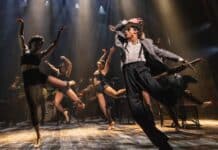
Mary Jane’s self-discovery is nourished by Lucinda, who we learn in act two (after numerous broad hints in Act One) is the spirit of her mother. A trio of dancers (Noelani Corey-Barr, Amaya Weston, and Christine C. Wyatt) executes Wyatt’s spectacular choreography to weave athletic modern and African dance elements together, creating a vivid physical representation of Mary Jane’s interior narrative. In the original 2023 production of Intelligence at the Houston Grand Opera, there were eight dancers. From brief clips of that production I saw, the larger dance corps provided a greater, more pervasive impact than the smaller forces available to Virginia Opera.
The production’s voices are first-rate. Irvin, whose villain role limits the emotional range of the material he is given, was a particular vocal standout. In a score full of large, powerful sequences (some of which tend toward the declamatory and, in the orchestra, the bombastic), quiet moments were often the most effective. Callie’s and Elizabeth’s “chained to you” in the second act, much of which is a capella, was especially memorable. The Virginia Symphony, conducted by Brandon Eldredge, gives a pleasingly vigorous playing of Heggie’s varied score.
The plotting of Intelligence is uneven at times. More development of the underlying tensions in the Elizabeth–Mary Jane relationship in Act One would have been desirable. The tepid love triangle among Mary Jane, Wilson, and Henry never gains traction. They both love her; she seems only mildly interested in either of them. (But for perhaps the desire to have a tenor role in the score, Wilson feels superfluous.) There is an even less developed attraction between Callie and Travis. These are elements that might well have been excluded in the interest of tighter storytelling.
Kyle Lang’s serviceable direction is often static. Much of the opera is delivered in stand-and-sing fashion, sometimes using symmetrically spaced, motionless stage pictures with three or five singers. In Lang’s defense, it may be that the construction of the libretto limits opportunities for more dynamic staging. The production’s fight choreography does not approach being credible.
Save for a large tree dominating the backdrop and an excellent quilt scrim flown in at the end of the show, the physical production is unimpressive. True enough, Virginia Opera productions have to fit into trucks to make the trek among venues in Norfolk, Richmond, and Fairfax, but the production sometimes betrays inattention to detail. For example, one setting is Jefferson Davis’s library, which the libretto says is full of books. Aside from one on a desk, there aren’t any. The fire intended to be the climax of the first act is weakly portrayed by pale orange lighting behind a window-frame unit. But for lines in the libretto saying there was a fire, the point might have been missed.
The lighting design relies extensively on follow spots and specials, which sometimes failed to align with the positioning of singers. At an important point for Wilson in Act Two, for example, Graves was left to sing in shadow. The design, seemingly including little color, did not effectively contribute to the mood of scenes.
Whatever the flaws of the production and limitations of the underlying material, Intelligence is a well-sung, emotionally compelling exploration of the pain and contradictions of slavery-era America and its echoes in our present life. Nowadays, what with official government declarations that the reality of slavery, the lasting trauma of racism, and the distortion of human relationships by structured inequality, are too “divisive” for public recognition (see for instance the removal of interpretive material about enslaved people at George Washington’s house in Philadelphia), skillful artistic representation of these truths is more important than ever.
Intelligence played on February 14 and 15, 2026, presented by Virginia Opera performing at the Center for the Arts, Concert Hall, George Mason University Fairfax Campus, 4373 Mason Pond Dr, Fairfax, VA.
The program is online here.
Intelligence
Conceived by Jake Heggie, Gene Scheer, Jawole Zollar
Music by Jake Heggie
Libretto by Gene Scheer
Based upon historical facts pertaining to the underground Civil War spy network of Mary Jane Bowser and Elizabeth Van Lew
This opera was commissioned by the Houston Grand Opera