On an episode of The Joe Rogan Experience, February 28, 2025, Elon Musk made this statement:
“The fundamental weakness of Western civilization is empathy.”
From the ICE invasion of Minnesota to the genocide in Gaza to the refusal to fund Medicaid during a government shutdown, we have seen how the world can look when we put this principle into action. Many of us have also experienced the tendency to “numb out” in ourselves and others when faced with such repeated demonstrations of mercilessness.
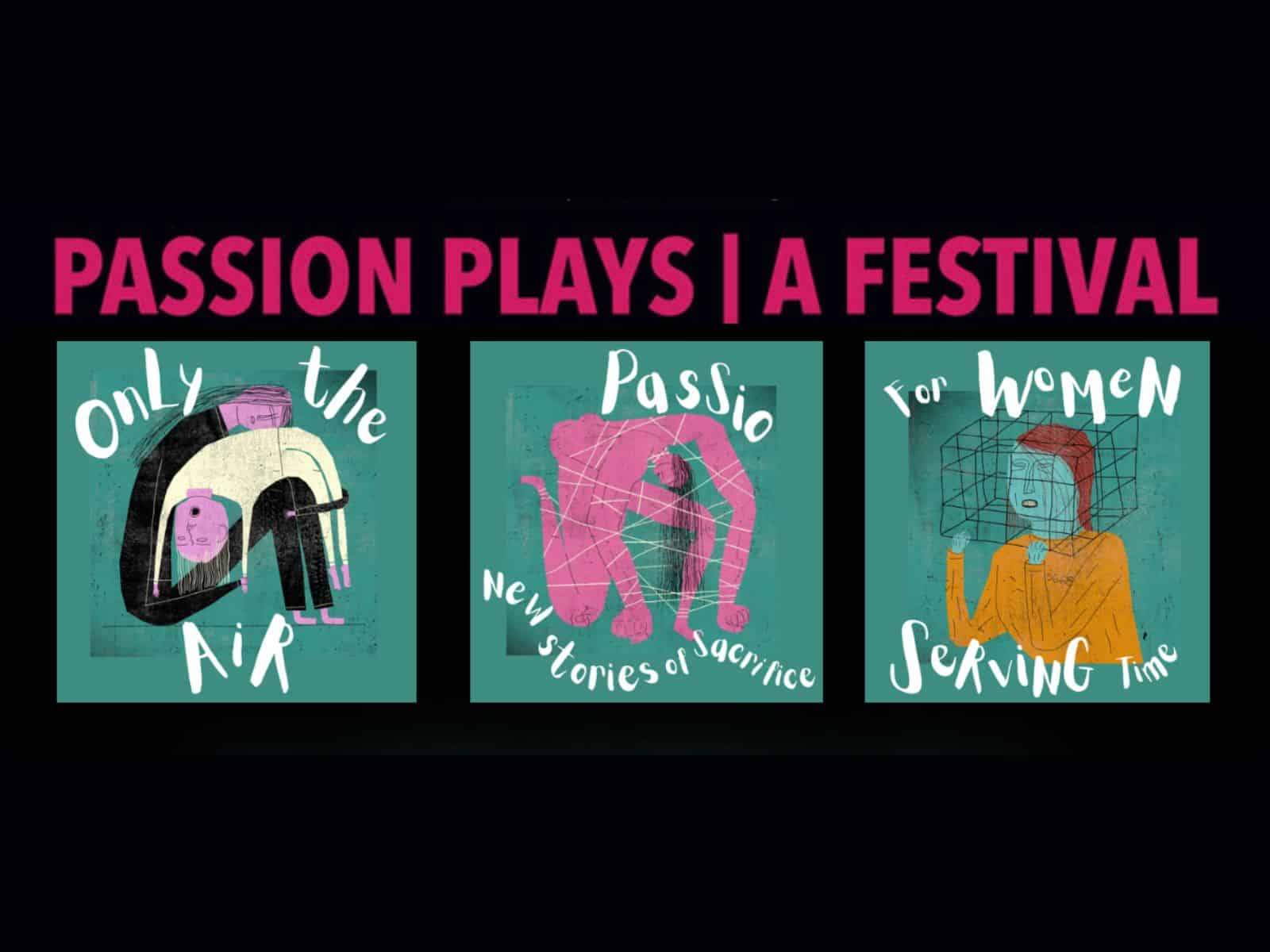
Passion Plays: A Festival, the next production at IN Series, showcases an art form that embodies a vision that is diametrically opposed to such mercilessness. Passions are one of Western theater’s oldest surviving forms, blending scripture, poetry, music, and communal reflection. According to IN Series Artistic Director Tim Nelson, the Passion as an art form both directly confronts this anti-empathetic way of thinking and offers an alternative to our tendency toward numbness: “The Passion is about the essence of catharsis — that is, watching an experience of suffering felt so deeply that one is broken open and made more able to experience empathy, compassion. What more could we be in need of today?”
Passion Plays: A Festival begins its run on Friday, March 6, at Dupont Underground. It features three world premiere plays with music.
The first offering (March 6–8),Only the Air, is a distilled, minimalist exploration of Bach’s St. Matthew Passion (the biggest and baddest of the Passions). This version removes much of Bach’s complications and centers his arias. (Tim Nelson, stage director, Joy Schreier, music direction; Joshua Borths, and Shana Oshiro were responsible for the new texts.)
The festival continues March 13–15 with Passio, a collective act of reimagining ancient human themes — betrayal, death, hope, resurrection — through the lens of female experience across cultures and generations. In this piece, personal stories of sacrifice are placed at the center of ritual. (Lucie de Saint Vincent, composer, and Maribeth Diggle, producer.)
The final entry in the festival, with performances from March 20 to 22, For Women Serving Time, is an extended poem-opera that fuses Fauré’s “Requiem,” jazz elements, and Brecht traditions to shed light on the lives and resilience of the often-overlooked women in the U.S. prison system. (Adrienne Torf, composer, and Fatemeh Keshavarz, text.)
DCTA spoke with IN Series Artistic Director and festival founder Timothy Nelson about resurrecting the ancient Passion form for a modern audience — and why he believes its raw, communal power feels more urgent now than ever.
This interviewhas been edited for clarity and space considerations.
DCTA: What excites you about this project?
Tim Nelson: This is a sort of pet project for me. A Passion is a totally unique dramatic form, unlike really any other out there, which blends texts from across centuries and voices, and instead of giving us a single point perspective, it adopts a community approach to storytelling and transformation through story watching. When you use this form as a jumping-off point for contemporary experiences, you bring out the universality of the human experience, which both interests me, and which I think is so desperately needed at this moment.
A Passion seems like such an old form. And a niche form. Why produce a passion in the 21st century?
And indeed it is an old form! The Passion is the place where theater, as invented by the Greeks and practiced by the Romans, was saved during the so-called “dark ages.” If it weren’t for the tradition of dramatizing the Passion story each Good Friday, we might not even have theater in the West today. That to me is amazing.
The form is about being inside a story, then suddenly stepping outside to consider the meaning and one’s own place in the story. This means it demands the audience participate and move between time, place, and action.
Even though the Passion form saved theater in the West, it at the same time rejects the Aristotelian unities that have so defined more conventional modes of narrative. Because it [The Passion] is understood, incorrectly, as essentially a musical form, this audacity survived. To use the form now to look at contemporary themes is, I hope, to offer a sort of revelation, a different way of seeing things.
Ultimately, the Passion is about the essence of catharsis – that is, watching an experience of suffering felt so deeply that one is broken open and made more able to experience empathy and compassion. What more could we be in need of today?
How is working on a Passion different from working with other forms for you? (Are Passions a form that you work in a lot? Or is this a departure for you?)
I have actually worked in the form more than most people. I stage a lot of traditionally unstaged pieces, and so I have had the opportunity to work on explicit Passions (Medieval Passion plays, Bach’s St. John Passion) to other works that I would still consider Passion plays (Brahms’ Requiem, Verdi’s Requiem, Mozart and Vivier’s Requiems, etc). It’s a place I enjoy because I am suddenly free to be irreverent (in ironically more reverent pieces). I wouldn’t say that I approach them differently, but I do rejoice in being freed from narrative, chronology, and “making sense.”
As you began working on this piece, what was the earliest idea that stuck with you?
Only the Air is based on the St. Matthew Passion, which is a behemoth of a work – double chorus, double orchestra, a third single voices choir, double soloists. It is a giant masterpiece I may never get to direct, and a mountain one may never feel prepared to climb. Creating a work that stripped that down to its essence, only four singers and a piano and a speaker, seemed like a way to take a step or two towards the summit. It was the beginning of imagining this festival, and indeed where the festival begins.
In the course of putting this together, is there something that you loved that you ultimately didn’t end up in the piece?
This is a tough question…Only the Air, as the title suggests, is only the arias (that isn’t quite true) from the St. Matthew Passion. This focuses the work in a certain direction, but means a lot of other amazing orchestral and choral music is sacrificed for the essence of the idea. As a musician, that hurts.
What do you hope audiences will take away from this production?
Firstly, an opening of the mind to this unique form. Secondly, an opening of the heart to hold more love. That is expressly what Martin Luther said the Passion tradition was about. And then to open the spirit to hold more peace. That all sounds very lofty, but after all, theater and music are the only places such loftiness is really possible.
What else would you like the potential audience to know?
The Dupont Underground is one of the great spaces in Washington, DC. Its leadership has worked so hard and so beautifully to make it an ever more welcoming space for theater and music. If you’ve never been, it’s a totally one-of-a-kind place for artistic experiences. If you’ve been before, come see all the changes and improvements. It is a magically and uniquely DC location, we are lucky to have it!
Get to Know Other Artists Involved in the Passion Plays festival
Maribeth Diggle: Maribeth, an opera singer, breath specialist, director, scholar, and sustainability practitioner, is associate artistic manager at IN Series and co-creator of Passio.
How did you come to be involved with Passion Plays: a Festival?
Five years ago, I met composer and pianist Lucie de Saint Vincent when she created her album Back to Bach, for which I was a vocalist. That collaboration sparked a deep artistic connection between us. Together, we became interested in returning to the Passion stories — not as historical artifacts, but as stories that belonged to us today.
We began asking: What does Passion mean in our time? Who carries Passion now? And whose voices have not yet been heard within that form? Lucie and I conceived the project together, and from there, we created the piece laterally with the cast — building it collaboratively so that each performer’s voice and personal artistic practice shaped the final work.

Fatemeh Keshavarz: Fatemeh is a professor, an Iranian academic, a Rumi and Persian studies scholar, and a poet in Persian and English. Her poem is the foundational text for the Passion Play For Women Serving Time.
How is working on a Passion different from working with other forms for you?
I am a poet. Poetry presents itself to you as the occasion demands. To put it less technically, you see or hear something and you have to write it. One day in my office, I read about women inmates yearning to educate themselves and the fact that many of the courses they needed were not available in their correctional facility. Some went through great ordeals to go to a male prison to take these courses. There was a poem there. I started writing it. At the time, I had no idea that it would become an opera.
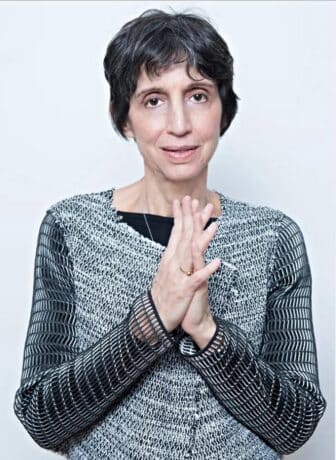
Adrienne Torf: Adrienne is a pianist and composer. She collaborated with poet June Jordan for 19 years until her death and was a co-deviser for Poetry for the People:The June Jordan Experience which won the Helen Hayes Charles MacArthur Award for Outstanding New Play for Theater Alliance in For Women Serving Time.
I’m excited about Fatemeh’s beautifully crafted poem, for starters. Her writing is rooted in her deep, intimate knowledge of Persian poetics, and she’s written in English, a combination that brings her distinctive voice to the poem/libretto. Fatemeh’s also chosen to highlight the specific challenges women incarcerated in the United States face trying to gain access to educational and training programs that promise to bolster their chances of supporting themselves and their families once they return to society – challenges that range from limited offerings, relative to programs offered in men’s prisons, to the invasive indignities of being strip-searched multiple times when they travel to men’s prisons to acquire skills that typically pay more than what they can learn from the training offered in the women’s prisons. I believe that the more informed the general public is about the realities of incarceration (for women and for men), the more likely people are to advocate for improvements in the carceral system all around. This opportunity to raise awareness through For Women Serving Time is exciting for me.
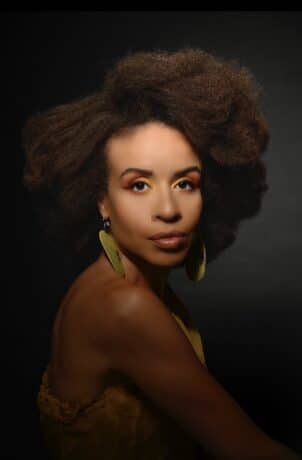
Shana Oshiro: Shana is a vocal performer and music therapist who uses music to address racism and social issues with her barbershop quartet HALO. She is a co-creator of the new text for Only the Air.
What excites you about this project?
Much of my poetic language is rooted in spiritual perspectives, and I believe that is the conduit through which I connected so strongly with this project. To reimagine St. Matthew Passion acknowledges a timeless relationship we have as human beings, and within a specific culture, with a sense and revelation of spirit. I believe the intense sociopolitical conflict in which we are entrenched is reflective of a confrontation we are having with shadow aspects of ourselves — as individuals and as polarized groups. This calls for a process of recognition, forgiveness and redemption — not just from without but more importantly from within. Being invited to process the moment in collaboration with another artistic vision feels grounding, affirming, and ripe with promise.
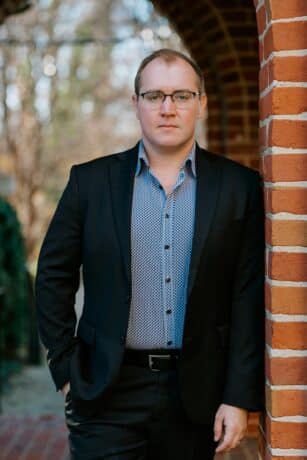
Joshua Borths: Joshua is a nationally recognized stage director, writer, and dramaturg. He is a co-creator of the new text for Only the Air.
What was your starting point in adapting the St. Matthew Passion?
When I finally sat down to start writing, I was really struggling. How can I improve or poetically elevate what is already so beautiful? What choices can I make that bring my voice into the project? I chose, therefore, to embrace the theatricality of the Passion, which led to the first big change I made to the text. I moved it entirely into the second person and present tense. The audience is the Christ-figure in the story, and it is the one going through the Passion, not just witnessing it. With this seemingly small choice, I was able to take ownership of my part of the project and engage with this narrative differently than I have before.
Passion Plays: A Festival plays March 6 to 22, 2026, presented by IN Series performing at Dupont Underground, 15 Dupont Circle NW, Washington, DC. Purchase tickets ($70 reserved, $50 general, $25 student) online or call 202-204-7763.
Only the Air plays March 6 and 7 at 7:30 pm and March 8 at 2:30 pm.
Passio plays March 13 and 14 at 7:30 pm and March 15 at 2:30 pm.
For Women Serving Time plays March 20 and 21 at 7:30 pm and March 22 at 2:30 pm.
For Women Serving Time also plays April 10 and 11 at 7:30 pm and April 12 at 2:30 pm in Baltimore at The Baltimore Theatre Project. Purchase tickets ($35, $25 student) online or call 410-752-8558.
The IN Series website has videos of conversations and rehearsals that you can explore about this unique project.