
Speech & Debate, written by Stephen Karam and directed by Sirra Faal, is laugh-out-loud funny, with all the adolescent, age-appropriate dark humor and youthful awkwardness that comes with coming of age to show for it.
Speech & Debate, which premiered off-Broadway in 2007, is a dark comedy with music. It features three teenagers who are trying to expose a drama teacher who preys on teenage boys. The three characters are Solomon, a reporter for the school paper, Howie, a gay student who is preyed upon by the teacher, and Diwata, an aspiring student actress and singer. The three students decide to perform a musical version of Arthur Miller’s The Crucible — adding time travel and a young Abraham Lincoln — to call out the school’s predatory teacher.
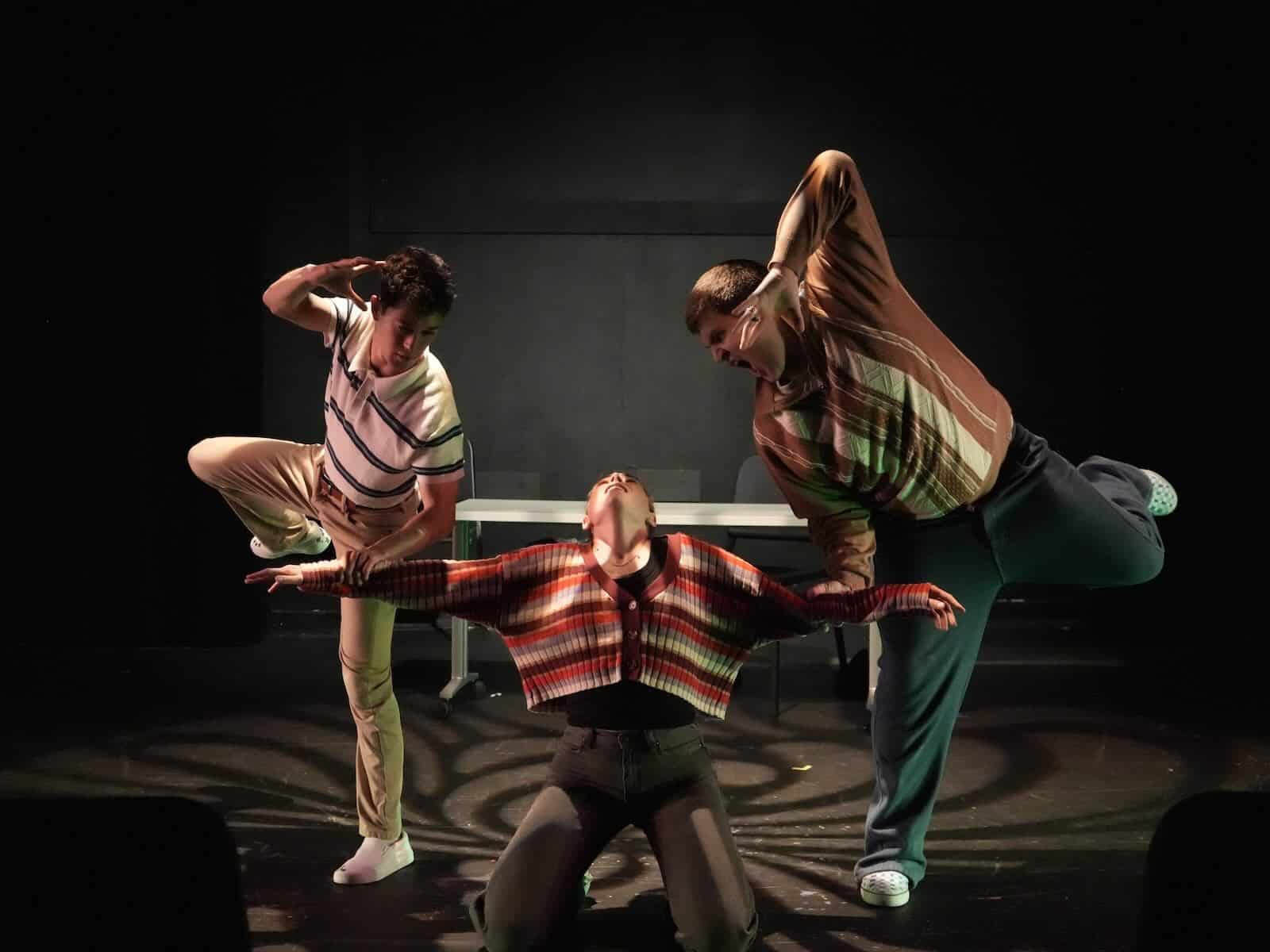
The play blends themes of religious trauma — Diwata, played by graduating American University senior Lucille Rieke, makes several references to both Puritanism and Catholicism, as well as the more taboo, controversial Satanic panic that plagued Salem, Massachusetts, and Colonial America during the Salem Witch Trials. It also touches on social justice issues from pedophilia to censorship, LGBTQ+, and abortion. This senior capstone project, produced by the appropriately named 2 Boys and A Girl, a talented trio consisting of Rieke, Jared Kirschenbaun, and Daniel Zavilowitz, uses music, dance, well-timed jokes, and a bit of time travel to pay tribute to the social pariahs of the world, the ones who don’t fit in, as they search for a sense of belonging and safe place.
Set in Salem, Oregon, the play’s many social references may seem a bit helter-skelter. There are references to everything from Salem, Massachusetts, to Abraham Lincoln, several characters in The Crucible, including Mary Warren and Tituba, and a retelling of the biblical story of Cain and Abel. The show illustrates that just as the 1600s were a time period riddled with political, social, and legal turmoil, today is no different, with the rollback of Diversity, Equity, and Inclusion (DEI) initiatives, the repeal of Roe v. Wade, attacks on human rights, and a militarized DC.
History tends to repeat itself, especially if we don’t learn from it, and Speech & Debate forces us to confront these hard truths head-on. Solomon, played by Jared Kirschenbaum, is determined to get to the bottom of a sex scandal involving a teacher, only mentioned in passing as Mr. Healy. Howie (Daniel Zavilowtiz) is an out-and-proud gay student. It’s a journey of identity and self-discovery, with Diwata tagging along for the ride, hoping to use Solomon’s investigative journalism piece in her production, which initially starts as a one-woman show, carrying a secret of her own.
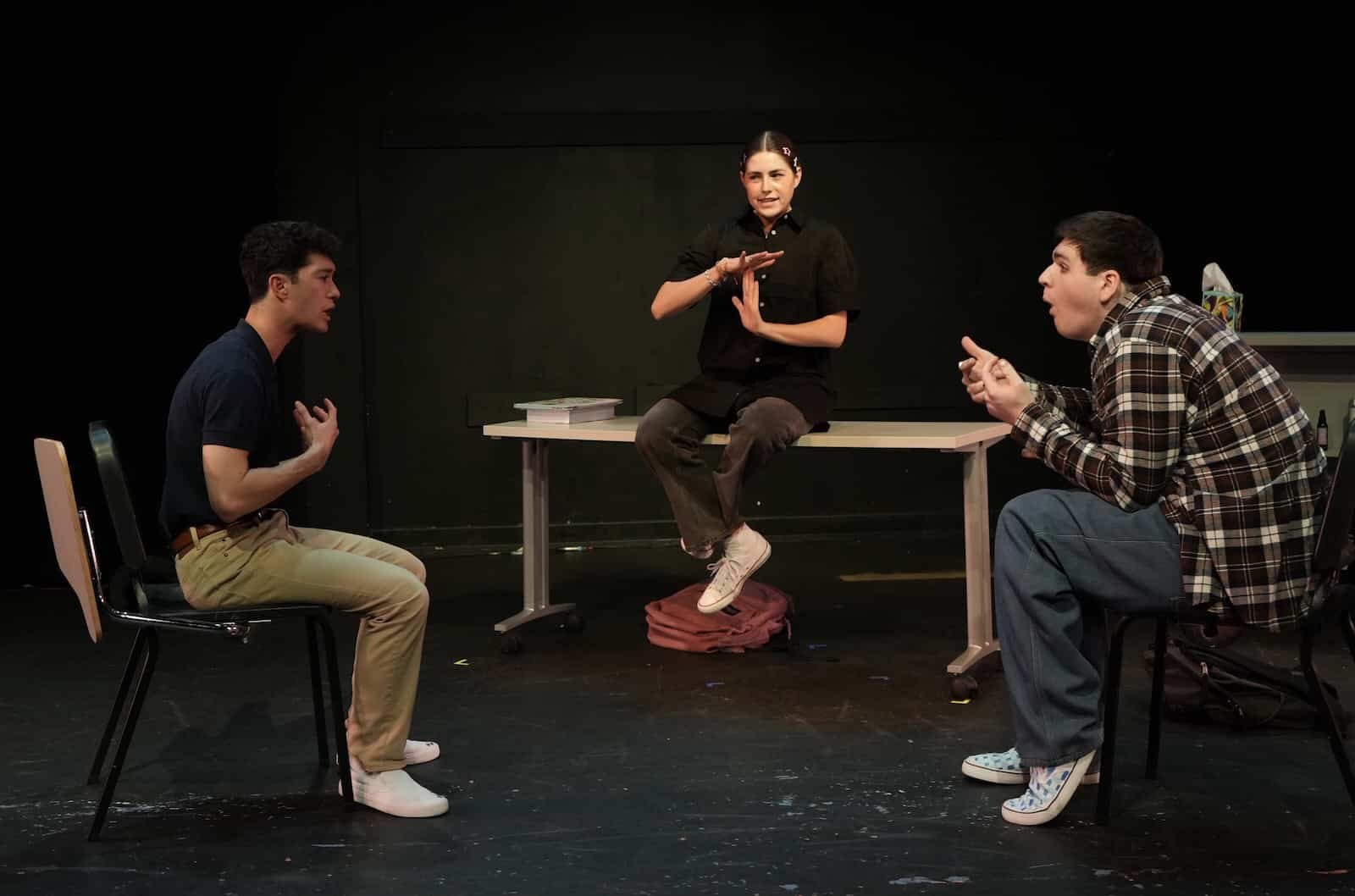
Kirschenbaum plays the role of Solomon well, his facial expressions and body language adding dramatic effect to every scene he’s in while Rieke’s animated quirkiness adds dimension to the simple stage setting (stage management by Staci Tomblin with assists from Diana Freeze and Dora Schulman), the strategic lighting of yellows, blue, and pink (designed by Morgan Kullen, Lois Proeller, and William Sahami) illuminating the cast at pivotal moments. Zavilowitz, on the other hand, embodies the spirit of “the new kid,” albeit confident and self-assured, who inadvertently gets caught up in something he’s struggling to come to terms with.
The deception, blackmail, betrayal, secrets, and lies are explored in a light-hearted, painfully relatable way. I thought of my own high school experiences and the abrupt shift from needing permission to go out to three months later, away at college, where the only thing keeping me from party-hopping till three in the morning was myself, and maybe an 8 a.m. class and term paper due at 11:59. Although, truthfully, sometimes that didn’t even stop me.
With a run time of 105 minutes with no intermission, Speech & Debate kept me entertained, or, as the kids say these days, “locked in.” I chuckled at some moments and cringed at others, feeling second-hand embarrassment when Diwata gave exaggerated monologues for extended periods of time only to say “enough about me” afterward. Other moments of note included Solomon freezing when his usually put-together facade starts to crack, and Howie singing loudly and off-key, like an early morning shower session, too familiar.
In hindsight, while Speech & Debate utilizes several popular tropes from Netflix originals and other teen dramas, such as a poster-bespeckled whiteboard (illustration design by Rebecca Morris) reminiscent of a teeny-bopper’s bedroom wall during the Y2K era, and chat bubbles queued to pop up at just the right moment (production design by Faal), it balances heavy topics with lighthearted commentary, leaving the audience hooked from beginning to end.
Running Time: One hour and 45 minutes with no intermission.
Speech & Debate played from April 24 to April 25, 2026, at American University’s Katzen Arts Center in the Katzen Studio Theatre, 4400 Massachusetts Ave. NW, Washington, DC.
To view the program, including the director’s note, click here.