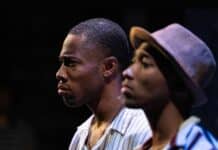
With neither a set nor props — and with minimal costumes and minimalist direction — some might expect the latest touring production of Tennessee Williams’s A Streetcar Named Desire, created by Lucy Owen and Nick Westrate (who directed), would be doomed to pretension. Yet, this jaded critic (doubling as a high-key Williams fanatic) was happy to be proven wrong. “The Streetcar Project” (which the creators have lovingly christened their multi-city tour of Williams’s play) brings the utmost care and curiosity to the text, even within the constraints of site-specific staging — in this case, the converted trolley station–turned–art gallery at Dupont Underground. In some respects — and Williams’s Pulitzer Prize–winning play from 1947 is a great example of this — some scripts are simply too powerful to fail. But all credit is due to Owen and Westrate, who conceived, co-produced, and co-designed this actorly passion project–turned–theatrical veneration of A Streetcar Named Desire.
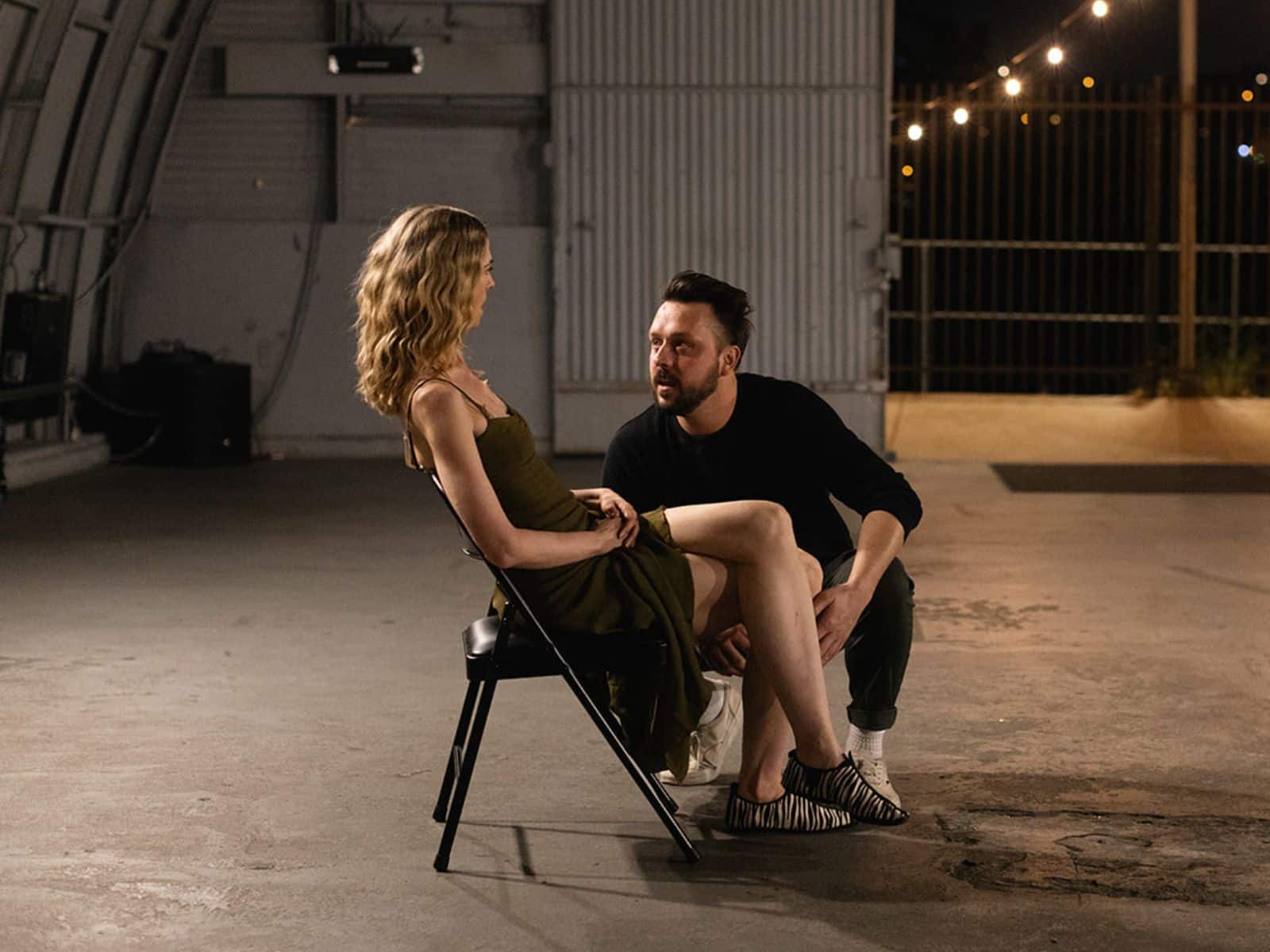
Considered to be among the greatest playwrights of the 20th century, Williams first came to fame with the 1944 premiere of The Glass Menagerie, but his “masterpiece” would be established three years later when Streetcar opened on Broadway with Marlon Brando and Jessica Tandy on top billing. Brando would later star in the 1951 film adaptation alongside Vivien Leigh and Kim Hunter, who both took home Oscars for their roles that year. The play centers on a troubled Mississippi schoolteacher named Blanche Dubois, who mourns the loss of her family’s estate at Belle Reve and visits her newlywed sister, Stella, in New Orleans. Once there, she immediately clashes with her sister’s husband, the “common” and “brutish” (as Blanche calls him) Stanley Kowalski. A mix of unfettered attraction, unbecoming classism, and raw traumatic memory, Blanche and Stanley’s antagonism undergirds most of the play, complicated variously by Blanche’s courtship of Stanley’s platoon buddy Mitch and the impending due date of Stella’s firstborn child. Familiar with the script or not, many have likely encountered Stanley’s cries of “Stella! Hey, STELLLAHHHHH!” somewhere in popular culture (and it’s easily a standout moment in this production as well).
Once seated in the round at the start of this production, the crowd is ominously hushed by the boozy tenor of Ella Fitzgerald’s “Solitude.” Tinny record scratches direct our attention to Owen, Brad Koed, Mallory Portnoy, and James Russell, who surreptitiously position themselves among audience members. The venue’s gritty fluorescents dim to something more theatrical as we attempt to navigate the aural clamor of the French Quarter. Now settled into exposition, the cast establishes their primary roles: Portnoy as Stella, Russell as Mitch, Koed as Stanley, and Owen as Blanche. Russell heeds most of the demands for double-casting, appearing first as the homely neighbor Eunice. “What’s the matter, honey? Are you lost?” she asks Blanche, who dreamily responds, “They told me to take a streetcar named Desire, and then transfer to one called Cemeteries and ride six blocks and get off at — Elysian Fields!” This underground production fittingly doubles down on the symbolic netherworld implied by the name of this streetcar stop.
Without much else to distract us, the four actors are triumphant in their roles. Koed’s Stanley is as sinister when he smiles as he is at his most brutal. Owen and Portnoy depict a sisterly bond so sincere that it devastatingly hardens Stanley and Blanche’s in-law hostility. Owen is particularly twisted yet swift as Blanche, toying with our sympathies as much as she demands our attention. Russell plays Mitch — who is often relegated to a misfortunate plot-device — with emotional integrity and muscle, reminding us that, while the three leads often get all the credit, Williams wrote a four-player game.
Each line emits a chilling echo through the tunnels of the converted streetcar station, and Owen and Westrate underscore most of the dialogue with jazz music. Their direction similarly relies on moments of isolation and emotional detachment — the actors frequently bypass realistic acting choices in favor of something more conceptual. With its warped sense of time and reality, the production strongly implies that each scene posits a specific memory, specifically those of Blanche, who (if you know the play) experiences life-altering trauma by the end of Act Two. Non-traditional, to be sure, this surreal take on what is otherwise a naturalistic story bequeaths as much opportunity to the actors to showcase their talents as it highlights the script’s own brilliance.
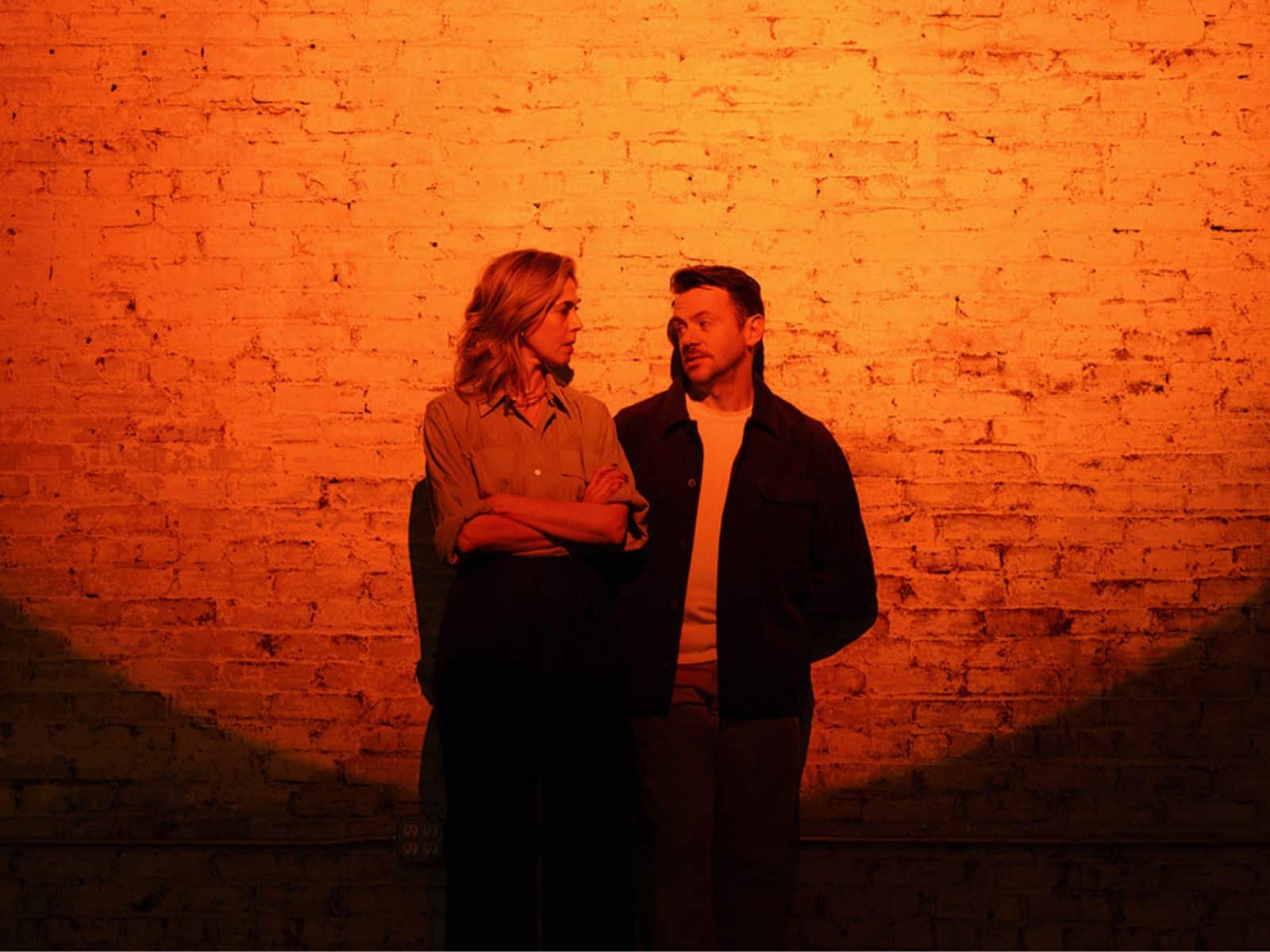
When it comes to staging a play pushing 80 years old, directors and producers can, at best, fight to make the play feel relevant, and, at worst, find themselves fettered by something dusty or antiquated. With eclectic modern dress that feels better suited to Williamsburg than to Belle Reve (and without any attempt — THANK GOD — at a Southern, transatlantic accent), Owen and Westrate seem totally uninterested in what this mid-century play once was, favoring instead what it could mean to future audiences. Stripped to its core and ingeniously directed, this extra-provocative Streetcar Named Desire brings the heat of New Orleans to DC. Still, audiences be warned: without the pretenses of a bygone era, Williams’s high-octane drama hits harder than ever — finding new ways to make itself felt and heard beyond the stage.
Running Time: Two hours and 30 minutes, including an intermission.
A Streetcar Named Desire plays through May 4, 2026, presented by The Streetcar Project, performing at Dupont Underground, 19 Dupont Circle NW, Washington, DC. Purchase tickets ($85–$125) online. Learn more here.
Content Advisory: Mature Audiences
Viewer discretion is strongly advised. A Streetcar Named Desire contains partial nudity, domestic violence, racist language, discussions of child abuse and suicide, and sexual assault.
A Streetcar Named Desire
By Tennessee Williams
Directed by Nick Westrate
Starring Lucy Owen, Brad Koed, Mallory Portnoy, and James Russell
Created by Lucy Owen and Nick Westrate
Production design by Nick Westrate and Lucy Owen