If you open your Spanish grammar book, you will see that the word vosotros is a plural pronoun meaning you. Visit Buenos Aires, Argentina, however, and you won’t hear vosotros.
In Argentina, they use vos: You. Singular.
It’s a hard concept for English speakers, where the closest thing we have to a singular versus plural you is the Southern y’all, but it’s a central concept to playwright Christina Pumariega’s play ¡VOS!
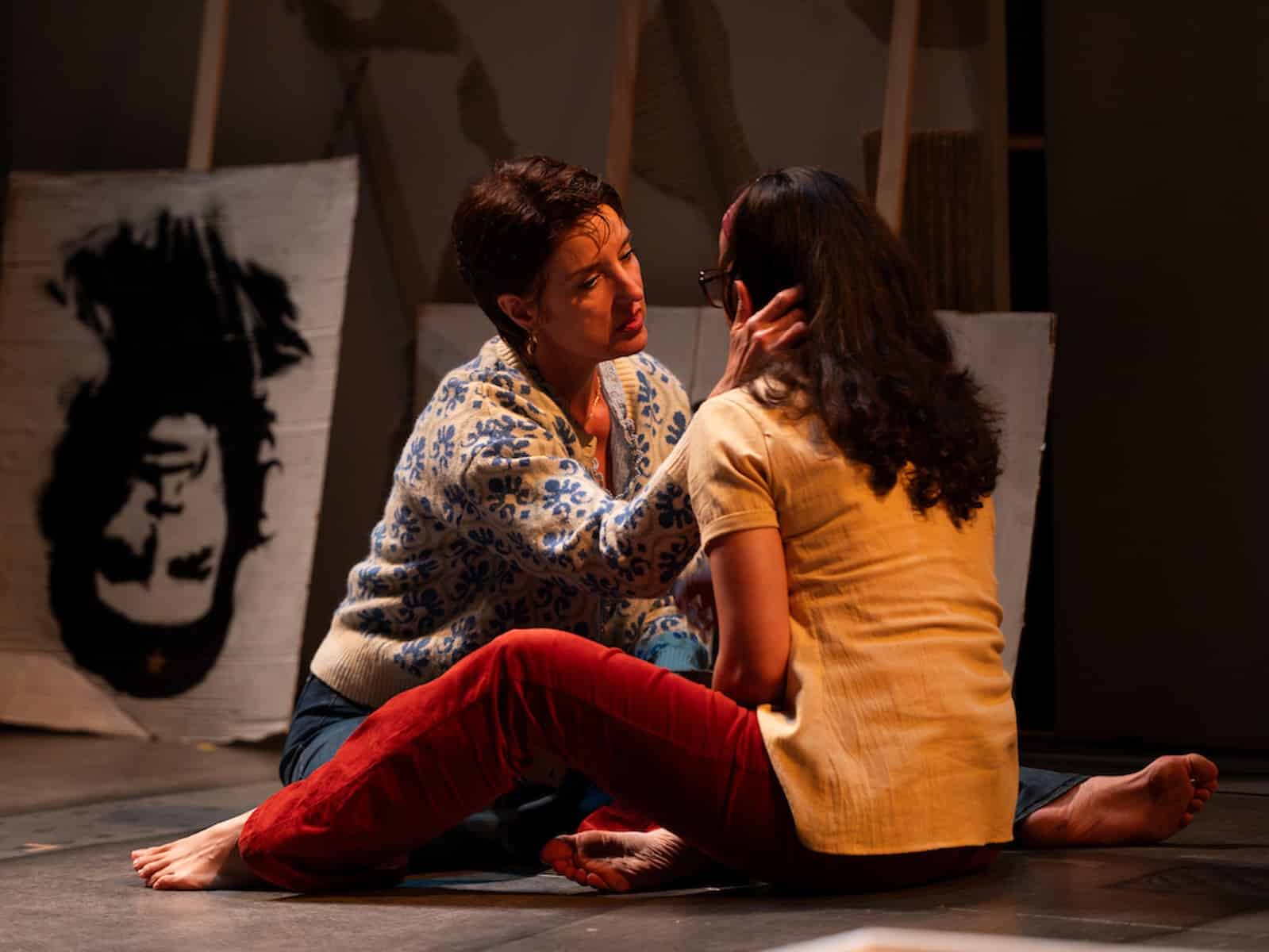
In a scene early on in ¡VOS!, Dr. Cossi, an Argentine fertility doctor, explains this grammatical difference to Annie, her Argentine-born but U.S.-raised patient, who recently came back to Buenos Aires for fertility treatments after learning that her deceased Argentine mother left her an apartment there.
In the context of fertility, the difference between singular and plural is everything. Without a child, or a parent, you are on your own, a singular entity navigating the world alone. With family, you are plural. You will go on. You matter.
¡VOS!, directed by Kimberly Senior, explores issues of fertility, family, and belonging across two generations of women living through Argentina’s 1976 coup d’état and beyond. There is considerable beauty in the play’s central conceit. Pumariega draws an affecting connection between reproductive longing and Argentina’s history of mothers searching for children taken from them during the military dictatorship, allowing private grief and national trauma to echo across generations.
The scenes between the women are often tender, funny, and sharply observed. A two-hander, the storyline featuring Annie and Dr. Cossi in 2015 Buenos Aires, alternates with scenes set in 1976 Buenos Aires, where two different women — Sofia and Ana — deal with another type of fertility issue. The same actors perform both roles, and the doubling of roles gradually creates a sense that the past is not merely remembered but continually relived.
¡VOS! is a play that tries to accomplish a lot, to varying degrees of success. At its best, ¡VOS! is a tender, beautifully constructed meditation on the ways women inherit family, history, and loss; but the play sometimes spends so much time making sure we know the history and politics at play that the emotional momentum stalls.
The politics of the period are central to the play — and to the lives of the Argentines who lived through a military dictatorship that lasted from 1976 to 1983 and resulted in the disappearance of 30,000 Argentine citizens — but as an audience member, I found it difficult to get emotionally lost in the story playing out in front of me while also wracking my brain to recall the exact political leanings of groups like the Montoneros and the Peronistas (not to mention Juan Perón, who seemed to teeter between Populism and Conservatism depending on who he was married to at the time), all of which was central to the 1976 plotline.
The difficulty is not that the play asks its audience to understand Argentine history, but that its characters are too often tasked with explaining it. As political names, factions, and historical events accumulate, the women briefly recede behind the information they are delivering. The middle of the play consequently begins to feel less like unfolding drama than an illustrated lecture, interrupting the intimacy that makes its strongest scenes so affecting.
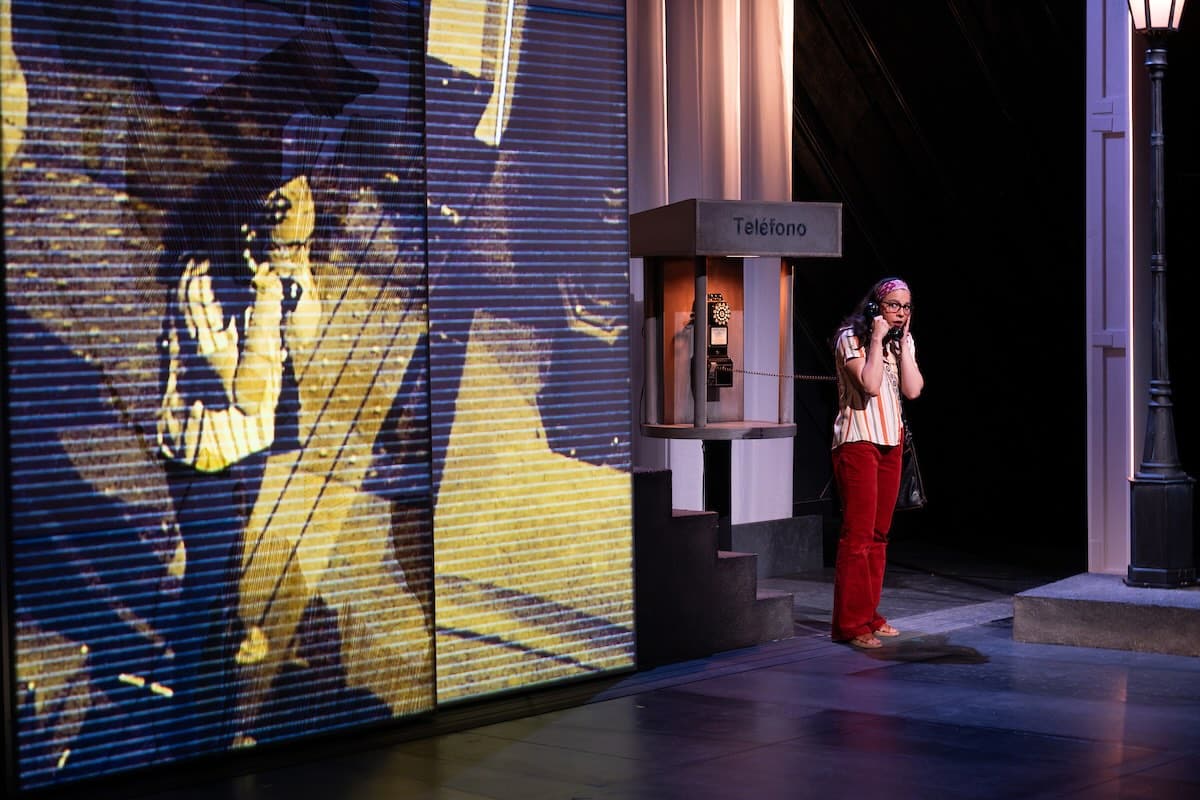
Kelly Colburn’s projection design was very helpful in bringing the Plaza de Mayo — site of so much history — to vivid life. The play’s multiple scene changes, however, continually bouncing us between 1976 and 2015, dragged down the pacing as we watched Annie/Sofia repeatedly change from one costume back to another (costume design by Shahrzad Mazaheri).
The play’s two performers both do an excellent job at their double-duty casting, with Maggie Bofill standing out. In her scenes as Dr. Cossi, a fertility doctor, she is tough but loving, imbuing many of the script’s lines with mischievous humor. As Ana, a law student at the University of Buenos Aires, she portrays a totally different character with similar wit and warmth.
Francesca Santodomingo plays Annie, the 2015 fertility patient, and Sofia, an activist supporting revolutionary causes in 1976. Both performances were solid. The pair exhibits great rapport, and intimacy direction by Shea-Mikal Green creates lovely moments of tenderness.
The two stories — of Annie and Dr. Cossi, and Sofia and Ana — will intersect, but not until the play’s end, when the two storylines that have been circling around each other throughout the play come together with a gut punch. It’s a satisfying and heartbreaking ending, and one that will stay with you long after leaving the theater.
Running Time: 90 minutes, no intermission.
¡VOS! plays through August 2, 2026, presented by the Contemporary American Theater Festival, performing at the Marinoff Theater on the campus of Shepherd University, 62 West Campus Drive, Shepherdstown, WV, in repertory with four other plays. Tickets, priced at $75 ($67 for seniors and $65 for students), are available online. Times, dates, and ticketing information for the full festival may be found on the CATF website or by calling the CATF box office at 681-240-2283.
SEE ALSO:
Contemporary American Theater Festival announces casts and creative teams for 2026 mainstage season (news story, June 20, 2026)