Few films have achieved the cultural status of The Notebook (2004), starring Ryan Gosling and Rachel McAdams. Often dismissed as the quintessential “chick flick,” the film has earned that reputation for good reason. Based on Nicholas Sparks’ 1996 bestselling novel, it chronicles the enduring romance of Allie and Noah across several decades, exploring the challenges posed by class differences and life circumstances through a series of flashbacks. Along the way, it produced some of the most iconic moments in modern romantic cinema, from the unforgettable rain-soaked kiss to Noah’s oft-quoted declaration, “It wasn’t over. It still isn’t over.” These scenes have become lasting fixtures in popular culture.
Now, The Notebook has been adapted for the stage as a musical based on the novel, featuring music and lyrics by Ingrid Michaelson and a book by Bekah Brunstetter, making its Washington, DC, debut at the National Theatre.
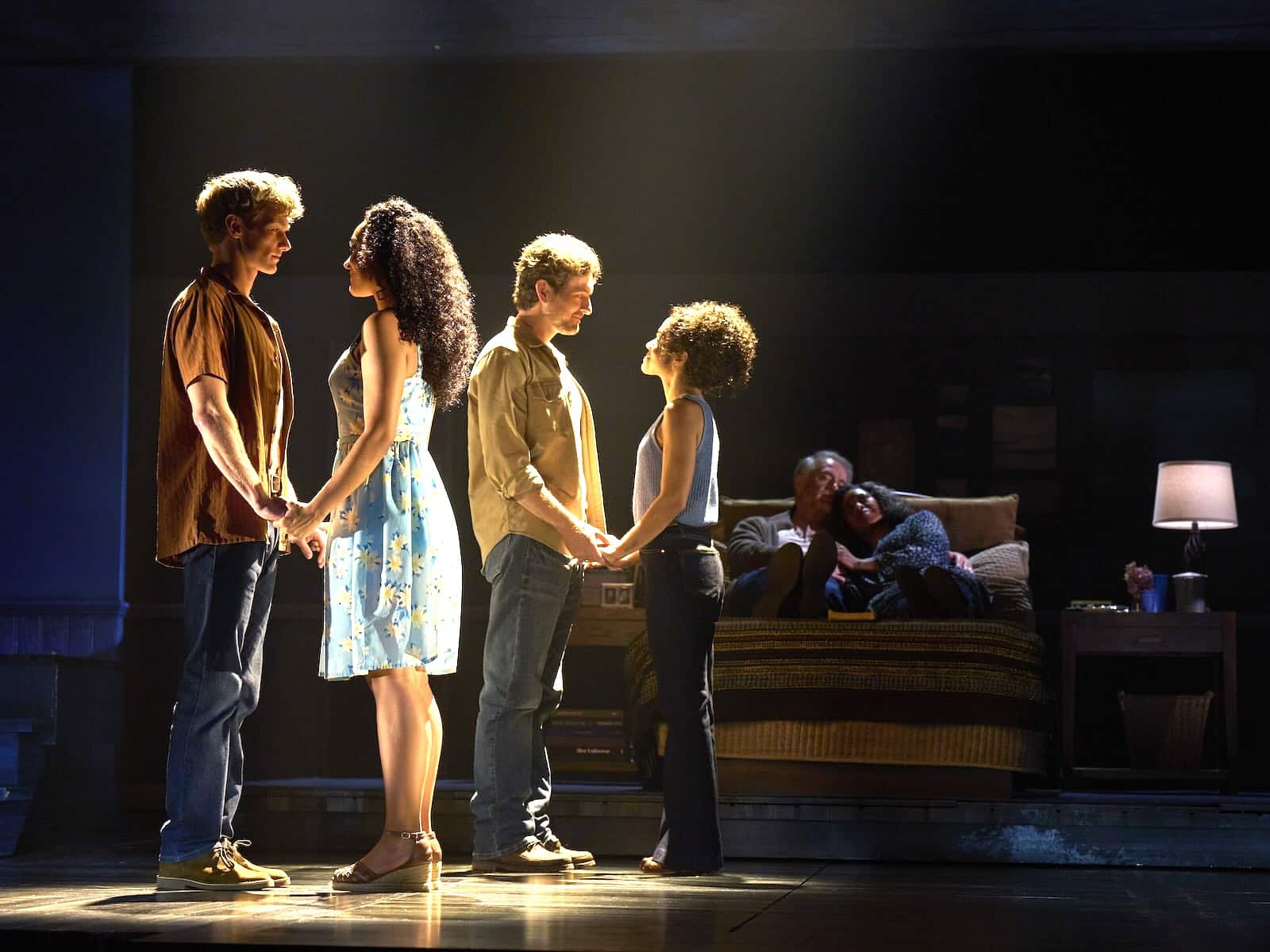
The connection between Noah and Allie is evident from the very beginning. Directors Michael Greif and Schele Williams skillfully use multiple actors to build the story’s emotional depth, layering the characters’ lives across different ages. The younger, middle, and older versions of Noah and Allie overlap in ways that mirror the workings of memory itself, illustrating how their love story unfolds across a lifetime. This storytelling device heightens both the romantic yearning of their earlier years and the heartbreak of the present-day narrative, creating a poignant sense of nostalgia. By intertwining past and present, the production captures the bittersweet nature of memory, love, and the passage of time with remarkable emotional resonance.
The attention the story pays to dementia is accurate and heartbreaking. Noah reads to Allie from her own diary (the notebook of the title), allowing her memories and reflections to tell the story of their life together. As the disease progresses, the older Allie moves between moments of wonder, fear, and frustration, capturing the emotional reality of dementia with striking authenticity. For me as someone who has witnessed firsthand how dementia affects a marriage and an entire family, these scenes felt especially powerful. One line, in particular, stood out, when a nurse says of Allie: “This disease moves in one direction.” Its simple honesty underscores the painful inevitability of dementia and lingers long after the story ends. Noah’s character demonstrates the other side of the condition — losing someone you love though they’re right in front of you.
The cast is wonderfully talented, with strong voices. Particular stand-outs were Alysha Deslorieux as Middle Allie and Ken Wulf Clark as Middle Noah. The acting talent of Beau Gravitte as Older Noah was particularly poignant, and Yassmin Alers as Older Allie (in the performance I saw) was convincing as a woman struggling with memory loss, and her scenes with Older Noah were particularly moving.
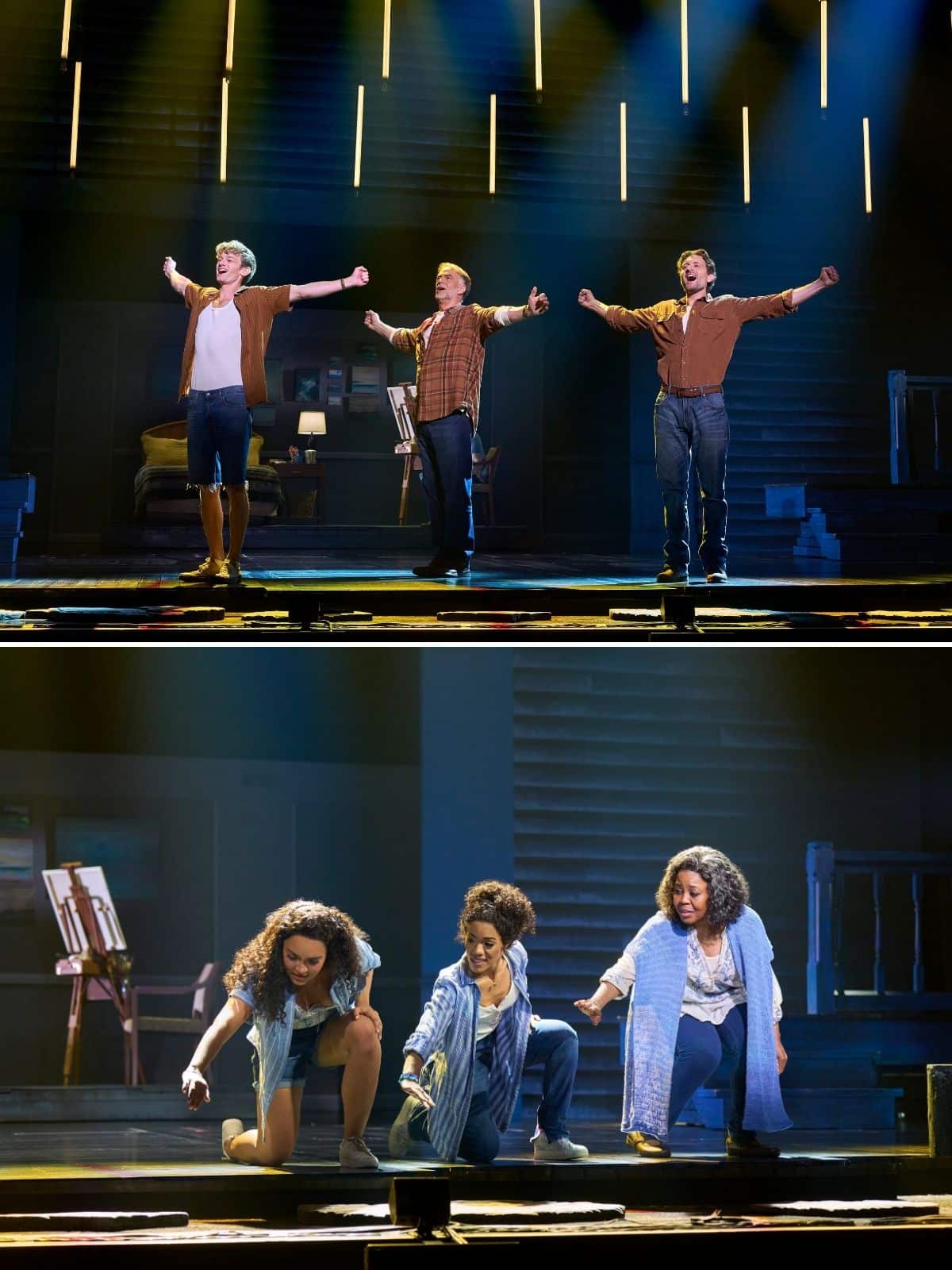
Through a deliberate use of color, costume designer Paloma Young creates a striking visual contrast between the characters: the Allies are dressed in shades of blue, while the Noahs are defined by warm, earth-toned hues. Scenic designers David Zinn and Brett J. Banakis deliver seamless and imaginative transitions throughout the production. The appearance of Noah’s house, in particular, is beautifully realized, and the use of actual rain onstage is both creative and spectacular.
However, because The Notebook is such an intimate story, I felt that a smaller venue, or perhaps a theater-in-the-round configuration, might have served the material better by fostering a stronger connection between the characters and the audience. Even so, the emotional impact of the production was undeniable, as evidenced by the audience’s immediate standing ovation at the show’s conclusion.
Ingrid Michaelson’s melodic, acoustic-leaning score fits the intimate storytelling. In truth, for me personally, the one feature I do think it lacks to make it even more appealing is an earworm melody that audiences can walk out of the theater humming. I also struggled somewhat with the vocal performance of Kyle Mangold as Younger Noah. At times, his performance felt overly forceful, giving the impression that he was emphasizing his vocal range rather than serving the emotional needs of the character. That said, this may be as much a reflection of the score as the performance itself. The orchestra, however, with musical supervision and arrangements by Carmel Dean, was flawless in delivering perfect accompaniment to an overall stellar cast.
The cast is clearly hardworking and deeply committed to the material, delivering performances that reflect both talent and sincerity. While some of the adaptation’s creative choices did not fully resonate with me, there is no denying the passion and effort on display. For audiences who are particularly fond of the story and its emotional themes, The Notebook will likely provide a moving theatrical experience.
Running Time: Two hours and 20 minutes, including one intermission.
The Notebook plays through August 30, 2026 at the National Theatre, 1321 Pennsylvania Ave NW, Washington, DC. Tickets are available online or by calling Broadway at The National at (202) 628-6161. Adult themes; recommended for ages 13 and up.
Cast and creative credits for the North American tour can be found here.
The Notebook
Based on the novel by Nicholas Sparks
Music and Lyrics by Ingrid Michaelson
Book by Bekah Brunstetter
Directed by Michael Greif and Schele Williams
Scenic Design by David Zinn and Brett J. Banakis
Costume Design by Paloma Young
Lighting Design by Ben Stanton
Sound Design by Nevin Steinberg
Musical Supervision and Arrangements by Carmel Dean
Choreography by Katie Spelman