In 1973, an arsonist torched a New Orleans gay bar, the UpStairs Lounge, killing 32 people. The View UpStairs, by Max Vernon, now playing at Baltimore’s Iron Crow Theatre, uses this horrific tragedy as the focus of an often surprisingly joyous musical. The show, originally written in 2013 (the 50th anniversary year of the fire), premiered off-Broadway in 2017.
The ensemble cast ably creates the close-knit UpStairs Lounge community for the audience. We have Patrick (Kobe Morrison), a touchingly sweet hustler. Buddy (Xander Conte), the middle-aged pianist, is bitter, closeted, and not over an apparent relationship with Patrick. Freddy (Christopher Alexy Diaz) is a drag queen traumatized by his beating by a thuggish cop (David Forrer). His mother, Inez (Santia Malolatesi), takes care of him — down to the level of helping him with makeup — and nurtures anyone else in need of it. Henri (Asia-Ligé Arnold), the no-nonsense bartender, is the glue that keeps the sometimes-fractious group together. Richard (Nicholas Miles) is a pastor of a small Metropolitan Community Church congregation that meets at the bar. The oldest of the group, Willie (Timoth David Copney), is full of fanciful stories about theater and the arts in days past. And then there’s the disturbed and anger-filled Dale (Geraden Ward), cast out even by the other outcasts.
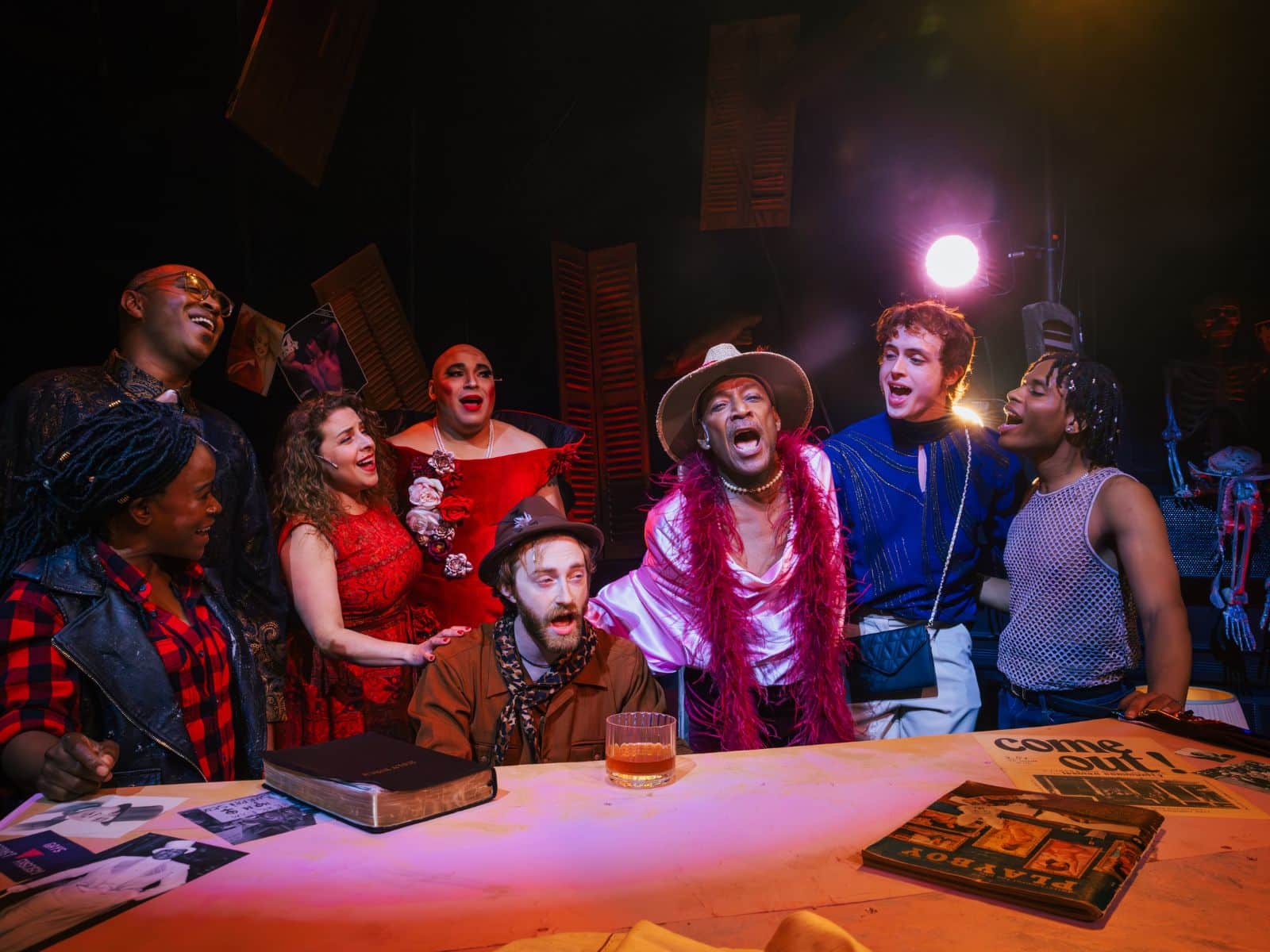
These regulars in the bar — a cross-section of closeted gay 1970s New Orleans — beautifully accomplish the show’s purpose. That purpose, the celebration and remembrance of a beloved community and its members, is a deeply meaningful one. As Bobby Fliessler, author of a book on the fire, said, it is important to “reflect upon the past in a way that tries to honor individuals who might be our forebearers, and in a way to try to offer some sort of symbolic restitution to people who did not receive respect, or dignity, or equal rights, or equal treatment in the past.”
Into this community drops the play’s lead, Wes (Joey Schuman). The script depicts Wes as a shallow, inconsistent, confused and confusing, present-day influencer and fashion designer who — after buying the building that once housed the bar — magically finds himself at the bar on the night it burns in 1973, apparently oblivious to the building’s history. The way in which Vernon has written and used the role feels like a structural flaw. Wes is less a character than a device, somewhat like Cliff Bradshaw in the original version of Cabaret, intended to form a bridge to carry the audience into a presumably unfamiliar world.
Is such a bridge really necessary, though? Granted, the more connected lives of the people Wes meets in the UpStairs Lounge give him some pause in contrast with the life he lives, best expressed in his number “The Future Is Great.” But a contemporary audience is already all too familiar with the discontents of our social media–saturated and atomistic age to need a reminder of our want of community.
In a time and place in which ”homosexuals” could not safely be out, the UpStairs Lounge is the one place where people can be fully themselves and create a chosen family. As families do, they bicker, love, hurt, and heal one another. They’re sexy. They make a home. And in their energetic movement, designed by director Sean Elias, as well as in their singing of Vernon’s varied, pop-inflected score, the ensemble members convincingly create this precious, fragile haven in a heartless world. The audience doesn’t need a contemporary interlocutor to see it.
None of this is to disparage Schuman’s performance. With a supple light tenor voice, he handles the vocal requirements of his role capably. One sweet moment is his tender duet with Patrick, “A Crazy Notion.” With his dance background, Schuman’s physical characterization is one of agility and grace.
Vernon gives nearly all his characters an opportunity to shine vocally. Henri leads “The World Outside These Walls,” underlining the dangers the characters face when they leave the bar. Freddy (in the drag persona of Aurora Whorealis) does a bang-up job with “Sex on Legs.” Inez’s nurturing character comes through in “The Most Important Thing.” Perhaps the show’s most effective dramatic moment is Dale’s “Better Than Silence,” in which he rages against being made invisible, even by his own community. The entire company sets the show’s tone in “Some Kind of Paradise.”
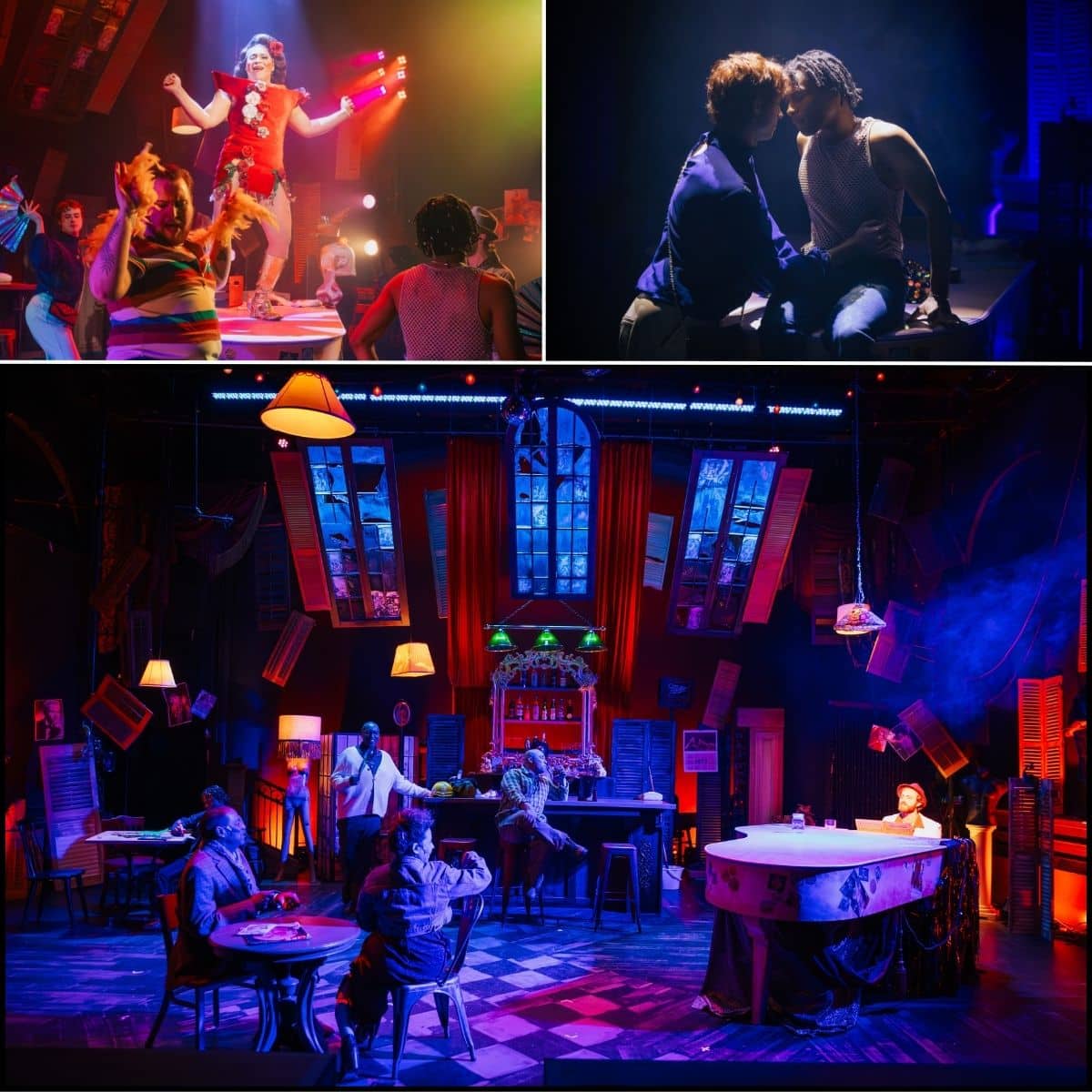
There are not enough superlatives for the design and execution of Iron Crow’s physical production. “Fabulous” — in all senses of the word — is the best description of James V. Raymond’s set. Colorfully creating a believable place for the characters to gather, the set is also immersive. Some audience members are seated at tables in the playing area, and actors interact with them frequently throughout the show. It’s an effective way of making the audience — even those in the regular seating area — feel part of the show.
Thomas P. Gardner’s lighting design is very specific, using follow spots and specials to highlight actors at particular moments in their numbers. The multicolored lights within and above the playing area emphasize the festive side of the UpStairs Lounge. Together with Zach Sexton’s sound design — especially a baleful buzzer — the lighting creates a suitably ominous representation of the onset of the fire.
Among Xorlali Plange’s costumes, standouts include Wes’s glittery jacket, Freddy’s drag dress, and the entire cast’s many-hued final scene outfits, markedly different from anything seen previously in the show. Plange takes care to match costumes to character, for example, Buddy’s conservative jacket and tie, Dale’s ragged shirt and shorts, and Willie’s swoopingly camp theatrical 1940s look.
Kudos also to intimacy director Shawna Porter and fight director Malory Shear for very credible kisses and violence at key points of the show. Iron Crow deserves high praise for one of the strongest dramaturgy presentations I have seen in quite some time. Not only does the program contain valuable historical material on the UpStairs Lounge fire, but the walls of the lobby are covered with pictures of the real people who experienced the fire and a detailed diagram of how it spread rapidly and catastrophically through the structure.
Issues with the script’s structure aside, Iron Crow’s The View UpStairs is a vibrant, emotionally powerful story about the need, the joys, and the dangers of creating a community among the excluded, whether in the past or today.
Running Time: Approximately one hour and 50 minutes, with no intermission.
The View UpStairs plays through June 14, 2026, presented by Iron Crow Theatre performing at Baltimore Theatre Project, 45 West Preston Street, Baltimore, MD. Purchase tickets ($44–$89) online or contact the box office at boxoffice@ironcrowtheatre.org.
The program for The View UpStairs is online here.
Visit theatreproject.org for info on the best parking spots in the 45 West Preston neighborhood.