Where Dead Women Go to Dance, a Theatre Prometheus production written by Stephen Spotswood and directed by Lauren Patton Villegas, starts off with Kim (Willow Kyteler) dragging a supposedly comatose Ellen (Alex Aspiazu) into a house that once belonged to her grandmother. It’s a quiet, quaint home (technical director, Ryan Franks), with vintage amenities (scenic and props designer, Simone Schneeburgh), save for a new microwave (because, for whatever reason, those things never have longevity), and appropriately pink, orange, and blue mood lighting (Felix Clare). At first glance, it appears to be the conclusion of a girls’ night out on the town where “the mom friend” ends up babysitting the ones who can’t hold their liquor.
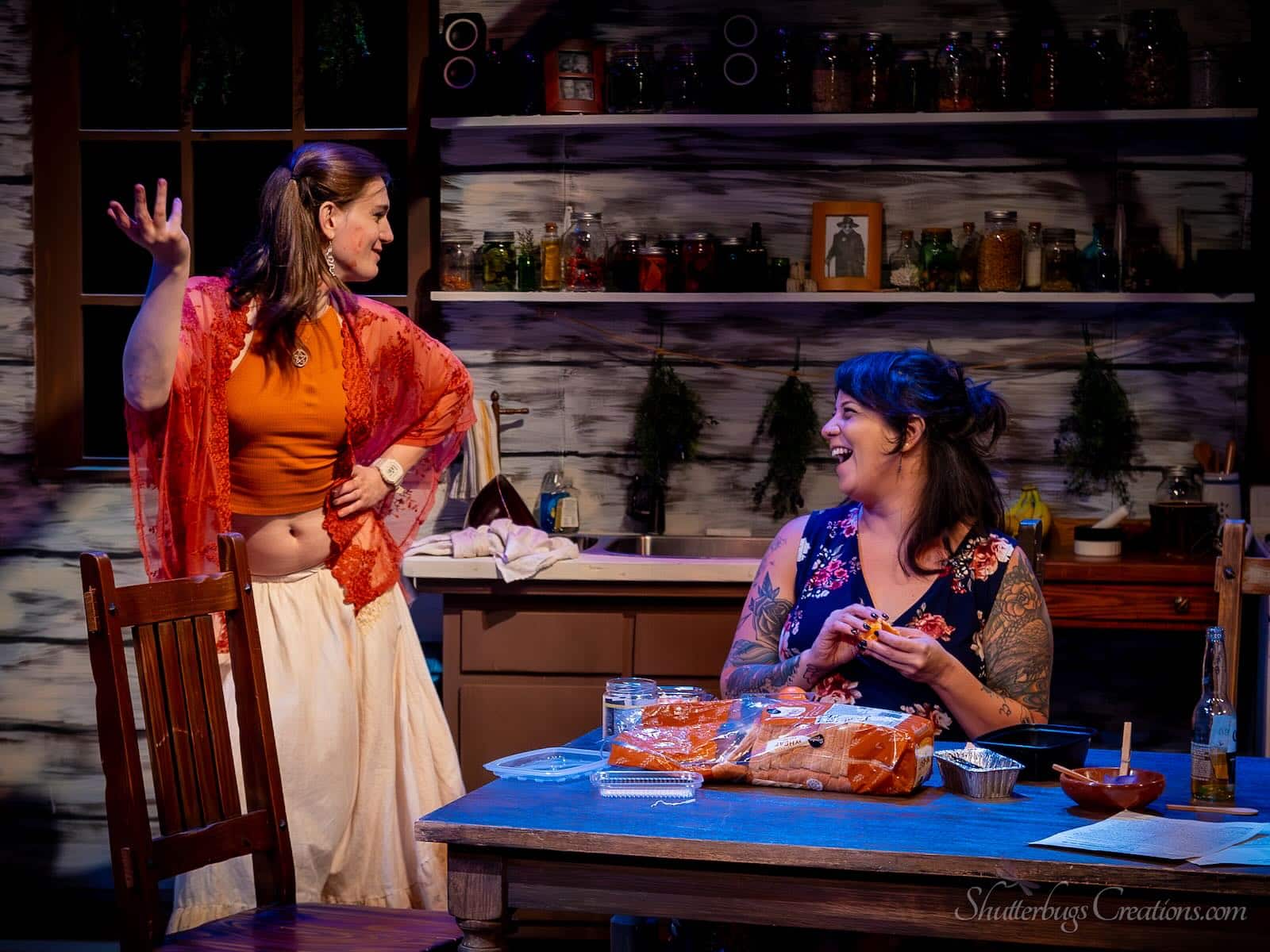
Then, in the tiny kitchen of a rural Appalachian home accompanied by the tell-tale sounds of owls, crickets, and grasshoppers (sound by Angelica G. Huertas), one that feels familiar to me as a Southern girl with my own country backroads roots, we witness paranormal activity as Kim uses a combination of “granny magic,” witchcraft, and a dash of herbalism to resurrect her fallen friend, all while clad in an outfit that gives the impression of an earthy free spirit (costume design by Jaya S. Basu).
Now, what is “granny magic?” you ask. Well, it’s where Appalachian nature and the traditional, ritual practices of the Cherokee, Choctaw, settlers, and enslaved Africans meet. Unlike in the media, where the mighty spellcaster is a warlock praised for raw power and the witch is old, decrepit, and evil, here the magic is held in the hands of the woman who came before us. Serving as midwives, healers, and keepers of knowledge, granny magick honors these elders as essential to their communities. (I’d be remiss if I didn’t mention that despite the current trend in holistic and homeopathic care as alternatives to modern medicines, the stigma associated with African traditional religions and Indigenous spirituality still exists today, although decolonization movements are working to address this.)
Ellen rises from the dead as if she’s the second coming of Jesus, and while the crescendo of music and the change in lights are meant to enhance the dramatic effect, the event itself felt rather obvious and anticlimactic; I found myself bracing for it in anticipation, thinking to myself, “Dang, she ain’t wake up yet?”
And, as to be expected after being brought back to life when you were just dead, Ellen panics, questioning, “Am I going to have to eat people’s brains?” distraught and disgusted until she’s hit with a bout of hunger pangs. Aspiazu plays Ellen with the quirky, self-deprecating humor one may expect from a young divorcee, especially in the neck of the woods where the only thing worse than a sinner is an unwed, single woman. At the same time, Kim, played with verve and energy by Kyteler, frantically tries to answer her concern, without giving too much away. After all, no recipe, potion, or spell can explain this predicament, as shown by witty one-liners delivered with awkwardness and a hint of sarcasm to break the tension.
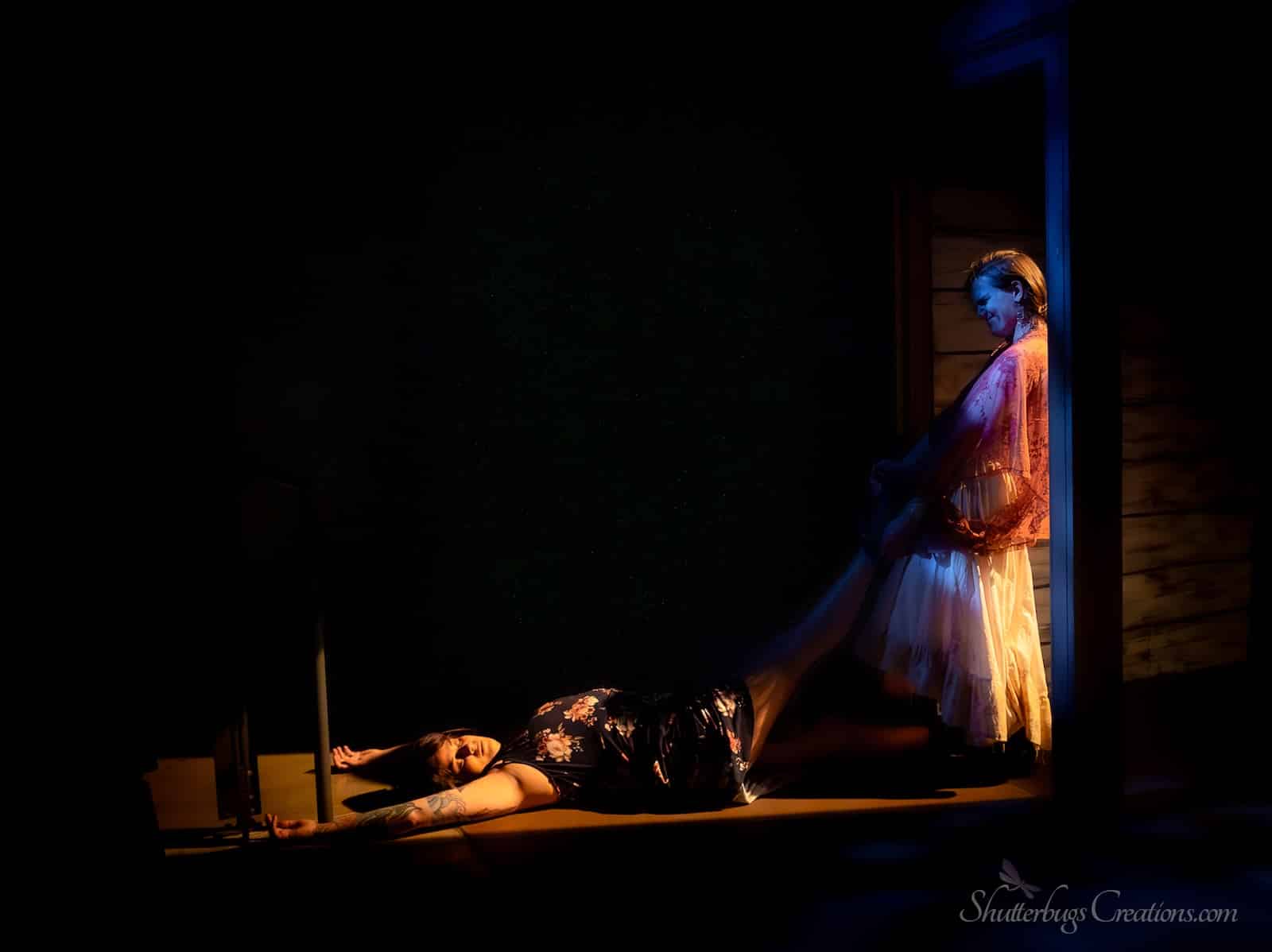
There are layers to death — the ones who die, and the people they leave behind — that come to a head when Ellen’s incessant pestering and nagging lead to hard truths, ones that force Kim to reveal grief and pain that were previously swallowed.
And for those of us who have experienced an “I love you” becoming a goodbye, the reality is that it never really gets any easier, but even so, just like in the play, there’ll be another sunrise.
Running Time: 90 minutes with no intermission.
Where Dead Women Go to Dance plays through October 17, 2026, presented by Theatre Prometheus, performing at Montgomery College’s Cultural Arts Center Studio Theatre, 7995 Georgia Ave, Silver Spring, MD. Tickets are $25 for general admission and available online (with student and pay-what-you-can tickets available for all performances).
SEE ALSO:
Stephen Spotswood on ‘Where Dead Women Go to Dance’ at Theatre Prometheus (interview by Amanda Zeitler, September 26, 2026)
Theatre Prometheus announces cast and crew of ‘Where Dead Women Go to Dance’ (news story, September 3, 2026)